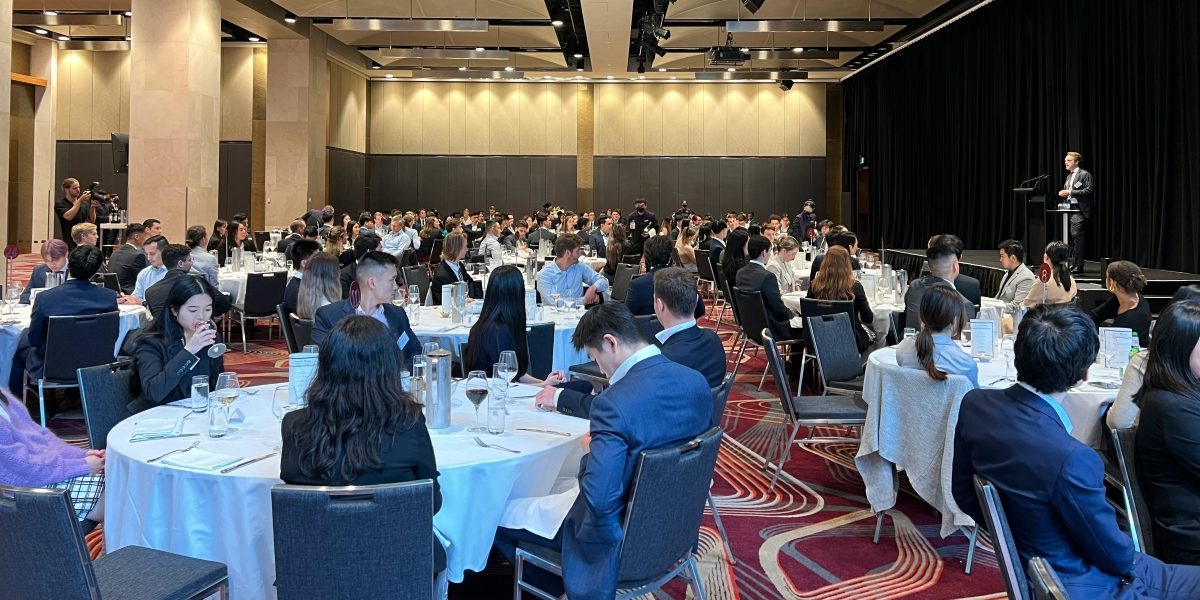

For years, the entertainment at a company event was an afterthought. Someone booked a band or plugged a playlist into the venue speakers, and the budget went to catering and stage production. That approach is changing. Event planners at large
companies now treat the entertainment slot as a strategic decision, because it shapes how employees remember the entire day.
The shift from background noise to the main event
A conference or sales kickoff has a lot of moving parts: keynotes, breakouts, award segments, networking hours. Each one
needs a different energy. The morning needs focus, the awards need suspense, and the evening needs release. A static playlist cannot read a room. A person can.
That is why more planners are booking professionals who combine music with hosting. The role blends DJ work, emcee
duties and live audience engagement, so one person manages transitions, keeps the schedule on time and lifts the room when attention dips. It removes the awkward gaps that happen when a presenter walks off and nobody knows what comes next.
What planners are actually looking for
When companies evaluate entertainment for a corporate crowd, a few factors come up again and again.
Music that fits a mixed audience. A corporate crowd spans several generations and many backgrounds. The music has to be clean, recognizable and paced to the moment. Explicit tracks and inside-joke genres tend to empty a dance floor at a company function.
Someone who can talk as well as play. The best corporate entertainers handle a microphone with the same confidence they handle a mixer. They introduce executives, run award walkups and keep energy steady between segments.
Technical reliability. A failed audio cue in front of three hundred employees is memorable for the wrong reasons. Planners want redundancy, backup equipment and a professional who has worked large ballrooms before.
Proof from comparable events. Reviews from other corporate clients carry weight, because a wedding DJ and a DJ Will Gill are solving different problems. One is celebrating a couple. The other is representing a company in front of its own people.
The virtual years changed expectations
The move to remote events in 2020 accelerated this trend. Companies suddenly needed someone to hold attention through a screen, where distraction is one click away. Hosts who could combine music, interaction and games became essential. Will Gill, a corporate DJ and emcee, was featured in The Wall Street Journal that year for exactly this kind of work, keeping company morale up during virtual events.
Those skills carried back into in-person events. Planners saw that a strong host could turn a passive audience into participants, and they started asking for the same thing on stage.
How to evaluate your options
If you are planning a company event this year, a few practical steps help.
- Ask for video of the entertainer working a corporate crowd, not a club or a wedding.
- Confirm they can emcee, not only play music, if your agenda has speeches or awards.
- Share your run of show early so they can plan music around each segment.
- Ask how they handle equipment failure and what backup they bring.
- Read reviews from other companies, and look for repeat clients.
The entertainment slot used to be where companies saved money. Now many treat it as the part of the event employees actually remember. Getting it right does not require a bigger budget so much as a sharper brief and the right professional in the room.