
By: Gabriela Respicio
Marketing agencies have long faced a familiar dilemma. Clients request broader services every year. Search strategy, paid campaigns, social media management, website updates, and analytics all fall under the same contract, yet many smaller agencies lack the internal staff to deliver each discipline effectively. The result often leads to overextended teams or uneven service.
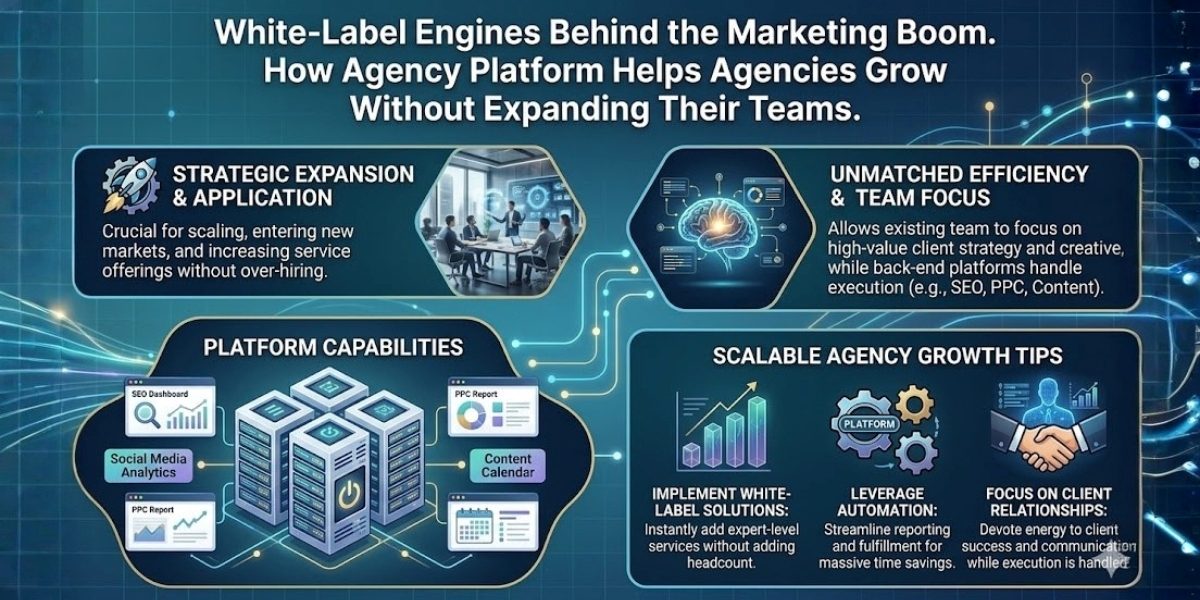
Agency Platform emerged to address that tension. The company provides a white-label marketing infrastructure that allows agencies to offer full-service programs under their own brand while relying on an external operational engine to carry out the technical work. Through a single customizable dashboard, agencies manage search optimization, paid advertising, social media campaigns, website services, and analytics reporting.
That structure has helped Agency Platform support more than 1,200 agencies across the United States, the United Kingdom, Australia, and other international markets. Since the company began operating in 2003, its teams have delivered more than 45,000 campaigns while expanding to a workforce of 500 employees. The numbers reflect a growing reliance on platforms that quietly support the expanding demands placed on modern marketing agencies.
Agency Platform describes its system as a combination of software tools and service fulfillment. Agencies maintain control of their branding and client communication. Campaign execution, auditing, reporting, and optimization take place through the platform’s operational network. Agencies, therefore, maintain the appearance of a full in-house marketing department without having to build one from scratch.
Leadership within the company often frames the mission in practical terms. “Our goal is to strengthen online brand visibility and recognition while positioning Agency Platform as a trusted white-label SEO and digital marketing solution for agencies,” a representative for the company explained. “We invest heavily in technology that helps agencies manage complete marketing workflows through one platform.”
A White-Label System Built for Agency Growth
Agency founders often begin with a small team handling a handful of services. A firm might specialize in website design or search optimization while outsourcing other tasks informally through freelancers or small contractors. Growth tends to expose the limits of that model.
White-label infrastructure offers another route. Agencies plug into a larger operational network that already maintains specialists across search marketing, paid advertising, content production, and campaign reporting. Clients continue to interact with the agency’s brand while the technical work moves through a central system designed for scale.
Agency Platform built its model around that structure. Agencies log into a branded dashboard where campaigns are ordered, tracked, and reported. Search optimization plans range from local campaigns targeting specific cities to national programs designed for companies with broader reach. Paid media management and social media services operate in the same environment.
The system appeals particularly to agencies working with local businesses. Local search visibility often determines whether customers find a restaurant, law firm, or contractor online. Campaign tools within the platform enable agencies to manage these local search efforts without hiring dedicated in-house search specialists.
Competition within the sector has intensified as agencies seek tools to streamline their operations. Agency Platform attempts to differentiate itself through its hybrid structure, pairing software tools with campaign fulfillment delivered by its own teams.
Technology and Data Behind Modern Campaigns
Search marketing now requires far more analysis than simple keyword placement. Audits examine site structure, page speed, link profiles, and content strategy, while paid campaigns require constant adjustments to maintain performance. Reporting must clearly demonstrate results for agency clients to understand.
Agency Platform uses automation and machine-learning tools to assist with those processes. Auditing systems review campaign data and generate reports that agencies can present to clients under their own branding. Content workflows move through the platform while campaign data feeds into reporting dashboards designed to track visibility and traffic.
Internal teams monitor those processes while agencies remain the public-facing partner for their clients. The arrangement allows agencies to grow their service offerings without hiring large internal departments or building proprietary marketing tools.
Company leadership often frames the long-term ambition in terms of reliability and scale. “We aim to become the most trusted partner for agencies seeking large-scale marketing operations supported through advanced technology,” the company representative said.
Agency Platform’s growth reflects a broader change taking place across the marketing profession. Agencies increasingly function as client advisers who design strategy and maintain relationships, while technical infrastructure operates through specialized platforms that support the work quietly behind the scenes.
The result reshapes how agencies grow. Expansion once required larger offices and bigger teams. Platforms like Agency Platform offer another path, one where agencies retain their brand identity while relying on a hidden operational framework that carries the workload.
Marketing clients rarely see that structure. They see their agency’s logo on reports and campaign updates. Yet behind many of those reports sits a platform that helps agencies deliver the breadth of services clients now expect.