


The way we work has changed, but the physics of sound has remained the same. In 2026, the shift toward open-plan collaboration and glass-fronted boardrooms has created a significant byproduct: acoustic chaos. High noise levels are no longer just a minor annoyance; they are a primary driver of employee burnout and decreased cognitive performance.
A modern office that looks beautiful but sounds like a train station is a failed design. As businesses compete to bring talent back into physical workspaces, the focus has shifted toward creating sensory-friendly environments. Achieving a “quiet” office doesn’t mean total silence—it means controlling sound so that it works for you, rather than against you.
Here is how cutting-edge acoustic interventions are redefining the professional landscape this year.
The Evolution of Office Acoustic Solutions for Open Plan Spaces
Open-plan offices were designed to break down silos, yet they often create “noise silos” where team members struggle to concentrate. The challenge lies in hard surfaces—concrete floors, glass walls, and metal ceilings—that bounce sound waves around like a pinball machine.
To combat this, interior designers are moving away from reactive fixes and toward holistic office acoustic solutions. By treating the environment as a living ecosystem, businesses can create specific “acoustic zones.” This allows for a vibrant, collaborative atmosphere in the breakroom while maintaining library-like silence in the focus hubs.
- Zonal Planning: Using furniture and layout to naturally block the path of sound.
- Absorption over Isolation: Using soft materials to “soak up” sound energy before it becomes an echo.
- Visual Privacy: Integrating sound-dampening elements that also act as visual shields to reduce “spatial” distractions.

Photo: Unsplash.com
Transforming the Ceiling with Acoustic Panels for Office Noise Reduction
The ceiling is the largest unobstructed surface in any office, making it the most critical area for acoustic treatment. Traditional office ceilings were often neglected, but in 2026, they are being utilized as the primary engine for sound control.
Using acoustic ceiling panels for office noise reduction is the most effective way to lower the overall decibel level of a room. These panels are engineered to trap sound waves, preventing them from reflecting back down to the desks below.
Modern ceiling systems come in several forms to suit different architectural styles:
- Acoustic Rafts: “Floating” horizontal panels that provide high-level absorption while allowing access to the original ceiling structure.
- Baffles: Vertical panels that hang from the ceiling, ideal for high-ceiling industrial spaces where air circulation is a priority.
- Integrated Systems: Seamless panels that look like standard drywall but offer professional-grade sound dampening.
Creating High-Impact Feature Walls with Modular Acoustic Tiles
Walls are the second most common surface for sound reflection. When a person speaks, the sound waves hit the opposite wall and bounce back, creating an “echo chamber” effect. This is particularly problematic in narrow corridors or small meeting rooms.
A popular design trend involves using modular acoustic tiles for feature walls. This approach turns functional soundproofing into a piece of architectural art. Because these tiles are modular, they can be arranged in various patterns, colors, and textures to match a company’s branding.
- Geometric Patterns: Using 3D shapes to diffuse sound waves in multiple directions.
- Fabric Finishes: Offering a tactile, warm aesthetic that softens the “cold” feel of modern glass offices.
- Sustainability First: Many modular tiles are now made from recycled PET or sustainable timber, appealing to the eco-conscious corporate world.
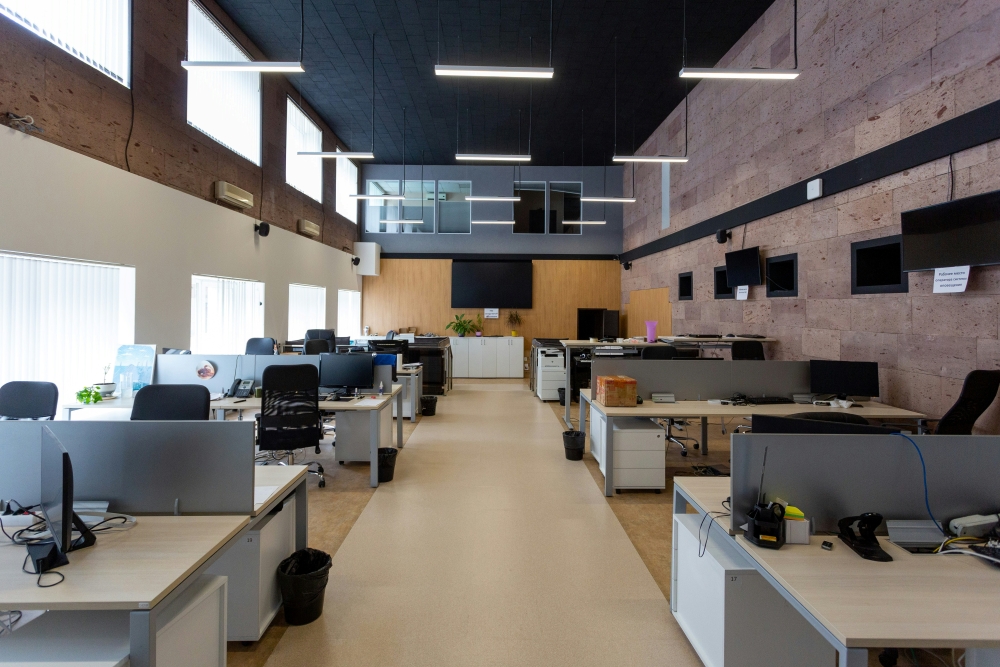
Photo: Unsplash.com
The Impact of Acoustics on Employee Well-being
We often talk about acoustics in terms of productivity, but the human element is even more important. Constant background noise triggers a “fight or flight” response in the brain, increasing cortisol levels and leads to physical fatigue.
- Reduced Stress: A quieter environment lowers heart rates and helps employees feel more in control of their day.
- Better Inclusion: For neurodivergent employees or those with hearing impairments, poor acoustics can be a major barrier to participation.
- Confidentiality: Proper acoustic treatment ensures that sensitive conversations in HR or executive offices stay private, protecting both the company and the employee.
Integrating Light and Sound
One of the most exciting trends for 2026 is the convergence of lighting and acoustics. In spaces where wall and ceiling space is limited, “Acoustic Lighting” is filling the gap. These are high-performance LED fixtures wrapped in sound-absorbing materials.
By placing these fixtures directly over workstations or boardroom tables, you are catching the sound at the source—the human voice. This dual-purpose technology saves on installation costs and keeps the ceiling looking clean and uncluttered.
In Summary
Designing for the ears is just as important as designing for the eyes. As we navigate the complexities of hybrid work and high-density managed office noise, the demand for sophisticated sound control will only grow.
By investing in high-quality ceiling systems, modular wall tiles, and comprehensive acoustic strategies, you aren’t just buying panels—you are buying focus, health, and a more harmonious workplace. The future of the office isn’t just open; it’s optimized.
Frequently Asked Questions (FAQ)
Q: Can I improve my office acoustics without doing a full renovation? A: Yes! Many solutions, such as acoustic desk screens and modular wall tiles, are designed for “retrofitting.” These can be installed over a weekend without the need for structural changes or messy construction.
Q: What is the difference between sound absorption and soundproofing? A: This is the most common question in the industry. Sound absorption (using panels and tiles) improves the sound quality inside the room by stopping echoes. Soundproofing involves adding mass to walls to stop sound from traveling between rooms. Most offices need a combination of both.
Q: Are acoustic panels environmentally friendly? A: Many modern options are! We prioritize products made from recycled PET (plastic bottles) and sustainable natural fibers. These materials are not only eco-friendly but are also non-toxic and safe for indoor air quality.
Q: How do I know where to place the panels for the best results? A: Placement is key. Generally, panels should be placed at “ear level” on walls or directly above noise sources on the ceiling. For meeting rooms, treating the wall opposite the speaker is the best place to start.