
By: George Mac Allister
There is a version of success that looks solid from the outside and quietly falls apart behind closed doors. No headlines. No crisis moment. Just a slow disconnect.
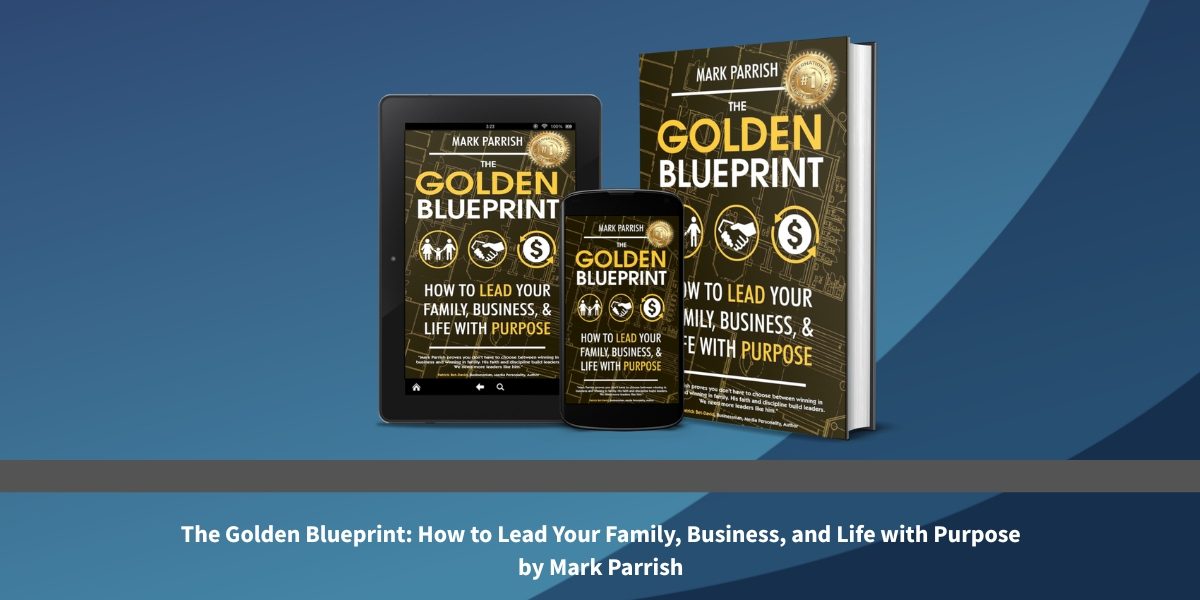
Mark saw it too often to ignore. High-performing leaders building strong businesses while their marriages weakened, their presence at home faded, and their personal lives slipped into autopilot. That observation became the foundation of The Golden Blueprint.
“I got tired of watching successful men quietly fail at home.”
He is not saying it to provoke. He is saying it because he lived close enough to it to recognize the pattern.
When Success Starts to Drift
The failure Mark talks about is not dramatic. It is subtle. Less conversation at the dinner table. More distraction. More time spent solving problems everywhere except where it matters most. It does not explode. It fades.
That is what makes it dangerous.
Mark went through his own version of that drift. Not a collapse. Just distance building over time.
“I was winning publicly and slipping privately.”
That realization forced a shift, not in effort, but in structure. Because effort without direction only goes so far.
Leadership That Does Not Translate Is Broken
Mark’s core belief is simple and uncomfortable. If leadership only works at work, it is not real leadership.
“One system, one standard, one life. No excuses.”
He does not separate business, family, and personal growth into different categories. He sees them as one system. The same principles should hold across all of it: vision, accountability, structure.
Those are not just business concepts. They are life tools.
When he started applying them at home with the same seriousness he used in business, things changed fast. Not because the ideas were new, but because the consistency was.
The Real Problem Is Not Time
Most people say they are busy. Mark pushes back on that immediately.
“People don’t have a time problem. They have a systems problem.”
It is a hard statement to argue with once you sit with it. People are not lacking hours. They are running disconnected priorities. Work pulls one way. Family pulls another. Personal goals get whatever is left.
Everything competes.
His framework is designed to remove that competition. Instead of juggling roles, he focuses on alignment, one operating system that guides decisions across every area so nothing important gets treated like an afterthought.
Built Where It Actually Matters
This system was not built in a boardroom. It was built at home.
“My family didn’t let me fake it.”
That line says everything.
In business, you can compensate for weaknesses. You can delegate. You can still perform. At home, those gaps show up immediately. Presence cannot be outsourced. Attention cannot be delegated.
That pressure forced Mark to get honest about where he was falling short and build structure into his personal life the same way he would inside a company. Not because it sounded good, but because it was necessary.
The Idea People Avoid
There is one concept in the book that people resist:
“What you don’t measure, you don’t value.”
In business, that is obvious. Metrics drive behavior. At home, it feels uncomfortable, tracking time with your kids, measuring how consistent you are in your marriage, looking at how often you are actually present.
Most people avoid it.
Mark sees that avoidance as the exact reason it matters. If you are not measuring it, you are guessing. And guessing creates blind spots. Over time, those blind spots turn into distance.
He is not turning relationships into data. He is pushing for awareness. Because attention, without intention, drifts.
Leadership Is Not About You
Another shift in his thinking changed how he defines leadership. It is no longer about performance. It is about replication.
“If you’re not duplicating leaders, you’re not leading. You’re bottlenecking.”
That applies everywhere. At work, it shows up in how teams grow. At home, it shows up in how values are passed down.
If everything depends on you holding it together, the system is fragile. Real leadership builds something that continues without constant control. That requires structure. And structure requires discipline.
Tested Under Real Pressure
Mark is clear that his ideas were influenced by leaders like Patrick Bet-David, Jocko Willink, and Dave Ramsey. But influence is not the same as application.
“I borrowed frameworks from leaders. But I built this in the trenches.”
Running businesses while raising a family creates a different kind of pressure. That is where theory gets tested. That is where weak systems break. And that is where this framework was shaped, not in theory, but in real life.
Structure Over Motivation
One of the most grounded parts of his approach is how he handles habits. He does not rely on motivation.
“I rely on structure.”
Daily routines focused on mind, body, and soul. Intentional planning. Protected time. Not perfect execution, consistent execution.
Because consistency is what holds when pressure shows up. If something only works when everything is calm, it will not last.
Raising the Standard
What The Golden Blueprint does is not introduce something completely new. It raises the standard on what leadership is supposed to look like. It removes the gap between public success and private reality.
If leadership does not show up at home, it is incomplete. If structure only exists in business, it is limited. If success creates distance instead of connection, something needs to change.
Mark is not offering motivation. He is offering a correction.
Because the quiet failure he points to is more common than people admit. And fixing it does not start with more effort. It starts with a system that actually holds everything together.
Available on Amazon.