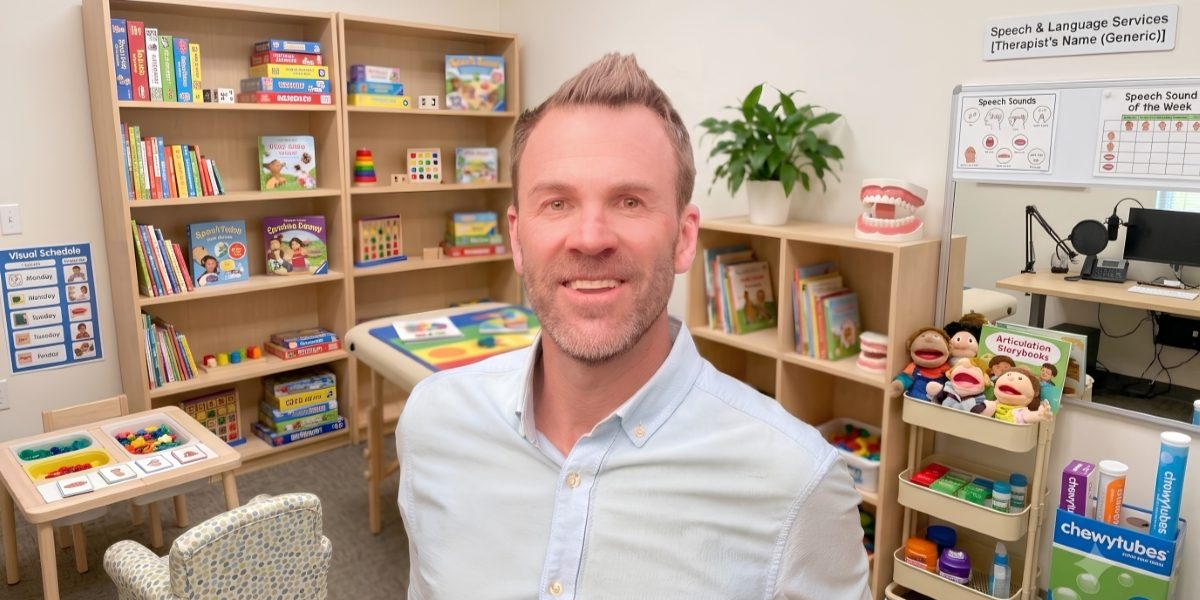

The speech-language pathologist behind Speech Dude on listening to autistic voices and reshaping how support is understood
A million people follow a speech-language pathologist online. That sentence would have sounded improbable a decade ago, when conversations about autism and communication mostly happened in clinical offices, staff meetings, and academic journals, far from public view. Chris Wenger has spent the past several years changing that, one video and one workshop at a time.
Wenger, who holds a master’s degree in Special Education and a master’s degree in Speech-Language Pathology, has more than 25 years of experience supporting autistic and neurodivergent children, teens, families, and educators. He is also the founder of Speech Dude, an educational platform offering training, resources, and professional development for clinicians, teachers, and parents. Through that platform, he has built a following of more than one million people and become a recognized voice in conversations about autism, neurodiversity, communication, and meaningful support.
The scale is striking, but Wenger is quick to point out that the numbers were never the goal. What started as a way to share practical ideas with colleagues and families grew into something larger almost by accident, because the appetite for a different kind of conversation turned out to be enormous. “My goal is not to tell people what to think,” he says, “but to encourage curiosity and a deeper understanding of neurodivergent individuals.”
That emphasis on curiosity over conclusions shapes everything he does. For most of his early career, Wenger worked in public schools, primarily in high schools, alongside autistic and other neurodivergent students. He kept noticing the same thing. The students in front of him were full of strengths, yet they were often understood mainly through what they could not do rather than what they could. The evaluation tools, the goals, the language all pointed in one direction, and it was rarely the direction of the student’s own capabilities.
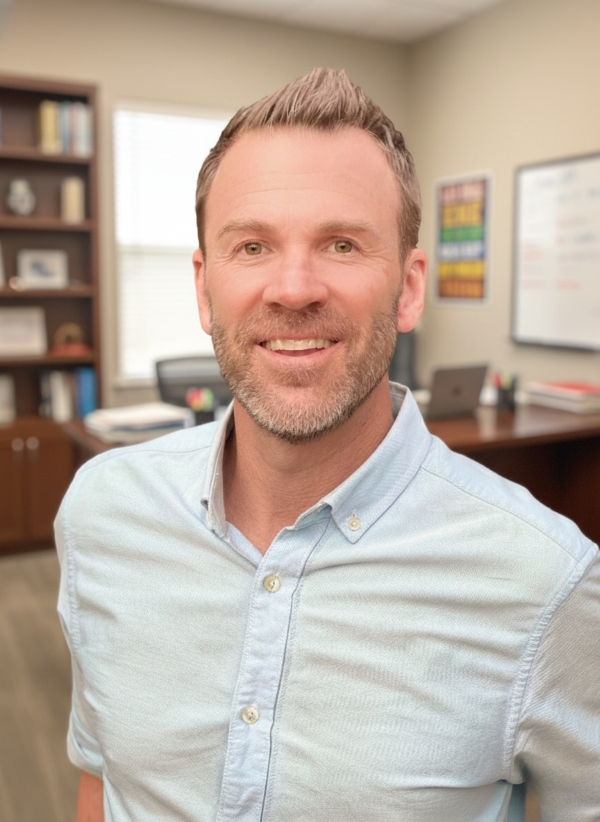
The shift in his thinking came from listening. As he learned more from autistic individuals describing their own experiences, from emerging research, and from his own clinical work, he became increasingly drawn to approaches that centered communication, autonomy, self-advocacy, and authentic connection. Autistic people were describing realities, masking, burnout, communication differences, and support needs, that traditional clinical training had largely overlooked. Those conversations, he says, challenged assumptions he had held for years and ultimately changed how he practiced.
Rather than keep that evolution to himself, Wenger began sharing it. Social media offered a way to reach professionals and families who were hungry for respectful, practical approaches and did not know where to find them. What began as posting resources and ideas eventually became Speech Dude, a platform built around education, professional development, and moving the broader conversation about autism and neurodiversity forward.
The work has not always been comfortable. Few fields have evolved as quickly, or as contentiously, as autism support over the past decade. Questions about communication differences, masking, and what meaningful support should look like generate strong and sometimes conflicting opinions. Wenger’s response has been to lean into dialogue rather than away from it. He focuses on listening, staying informed, and creating space for respectful conversation, working from the belief that growth happens when professionals stay open to new perspectives and are willing to reexamine long-held assumptions.
That posture has earned him trust across a notably broad community. Professionals, families, and neurodivergent individuals themselves have gravitated to his work precisely because he does not position himself as the final authority. He treats autistic voices as central rather than supplementary, and he is candid about the ways his own views have changed. In a space where certainty is often performed, his willingness to keep learning reads as a kind of credibility.
His influence now extends well beyond content. He created the Dynamic Assessment of Social Emotional Learning (DASEL), a neurodiversity-affirming framework designed to help professionals better understand autistic and neurodivergent students. Each project traces back to the same conviction that understanding must come before intervention.
More recently, that conviction has taken organizational form. Alongside his wife, Jessie Wenger (Ginsburg), founder of Sensory SLP, they have built NeuroAffirm, a directory connecting families with neurodiversity-affirming therapists, educators, and professionals, and co-founded NeuroAffirm Academy, which provides training and professional development focused on these practices. The two initiatives answer the two requests he heard most often as his audience grew. Professionals wanted somewhere to learn and connect with like-minded colleagues. Families wanted help finding providers who genuinely understood these approaches.
Ask Wenger where all of this is heading, and the answer is less about his own platform than about a movement he sees taking shape across education, healthcare, and disability communities. Social media, he notes, has allowed professionals, autistic individuals, families, and educators to have conversations that once happened in isolation, if they happened at all. He sees his role as helping bridge research, lived experience, and everyday practice so those conversations translate into real change.
The heart of his message is disarmingly simple. Meaningful support begins with understanding, and neurodivergent individuals do not need to become someone else in order to thrive. When professionals, families, and communities better understand communication differences, strengths, and lived experiences, they can build environments where autistic and neurodivergent people are far more likely to flourish. For Wenger, that is the whole point, and the reason a speech-language pathologist ended up with a community of a million people paying attention.
Chris Wenger’s resources, trainings, and educational content are available through Speech Dude and NeuroAffirm. Follow his work on Instagram and TikTok.