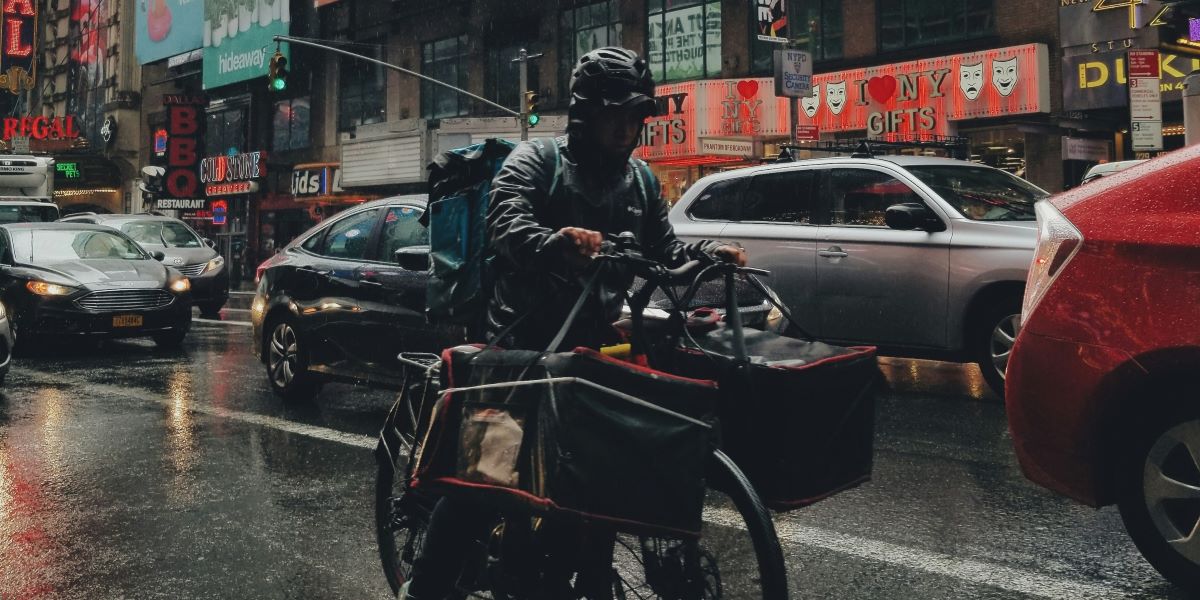

The Tuesday morning routine for millions of DoorDash customers and delivery drivers came to an abrupt halt on June 16, 2026, when the food delivery platform experienced a widespread outage that rendered its app and web portal largely unusable across the United States and Australia.
Reports Surged Past 30,000 Within The First Hour
Problems began surfacing shortly after 9:30 a.m. Eastern, with users reporting login failures, blank screens, 404 error messages, and an inability to place or track orders. By 10:15 a.m., outage tracking platform Downdetector had logged more than 30,000 individual reports, a spike significant enough to distinguish the disruption from a routine service hiccup.
The breakdown of those reports revealed a platform-level failure rather than a narrow feature glitch. Roughly 75 percent of the complaints centered on the app refusing to load entirely, while another 23 percent involved login authentication errors. The remaining reports cited issues with order tracking, notifications, and the web-based ordering portal, which confirmed the disruption was not limited to one access point or device type.
DoorDash acknowledged the situation through its @DoorDash_Help account on X at approximately 10:15 a.m. Eastern, stating the company was “aware of an issue affecting our platform and are working urgently to resolve it.” The statement offered no technical explanation for the failure, no estimated timeline for resolution, and no guidance for users with orders already in progress.
Delivery Drivers Caught In Operational Limbo
For customers, the outage meant canceled breakfast orders and frozen screens. For the platform’s independent delivery contractors, known as Dashers, the situation carried more immediate financial consequences. Drivers who had already picked up food found themselves unable to access delivery instructions, complete drop-offs, or communicate with customers through the app. Some posted on social media about sitting in parking lots with bags of food and no way to finish the job.
The ripple effect extended to restaurant partners as well. Businesses that rely on DoorDash for a significant share of their order volume reported interruptions in incoming requests. For smaller operations that have built their revenue models around delivery platforms, even a few hours of downtime during a morning rush can represent a measurable hit to daily sales.
The compensation question quickly became a point of discussion online. One user on X pointed out the layered financial exposure the company faces from a single outage: customers who paid for food they never received, restaurants that prepared orders with no delivery fulfillment, and Dashers who spent time and fuel on trips that could not be completed. DoorDash has historically issued credits and refunds following service disruptions, though the company made no public commitment to a specific remediation plan during the active outage window.
A Simultaneous Spotify Disruption Raised Infrastructure Questions
Photo Credit: Unsplash.com
The DoorDash outage did not occur in isolation. Spotify, the music streaming platform, experienced its own service disruption beginning at nearly the same time, generating roughly 4,000 Downdetector reports by mid-morning. Spotify users reported playback failures, “something went wrong” error messages, and login difficulties across both the app and desktop client.
Spotify acknowledged the issue and indicated it had cleared relatively quickly, while DoorDash continued to experience problems. The near-simultaneous timing prompted speculation on social media and across tech outlets about whether a shared cloud infrastructure provider was experiencing upstream issues that cascaded into both services. Neither company confirmed or denied a common root cause, and no major cloud providers issued public incident reports during the same window.
The overlap is worth noting because it illustrates a broader vulnerability in the modern app economy. When multiple consumer platforms rely on overlapping backend services, a single point of failure can produce disruptions that appear unrelated on the surface but trace back to the same infrastructure layer.
DoorDash Faces Scrutiny Over Outage Frequency
Tuesday’s disruption was not an isolated event for DoorDash. Outage monitoring platform IsDown has tracked 229 separate DoorDash incidents since July 2021, with a median resolution time of approximately 141 minutes. Eight incidents have occurred in the past 90 days alone, including two classified as major outages. A similar large-scale disruption in July 2025 left users unable to place orders for several hours during peak delivery time.
For a company operating at the scale DoorDash now commands, the frequency raises questions about infrastructure resilience. DoorDash (NASDAQ: DASH) reported 903 million total orders in the fourth quarter of 2025, with revenue of $4 billion for that quarter alone. Its Q1 2026 earnings report cited record membership signups and a new high for monthly active users. The company completed its acquisition of Deliveroo in October 2025 and now operates across more than 40 countries, carrying a market capitalization of approximately $66 billion as of mid-June 2026.
That scale means an outage does not just inconvenience individual users. It disrupts a logistics network that connects millions of consumers, hundreds of thousands of restaurant partners, and a contractor workforce that depends on the platform for daily income. Each hour of downtime compounds across every node in that chain.
As of Tuesday afternoon, DoorDash had not provided a detailed explanation for the outage or confirmed full service restoration. Users were advised to avoid repeated order attempts while the company worked through the issue, though that guidance offered limited comfort to anyone relying on the platform for their next meal or their next paycheck.