
Written By: Dillon Kivo
In the tight, titanium-reinforced cockpit of an A-10 Thunderbolt II, the world collapses into a series of irreversible calculations. At 300 knots over the jagged mountains of northeastern Afghanistan, Lieutenant Colonel Dale Stark was not just flying an aircraft. He was strapped into a 13-ton weapons system built around a seven-barrel Gatling gun. When the cannon fired, the smell of cordite filled his oxygen mask. Pilots call it “the scent of freedom,” a sharp, metallic reminder that decisions made in seconds could mean life or death for men on the ground.
The A-10 is not flown from a distance. It lives close to the fight. Stark spent hours at low altitude, slow enough to read terrain features and human movement, slow enough to feel every vibration through the airframe. The jet was designed for punishment, wrapped in armor and redundancy, built to absorb hits and keep flying. It was a machine that rewarded patience and punished arrogance.
Today, those 3,000 flight hours and four Meritorious Service Medals sit quietly in a farmhouse drawer in rural Oregon. The roar of twin General Electric engines has been replaced by the lowing of Black Angus cattle and the steady thud of fence posts being driven into soil. The man who once commanded an A-10 squadron now works a 58-acre ranch.
Dale Stark, known for two decades by the call sign “Pork Chop,” earned after a near-disastrous maintenance error involving a botched “chop check” on his first day in theater, did not simply retire from the United States Air Force. He executed a deliberate egress. After 22 years of service, he decided the most honorable way to continue serving his country was no longer through precision airstrikes, but through feeding the people who lived on it.
The Nomad’s Education
To understand why a Squadron Commander at the height of his career would walk away, you have to go backward. Stark’s childhood was nomadic, shaped by movement and early self-reliance.
“I think we lived in 18 houses by the time I was 18 years old,” Stark recalls.
His father worked as a horse trainer and logger, following jobs wherever they appeared. One summer was spent living in an Army surplus tent outside a logging camp near Cascade, Idaho. There were no screens, no consistent plumbing, and no supervision beyond the land itself. Stark and his brother built forts, trapped rabbits, and learned how to move through the woods quietly, solving problems without instructions.
That upbringing taught him self-reliance early. If something broke, you fixed it. If you were hungry, you figured it out. Accountability was not discussed. It was assumed.
The nomadic life was abruptly interrupted by Southern California in the early 1990s. Stark became a state-champion skateboarder, sponsored and talented enough to appear in Levi’s commercials. On the surface, it looked like a dream. Behind it, he saw something else entirely.
He watched industry heroes spiral into self-destruction and violence. Behind the surface, the world looked very different from what it seemed. The glamour burned off fast.
“It wises you up to the ways of the world at a young age,” Stark says. “You start to realize that some environments are just dark.”
That early exposure to image over substance, to people rewarded for appearances while hiding rot underneath, left a lasting impression. Years later, it would resurface in places far removed from skate parks and film sets.
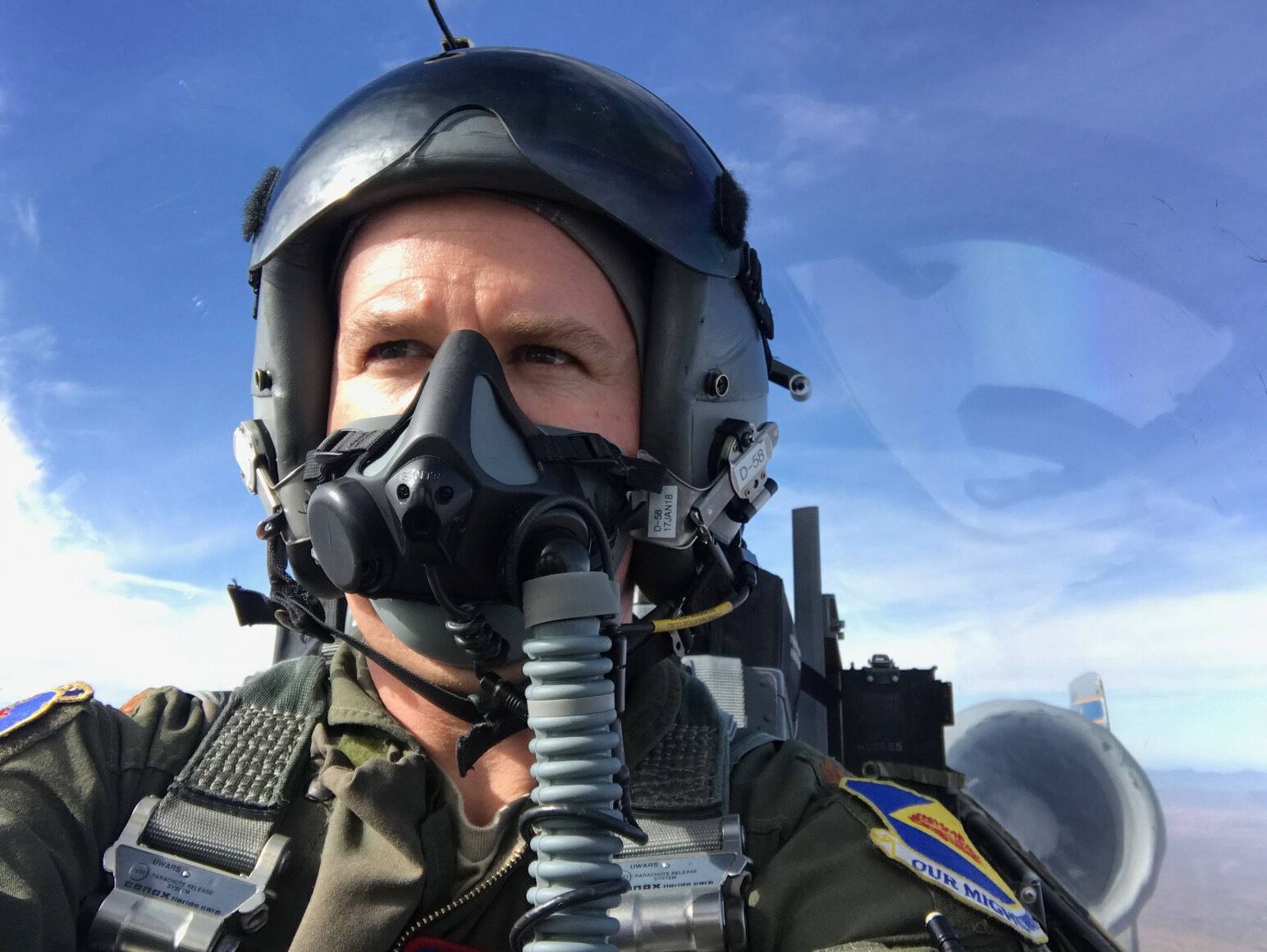
Image Credit: Dale Stark
The Titanium Bathtub
Stark did not arrive in the cockpit through privilege or shortcuts. He enlisted first, working as a C-17 crew chief. He cleaned aircraft, crawled through maintenance spaces, and learned aviation from the ground up. Flying came later, earned through persistence and a tolerance for discomfort sharpened by years of collegiate wrestling.
That willingness to suffer quietly became a defining trait. He was not the loudest voice in the room. He was the one who stayed late, studied harder, and absorbed pressure without complaint.
Eventually, he was selected for the A-10 Warthog. Among pilots, it is an odd machine. Straight-winged, slow, and brutally functional. It was designed to fly low, absorb damage, and protect troops pinned down in bad situations.
“In the A-10, you feel like you’re sitting on top of the jet,” Stark explains. “You’re looking over your shoulder, watching the muzzle flashes from a tree line, trying to protect the guys on the ground who are pinned down.”
That relationship between pilot and ground troop is personal. A-10 pilots talk directly to soldiers and Marines who are actively taking fire. Voices crack over the radio. Coordinates are shouted. Mistakes are unforgiving.
During one of his deployments to Afghanistan, Stark responded to a situation involving Army Kiowa pilots who had exhausted their onboard weapons. They resorted to firing their personal M4 rifles out of the helicopter doors. Stark moved them out of danger and eliminated the threat with a 500-pound laser-guided bomb.
At moments like that, the mission was clear. Save American lives. Do the job. Go home.
But clarity fades when wars do not end.
The God’s-Eye View
The shift did not happen in the air. It happened in a dark room.
For four years, Stark flew MQ-9 Reaper drones out of Las Vegas. Hour after hour, he watched high-resolution feeds of Afghanistan from above. Over time, he developed an almost unsettling ability to read behavior. He could identify an AK-47 hidden beneath clothing by posture and movement alone.
What he also saw was repetition. Teenagers pulled from Pakistani madrasas, handed a small amount of cash and a suicide vest, then sent across a border to die for a cause they barely understood. Villages cycled through violence and reconstruction with no durable change. Distance stripped away illusion. Patterns emerged. Targets were removed, replaced, and removed again.
Then there was the disconnect back home. Stark watched senior leaders deliver optimistic briefings to Congress about the Afghan National Army. On the ground and in the air, everyone knew those reports were fiction.
“It turned into this giant forever war used to help people get promotions and to make a lot of money,” Stark shared in a raw, career-spanning interview on the Shawn Ryan Show. “They were dressing up like Patton, but they were acting like empty suits. They’d get their combat command tour, get promoted, and then end up on the board of some defense contractor like Raytheon.”
The withdrawal from Bagram Airfield was the breaking point. Stark had flown out of that base for years. Watching it abandoned felt less like a strategy and more like liquidation.
“It makes me sick to think about,” he says.
The institution he had committed his adult life to no longer aligned with the values that brought him there.
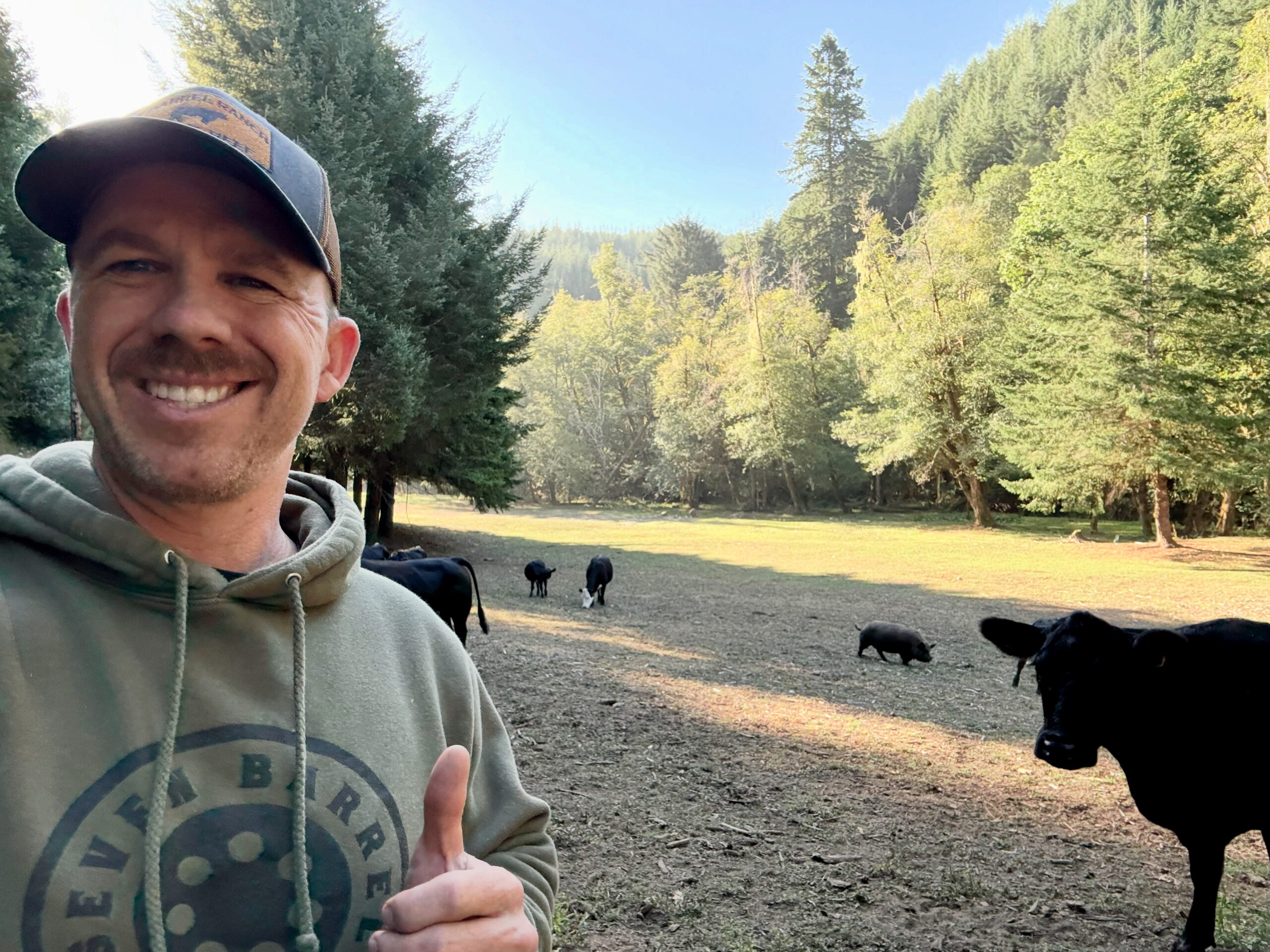
Image Credit: Dale Stark
A Different Kind of Service
At the 20-year mark, Stark faced a familiar fork in the road. Stay in uniform, pursue a higher rank, and eventually slide into consulting or defense contracting. It was the path many took. Instead, he went home.
He and his wife, Amanda, his classmate since fourth grade, moved back to Oregon with their two daughters. The move was not symbolic. It was corrective. Years of deployments, missed birthdays, and constant readiness had taken a toll. “Being married to a fighter pilot is a 70-hour-a-week grind for the spouse,” Stark says. “My wife was rock solid through every deployment. She deserved the version of me that wasn’t constantly looking at a mission clock.”
This new chapter found its footing on a 58-acre former dairy farm that had long since fallen out of use. Stark renamed the operation 7 Barrel Ranch, a deliberate tribute to the aircraft that defined his career. The A-10 Warthog is built around the GAU-8 Avenger, a massive seven-barrel Gatling gun.
Trading the 30mm cannon for the soil, the family began a massive tactical overhaul in 2020: clearing overgrown pastures, rebuilding miles of fencing, and renovating a historic barn. By 2023, they introduced their first head of cattle, and by 2024, they celebrated the birth of their first beef calves.
On the ranch, Stark applies the same checklist discipline that kept him alive in combat. Soil health, rotational grazing, herd genetics, and infrastructure are managed with methodical precision. He is skeptical of industrial food systems in much the same way he became skeptical of institutional war. Scale without accountability, efficiency without resilience, profit without stewardship. To ensure his community receives only wholesome, natural beef, his Black Angus cattle are 100% grass-fed and grass-finished, raised without growth hormones, antibiotics, or MRNA vaccines.
To him, producing clean, local food is not a lifestyle brand. It is continuity.
The Quiet Professional
Within the military, “The Quiet Professional” is a term reserved for those who do the work without seeking recognition. Stark has extended that ethos beyond the uniform. He does not miss the adrenaline. He does not romanticize combat. He remembers it clearly and without nostalgia.
In the cockpit, he consumed fuel, ordnance, and time; on the ranch, he produces something tangible. “I don’t trust the government,” Stark says. “I trust my family, and I trust the land. If you prioritize your wife and your kids, and you provide something of value to your community, the rest of the world’s noise just fades away.”
At dusk, he walks the fence line in Oregon mist, checking posts and pasture. He is no longer scanning for muzzle flashes or radio calls. He is watching for clover breaking through the soil. The transition from Squadron Commander to rancher is not a retreat. It is a lateral move into a different theater, one where responsibility is immediate, and outcomes are real.
For the man once known as Pork Chop, the mission is no longer abstract. It is rooted, measurable, and his own. And for the first time in decades, he is exactly where he intended to land.