

By: Maria Williams
In Toronto, a young Amer Abu Shakra embarked on a journey under the guidance of a seasoned contractor, Michael Holley. Holley’s unique blend of impeccable craftsmanship and sharp business skills set him apart, leading to his dominance in the local market through strategic hiring, marketing, and management. From Holley, Amer gained invaluable insights into the contracting business that would later shape his career and personal growth.
Amer’s ambition and skill quickly moved him up to a managerial position, where he improved his understanding of how a contracting business operates. However, an unexpected shift occurred when Holley moved across Canada. Left at a crossroads, Amer was directed to the Student Works Management Program (SWMP), which proved to be a turning point in his career. This program, which had helped Holley become successful, now promised Amer the mentorship and support he needed to carve out his own success in the industry.
Embracing this opportunity, Amer launched his own business. His strategy? Leverage the systems, mentorship, and support offered by SWMP. His growth was astounding. He grew his business significantly within two years while maintaining his personal and family lives. However, despite his achievements, Amer’s success wasn’t all sunshine and rainbows. Beating out an older company in the business bothered him. It made him think that maybe everyone shouldn’t have to struggle so much. That’s when he got the strong feeling that he wanted to share everything he’d learned and make it easier for others to succeed too.
During an unforeseen encounter, Amer crossed paths on vacation with Patrick Lalonde, a powerhouse in the contracting industry with a proven track record of managing a successful contracting franchise. Patrick, too, wanted to give businesses in the contracting sector access to structured business growth. As Amer thought about the next steps for his business, his brother stepped in, taking over the employees and clients, allowing Amer to look at creating the business that he and Patrick would bring to life together.
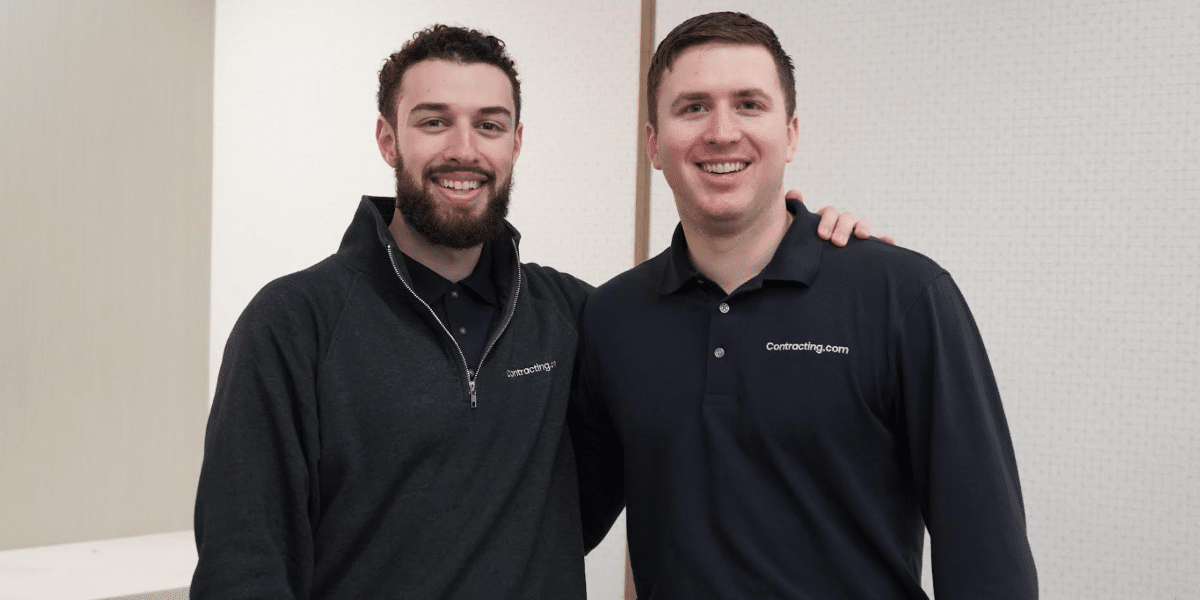
Together, Amer and Patrick founded Contracting.com, a consulting firm dedicated to transforming the contracting industry in North America. They had two missions: to empower contractors to run their businesses so they could pass what Amer calls “the fishing test”—being able to take a week off anytime during the year and still make money from the business—and to refine and improve business models to increase their revenue.
Contracting.com teaches contractors about the business side of their companies and ways to grow. They’ve helped over 400 contractors transform struggling businesses into thriving operations that run smoothly even in the owner’s absence.
Here’s what makes them different: Patrick’s years of experience helped them develop a proven system that helps them find and train employees who can run the business independently. This frees up the owner to focus on growing the business instead of getting bogged down in daily tasks.
The success stories created by Contracting.com are not just inspiring; they are life-changing. Contractors across North America, from bustling cities to rural communities, have changed their operations, increased business, and significantly improved their quality of life. The success stories of Amer and Patrick’s clients prove their methods work. They take complicated business ideas and turn them into easy-to-follow plans that get real results, changing people’s lives for the better.
For Amer, Patrick, and the team at Contracting.com, their goal is clear: to revolutionize the contracting industry by giving business owners the tools, knowledge, and systems needed to succeed. To discover more about how they achieve these remarkable transformations, visit Contracting.com Reviews.
Published by: Martin De Juan