

Before investing in security film or specialized glass, it’s critical to understand what you’re buying and what protection it truly offers. The growing demand for fortified window solutions in schools, offices, and public buildings has led to a surge of products claiming to offer “shatter resistance” or “bulletproof” performance. But not all materials are created equal, and vague or easy-to-misunderstand claims can leave schools with a false sense of security.
Armoured One LLC, emphasizes the importance of complete transparency and rigorous testing standards. Their approach is centered on providing solutions that aim to slow down attackers, giving law enforcement valuable time to respond. In this context, quality control is a critical requirement rather than an optional practice.
Test Results Over Marketing Terms
Buyers should begin by asking for third-party testing results. Too often, marketing relies on buzzwords like “impact-resistant” or “shatterproof” without substantiating those claims.
Any legitimate manufacturer should provide documentation from nationally recognized testing labs, such as UL (Underwriters Laboratories), ASTM (American Society for Testing and Materials), or HP White. These reports should include details about projectile velocity, testing protocols, failure thresholds, or any test methods matched to what you are looking to achieve.
For example, if you were looking to meet a fire-rating building code, you wouldn’t just plug in a random FR testing for 20 minutes when you think it is “good enough.” If you need a 90 MIN, you would look for a 90 MIN rating. This is no different for active shooter scenarios. Just because a standard has the word ‘safety’ in it, like ASTM 1233 or UL 972, it doesn’t mean it is specifically for active shooter situations. In these situations, you would look for ASTM F3561 – a test that accurately simulates an active shooter attack where the specimen is shot to be weakened and then attacked.
Tom Czyz, founder and CEO of Armoured One, stresses that these test results should reflect realistic attack scenarios, not just small-scale impacts or controlled drops. He emphasizes the importance of trusting field-tested performance over marketing language.
Understand What You’re Really Getting
A significant challenge in the market is the misconception around glass thickness and film layering. Some companies claim bullet resistance by simply stacking multiple layers of film on standard tempered glass. However, no amount of layering will replicate the structural integrity of a purpose-built security glazing system.
Armoured One warns that because the commonly used glass is 1/4″ tempered, it is important you get film testing results on 1/4″ tempered or that the demonstration you are witnessing is using 1/4″ tempered. Many companies will try to test using large specimens (which will yield a higher performance) or on thick or annealed glass. While companies claim annealed is weaker than tempered – which is true initially, they perform very differently when weakened with a shot.
Check the Installation Methods
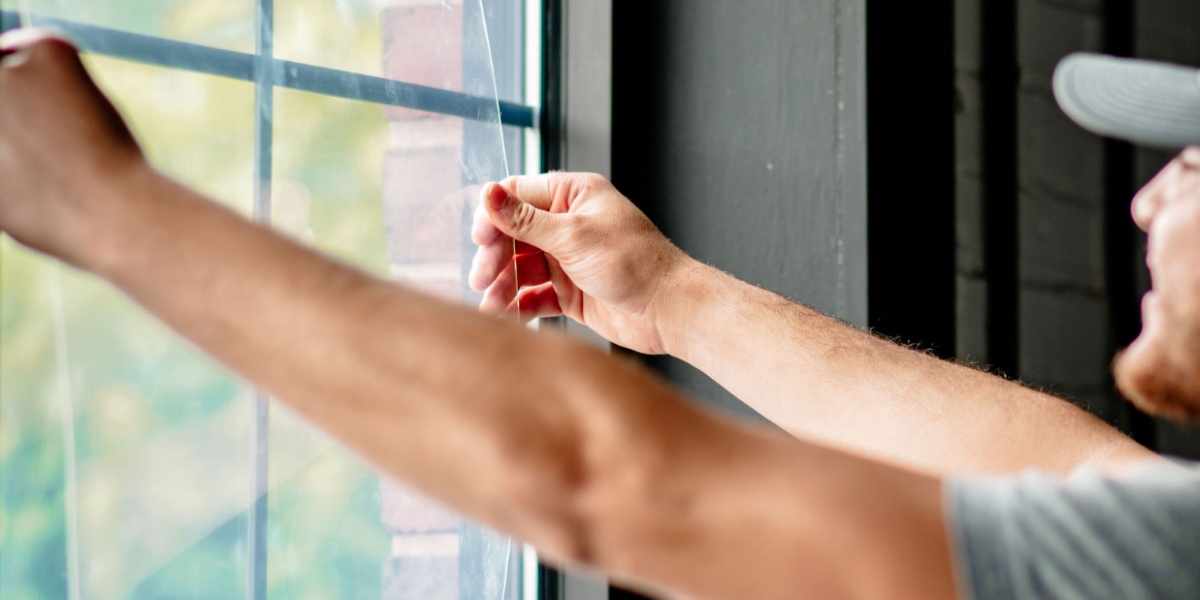
Even high-quality materials can fail if they aren’t installed correctly. Buyers should confirm that technicians follow strict protocols for bonding, curing time, and surface preparation. These details can significantly impact the overall strength and durability of a security film installation, especially in high-risk environments.
Sufficient anchoring is another critical factor in system performance. If the film or glass detaches due to inadequate anchoring or excessive pressure on the window frame, the entire setup can quickly fail. Proper anchoring makes sure the film and frame function as a unified system, delivering reliable protection during forced-entry attempts or other high-impact events.
Distinguish Between Time-Buying and Bulletproofing
Security film is not bulletproof or bullet resistant. Its function is to delay or deter, rather than stopping rounds from penetrating. The critical measure is time—how long the window resists entry after being struck.
Armoured One LLC makes this distinction between time-buying and bulletproofing clear in both its product development and public education efforts. Why? Because there are many competitors’ films out there that falsely claim to buy time with inaccurate simulation methods.
It’s critical to look at it this way: film acts like the fabric of a t-shirt. It is difficult to rip on its own, but once there is a little hole in it, you can rip it right apart. That is how film acts. It acts so differently against someone punching or hitting it with a bat when it’s shot, versus when it is not.
Armoured One’s philosophy emphasizes realistic protection: systems designed to slow down attackers long enough for first responders to intervene. By treating every product as a life-saving barrier rather than a visual deterrent, they raise the standard across the industry.
A Clearer View of Safety
Verifying the quality of security film and glass requires diligence and attention to detail. It means understanding what test methods apply for these applications. What’s at stake is not just property, but lives.
Armoured One believes in facing this reality directly, with products and practices that reflect the urgency of the threat. Their expertise and experience have shaped solutions that don’t trade truth for convenience, and they continue to advocate for buyers to demand the same.
Disclaimer: The content provided is for informational purposes only and is not intended as professional advice. All statements regarding product effectiveness or safety standards should be independently verified through appropriate third-party testing and consultation with experts. No guarantees are made regarding the results or performance of any security film or glass products mentioned in the article.