
By: Christian Cooper
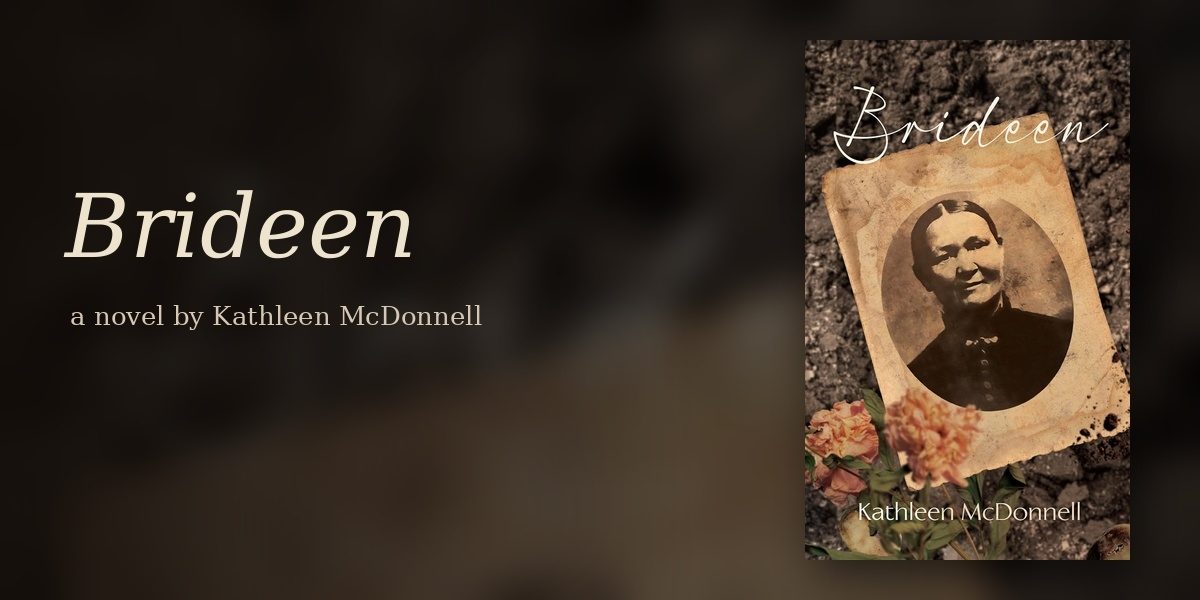
County Mayo, Ireland, 1847. The potato crop has failed for the second year in a row and the catastrophe that history will call the Great Hunger is at its most devastating height. Into that catastrophe Kathleen McDonnell places nine-year-old Bridget Sweeney, her own great-grandmother, and the novel that follows traces everything that happened to that child and the woman she became across the next six decades and three continents. Brideen is the book that rescues one of the millions of unremarkable lives that make up the worldwide Irish diaspora from the vast anonymity that has swallowed most of them, and it does so with the skill and the emotional intelligence of a writer who has spent a career learning exactly how to make history feel like the present.
The reading experience this book provides is one of immersive historical presence that the best literary fiction in this tradition always achieves at its most effective. McDonnell has done the research, drawing on fragmentary family records, newspaper archives, and the preserved lyrics of traditional Irish ballads that carried cultural memory in their verses when official documentation was scarce or nonexistent, and she has used that research not as a scaffold to display but as a foundation to build upon, filling the inevitable gaps in the historical record with the imaginative intelligence of a novelist and playwright who understands how people actually lived in the periods she is writing about.
What gives the novel its particular emotional power is the decision to follow Bridget Sweeney not just through the trauma of the Famine but through the full sixty-eight years of her life, across England’s industrial revolution, the American Civil War, and the settlement of the Midwest. That full-life scope transforms the book from a story of suffering, however important and however well rendered, into a story of survival and adaptation and the specific kind of resilience that is built not through single dramatic acts of courage but through the accumulated daily decisions of someone who keeps choosing to move forward when every reasonable calculation might suggest stopping. Bridget Sweeney was not just a victim of one of the great catastrophes of human history. She was a person who lived through it and kept living, and McDonnell’s insistence on honoring that full life rather than just the famous tragedy at its beginning is one of the book’s most significant and most humanizing choices.
The Irish language woven through the text, the cultural music and history that fuel Bridget’s fight for her family’s survival, the specific textures of the three very different societies she navigates across her lifetime, all of these give the novel a richness and a specificity that makes Bridget feel genuinely of her time and place rather than a modern sensibility dressed in period clothing. McDonnell is deeply immersed in Irish traditional music and that immersion shows in how the cultural life of the Irish diaspora is rendered, not as background color but as genuine sustenance for people who carried their culture with them because it was the most portable and the most durable thing they owned.
Brideen is a book for anyone who has ever wondered what the Great Famine actually meant for the specific people who lived through it, and a book for anyone who has ever looked at an old family photograph and wanted to know the full story of the face staring back at them. McDonnell has given us both, and the result is something genuinely worth celebrating.
If you want historical fiction that honors the full scope of a life rather than just the famous tragedy at its beginning, Brideen by Kathleen McDonnell is exactly the novel you have been looking for. Pick up your copy on Amazon and follow Bridget Sweeney from the devastated fields of County Mayo through industrial England, Civil War America, and the settling Midwest, a journey that is not just a story of what was lost but of everything that was built from the wreckage of it.