
By :Jay kt
There is a moment in Seventeen to a Man, Dr. William Rankin’s newly published memoir of the Vietnam War, that stops the reader cold. It is not a firefight, though the book has those. It is a scene set decades after the war, in a quiet martial arts studio, when the lights suddenly go out.
Rankin is teaching a knife-defense drill. His students wear black. In the darkness, for just a heartbeat, he is no longer in Texas. He is back in the jungle, back in a hostile hamlet, back with a blade in his hand and life in the balance. One student rushes him with a rubber knife, and Rankin’s body responds the only way it knows how: he drops the young man to the mat, violently, before being yanked back to reality by the shouts of everyone around him, “Wake up! It’s okay!”
That moment, recounted with brutal honesty, lies at the heart of Rankin’s story. It is the story of a man who survived war only to discover that war never really leaves. And it is the story of how he learned, over decades, to transform the very skills that saved him in combat into a mission to protect others, without losing himself in the process.
Seventeen to a Man reaches beyond a combat narrative. It is a meditation on what we ask of young people when we send them to war, and on the long, winding road they walk when they come home.
The Boy Who Became a Man in a Single Season
The book opens not in Vietnam, but in small-town Texas. Rankin, a self-described “klutzy kid” from a struggling family, grew up watching trains roll past his house and staging backyard battles with toy soldiers. At seventeen, following his family’s move to a violent New York City school, he made a decision that would change everything: he enlisted in the Army. His mother signed the papers, hoping he would join the band. Instead, the Army shaped him into a sharpshooter, a radioman, and ultimately, a soldier who would volunteer for Vietnam from a comfortable post in France.
When he arrived in the country, barely three months past his eighteenth birthday, he was assigned to the 1st Infantry Division’s signal corps, but he had no intention of staying behind a desk. He sought out Korean soldiers renowned for their hand-to-hand combat skills and trained with them unofficially, earning a reputation that brought him both admiration and trouble. The South Vietnamese special forces he later accompanied gave him a nickname: Denki Dow, “Crazy.” He wore it as a badge of honor.
But the war exacted its price. The book recounts the Tet Offensive of 1968 with the kind of sensory detail that only someone who was there could provide: the endless barrage, the gunships overhead, the order to go out and identify bodies. Rankin describes one corpse in particular, a man whose spine had been shattered by a bullet, projecting out of his back, whose face was simply gone. That image, he writes, has followed him for more than fifty years.
It is this tension, between the warrior’s pride and the lingering trauma, that gives Seventeen to a Man its emotional gravity. Rankin does not shy away from the violence he both witnessed and inflicted. One of the book’s most controversial passages describes an unauthorized mission he was ordered to carry out: to enter a Viet Cong–controlled hamlet and “relieve the mayor of his duties.” No written orders. No backup. If he did not return, no one would come looking.
He did return, but at a cost that he only began to understand years later.
The Invisible Wounds of a Warrior
For decades after Vietnam, Rankin carried his experiences in silence. He remarried, built a career, and immersed himself in martial arts, but the war remained inside him, waiting. His first wife, Delia, endured his long silences, never knowing why he needed to be alone so often. His second wife, Judy, recognized when he was “in another world right in front of her,” and she urged him into the forests to hike, gently teaching him that “the bad guy is not here.”
It was Judy who held him together during the years when the past could break through without warning. The flashback in the martial arts studio was one such moment. Another came during routine knife drills with rubber weapons; every time a red blade appeared, Rankin would lose himself in the memory of a kill he had made in that jungle hamlet. His students learned to recognize the signs.
The book does not sensationalize these episodes. Instead, it presents them matter-of-factly, as part of a life that required constant recalibration. Rankin’s coping mechanism, watching war movies, strikes some as unusual, but his counselor supported it. “It works,” Rankin writes, “but it is hardcore.”
From Combat to Compassion: The Martial Arts as a Bridge
What makes Rankin’s story more than a chronicle of suffering is what he built from the ashes of his experience. Today, Dr. William Rankin is a 10th-degree black belt and the founder of Uchuno Shorin-ryu Karate. With over 58 years of experience, he has trained federal law enforcement agencies, including the FBI, the CIA, the Secret Service, and police departments across Texas and beyond.
“I don’t teach fossilized training programs,” he says. “I teach what works.” The defensive tactics he developed in the 1990s for law enforcement grew directly from the skills he learned in the jungles of Vietnam, both from the Korean soldiers who taught him to fight with his hands and from his own desperate lessons in survival. The system he created is pragmatic, adaptive, and designed to be effective under the kind of stress that no training manual can fully replicate.
In this way, Rankin transformed the instrument of violence into an instrument of protection. The knife he once used in that hamlet, and which still haunts his dreams, became the metaphorical starting point for a career dedicated to keeping others safe. His students, whether they are federal agents or civilians seeking self-defense, learn not only techniques but also the ethical framework that distinguishes a warrior from a weapon.
A Testimony for a New Generation
Seventeen to a Man arrives at a moment when the nation is still wrestling with the legacy of Vietnam and the ongoing costs of war. Rankin’s voice is both timeless and urgently needed. He belongs to the generation of veterans who came home to silence and indifference, who carried their wounds without the language to describe them, and who are now, in their seventies and eighties, finally telling their stories.
What sets this memoir apart is its refusal to offer easy redemption. Rankin does not claim to have healed completely. He still struggles with trust, still prefers to keep people at arm’s length, and still disappears into his own home when the memories become too much. His current wife, Nancy, who encouraged him to write the book, knows these rhythms and accepts them. She is, as Rankin puts it, “not a warrior,” and he has come to understand that he needed someone who could ground him in a world without enemies.
The book’s title, Seventeen to a Man, captures this duality: the boy who went to war became a man in the span of a single tour, but that man has spent the rest of his life learning what to do with what he had become. Rankin’s story is not a neat arc from trauma to triumph; it is a steady, sometimes painful, sometimes inspiring journey of integration, of taking the shattered pieces of a young life and assembling them into something that can teach, protect, and even heal.
Why This Book Matters

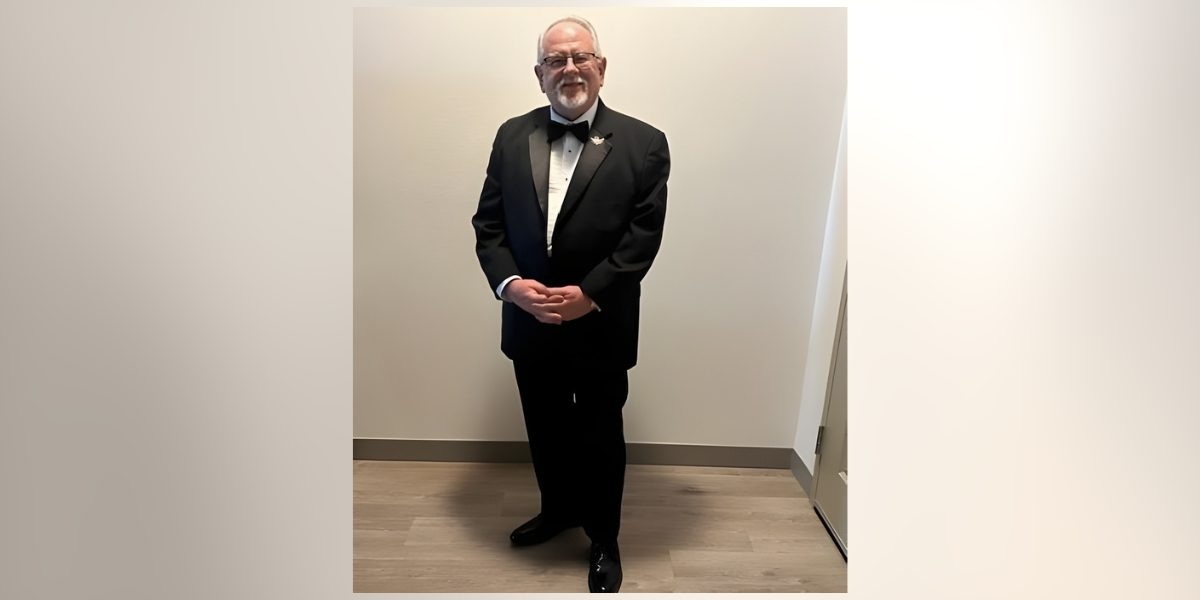
Photo Courtesy: Dr. William Rankin
As the ranks of Vietnam veterans thin, their stories become more precious. Rankin’s memoir preserves not just a personal history but a crucial piece of American memory, the story of an eighteen-year-old thrust into a war he never trained for, who survived by wit and will, and who refused to let that survival define him as only a survivor.
For readers who have never served, Seventeen to a Man offers a window into the soldier’s world: the boredom and terror, the camaraderie and isolation, the moral ambiguity that haunts every act of violence. For veterans, it offers the recognition of shared experience, the understanding that the weight of the knife is not carried alone.
Dr. Rankin continues to teach and speak across the country, sharing his story with new audiences. He does so not to relive the past, but to ensure that the lessons he learned, about courage, about resilience, about the long work of healing, are not lost.
In the end, the rubber knife in that darkened studio was a gift. It forced him to confront what he had buried. And out of that confrontation came a book that speaks to the enduring strength of the human spirit, and to the possibility that even the heaviest memories can be shaped into a legacy of purpose.
For more information about Dr. William Rankin, his martial arts organization, and speaking engagements, visit rankinmartialarts.net.