
Something is happening in the church that many people may not be talking about openly. Behind the scenes of vibrant ministries and growing congregations, a quiet crisis can unfold. Good leaders, faithful men and women who answered the call of God, sometimes walk away. They may not be walking away because they lost their faith. They may be walking away because the weight of leadership became too much to carry.
If you are a leader, you may know what this feels like. There may have been moments when you looked at the responsibility on your shoulders and thought, “I do not know if I can keep doing this.” That thought does not make you a failure. It can make you honest. And honesty can become the first step toward survival.
The modern church often celebrates the platform. It celebrates influence, authority, and the visible results of leadership. But what the church does not always address is the internal collapse that can happen when a leader carries too much for too long. The quiet moments of pressure, the sleepless nights, and the weight of decisions that affect real lives are often unseen. Because they are unseen, leaders can suffer in silence. They smile on Sunday and fall apart on Monday. This is the silent crisis, and for many leaders, it can feel real.
One damaging lie leaders may believe is that strong leaders do not struggle. This myth can harm ministries more than many external challenges. The truth is that many leaders in the Bible faced moments of deep struggle.
Consider Moses. God called him to lead an entire nation out of slavery. That sounds powerful, but what did it actually feel like for Moses? He faced constant pressure, endless complaints, and the burden of people who depended on him for everything. At one point, Moses cried out to God and said, “I cannot carry all these people by myself. The burden is too heavy for me.” That is a leader talking. That is real. Moses was not weak. He was honest. He admitted that the weight was too heavy for human shoulders.
Consider Elijah. After one of the major victories of his life, he collapsed. He ran into the wilderness, sat under a tree, and asked God to take his life. He was exhausted, discouraged, and empty. This was not simply a moment of spiritual weakness. It was also a moment of human exhaustion. God did not rebuke Elijah for his honesty. Instead, God let him sleep, gave him food, and restored his strength.
If the prophet Elijah could hit a breaking point, leaders today can as well. The idea that leaders must always be strong can be dangerous. It can keep leaders from seeking help, and it can keep them from finding rest.
One difficult part of leadership is loneliness. A leader can be surrounded by people and still feel alone. This is not just a feeling. It can be a reality of leadership.
Leaders often carry a vision that others do not fully understand. They make decisions when others do not see the full picture. They carry burdens that no one else can fully carry for them. Slowly, their circle can become smaller. They may stop sharing their struggles because they do not want to worry people. They may stop being honest because they feel they must appear strong.
This isolation can become dangerous. It may lead to emotional shutdown, spiritual dryness, and poor decisions. Leaders were not meant to lead alone.
The pain of betrayal adds another layer to the weight. There is a unique kind of hurt that can come when people a leader trusted turn against them. They invested in them. They prayed for them. They stood by them. And then, for reasons they may never fully understand, those people walk away or turn on them.
This is not just painful. It can be confusing. A leader may replay every conversation, searching for what went wrong. But sometimes, they did nothing wrong.
David experienced this. He wrote about the pain of a close friend betraying him. Jesus experienced this as well. Judas walked with Jesus, learned from Jesus, ate with Jesus, and still betrayed him. If it happened to Jesus, Christian leaders should not be surprised when betrayal becomes part of their own journey.
But betrayal does not have to harden the heart. Leaders may need to guard their hearts without closing them off completely. Forgiveness is not easy, but Brantley presents it as necessary. Without forgiveness, bitterness can grow, and leadership can suffer.
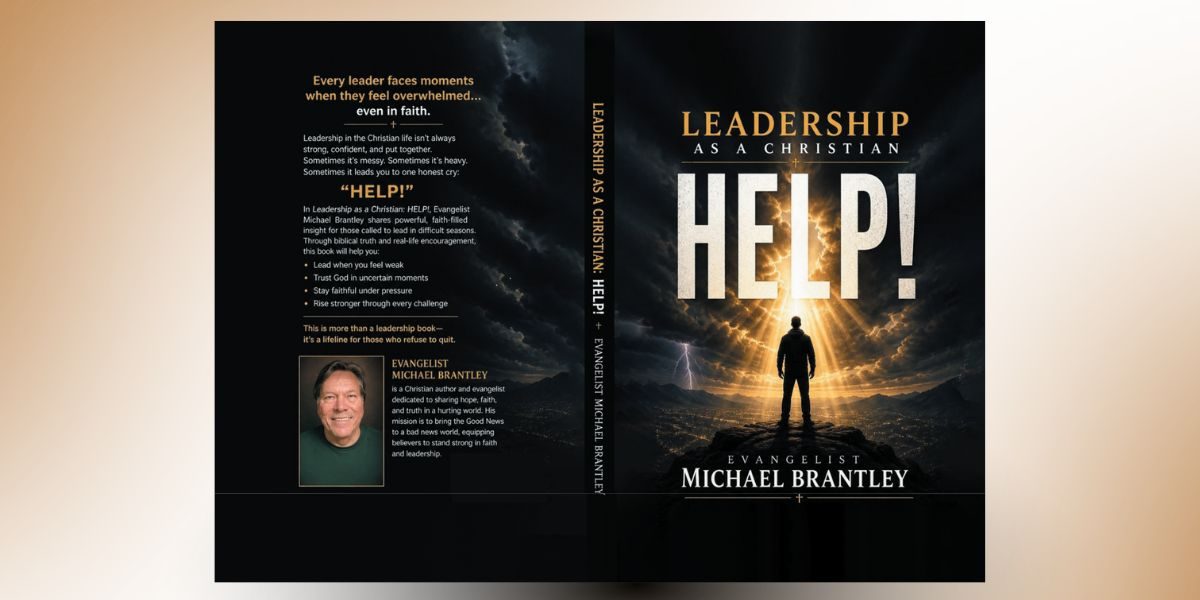
So where is the hope? Where is the solution to this silent crisis? Evangelist Michael Brantley’s book, Leadership as a Christian HELP!, points overwhelmed leaders back to dependence on God.
The book speaks directly to leaders who feel worn down by responsibility. It does not present quick fixes. It offers a faith-centered message. One of the freeing ideas in the book is that leaders are not supposed to be enough on their own. Brantley argues that God did not design leadership for people to have all the answers, handle everything perfectly, or carry everything alone. He designed it so that leaders would need Him.
The moment a leader says, “God, I cannot carry this without You,” can become the moment they begin leading differently.
Evangelist Michael Brantley understands this struggle because he has lived through parts of it. His writing is not only theory. It is shaped by ministry experience and the quiet battles many leaders do not see.
He writes with compassion and conviction, calling leaders to stop pretending and start depending. He reminds readers that strong leaders are not the ones who never struggle. They are the ones who depend on God.
The weight of leadership does not always disappear when a leader releases it to God. But, in Brantley’s message, it can be transformed. Instead of pressure alone, it can become purpose. Instead of stress alone, it can become a shared responsibility with the God who called them.
Many leaders live under the pressure to be perfect. They feel they cannot afford to make a mistake. They feel they must hold everything together. This pressure can be crushing. It can lead to burnout, fear, and loss of joy.
Brantley’s message is that God did not call leaders to perfection. He called them to faithfulness. Faithfulness means showing up, doing the work, and trusting God with the results. It means being honest when they fall short and allowing God’s grace to cover their weaknesses.
Perfectionism can damage a leader. Faithfulness can help sustain one.
The silent crisis in Christian leadership may be real, but it does not have to define every leader’s story. Leaders do not have to quit. They do not have to fade away. They can survive the call, but Brantley argues that they cannot do it while carrying the weight alone.
They need to stay connected to God. They need trusted people who can speak truth into their lives. They need rest when rest is needed. They need forgiveness when they have been hurt. And above all, they need to remember that their identity is not in their role. Their identity is in Christ.
Leadership is an assignment, but it is not the whole of who a person is.
Evangelist Michael Brantley writes in Leadership as a Christian HELP! that finishing well is not about how fast a person goes. It is about staying connected to the source. A leader can have a visible ministry and still lose themselves if they are not careful.
The road can be hard, but Brantley points readers back to the One who called them. In his view, God can carry leaders through each season when they allow Him to do so.
For leaders who feel tired, overwhelmed, or alone, Leadership as a Christian HELP! offers a faith-based reflection on the cost of ministry, the need for dependence on God, and the importance of continuing with humility, honesty, and faithfulness.