
By: Revamz LLC
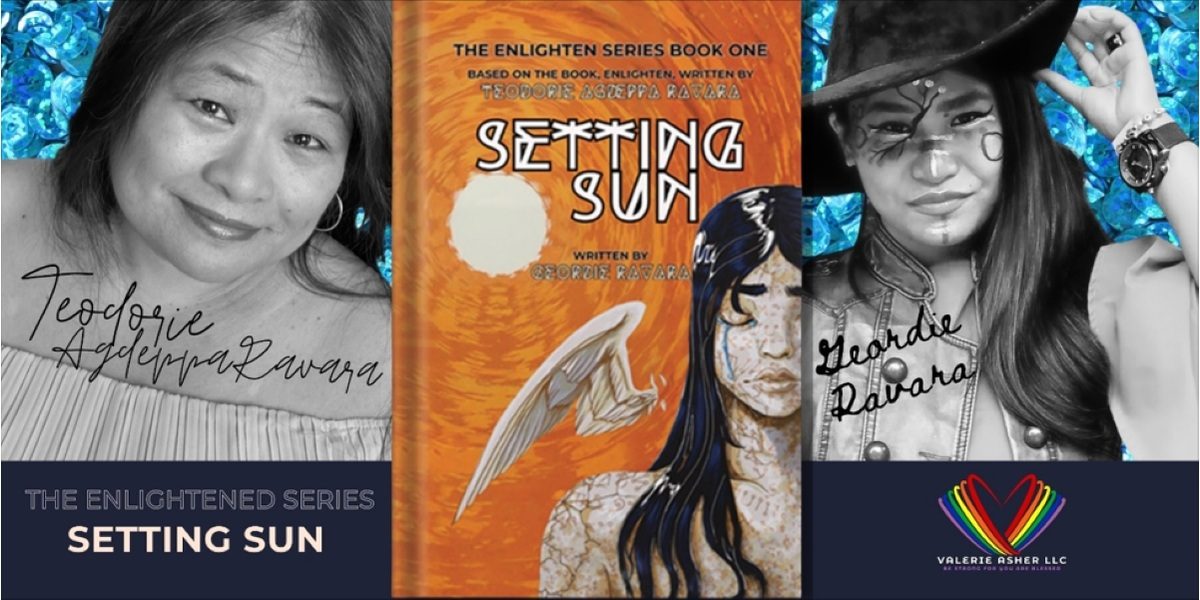
When a story is born from pain, it can carry the ability to support reflection, not just for its creators, but for readers who connect with it. The Enlightened Series: Setting Sun is that kind of story. It springs from the intertwined lives of a mother and child, Teodorie and Geordie Ravara, whose personal trials became the spark for a fictional world where loss, identity, and courage meet the will to move forward.
From the first page, the novel plunges readers into a nightmare that feels painfully real, a child reliving the crash that shattered her family. “Nightmares occur because your body is trying to tell you something is wrong,” it opens. That single line reflects what both authors said in their interview: pain, when understood, can become part of purpose.
Teodorie Ravara, “the first American born on both sides” of her Filipino family, grew up feeling like the “first” and the “only,” an outsider even among relatives. That tension between belonging and isolation echoes through the book’s central character, Rianne, a young girl caught between what once was and what must now be. Teodorie described herself as an “adventure seeker,” confident yet marked by teasing that she was “adopted.” That duality, courage mixed with hidden hurt, became an emotional cornerstone of Setting Sun. In Rianne’s world, survival means living with questions that have no answers. The crash that took her sisters’ lives leaves her wondering why she was spared. “I don’t feel blessed,” Rianne admits. “I feel… empty.”
While Teodorie’s storytelling is grounded in resilience and cultural identity, her co-author and child, Geordie Ravara, brings a younger lens filled with empathy and imagination. Growing up surrounded by creativity, from professional acting to devouring books by age four, Geordie developed an early love for stories. “I’ve always wanted to write a book,” they said, recalling journals begun at six. That dream became more than fiction. It became a bridge between generations. The blend of youthful wonder and a mother’s hard-won wisdom gives Setting Sun its emotional pulse.
Geordie recalled calling 911 at four years old to save their mother during an allergic reaction, a moment revealing an instinct for courage under pressure. That same bravery appears in Rianne’s determination to live after tragedy. For Teodorie, writing became a form of therapy. After suffering a stroke three years before the interview, she explained that while her speech sometimes faltered, her spirit did not. Each page reflects that truth. The book’s emotional realism, its slow, tender portrayal of healing, comes from a woman who rebuilt her strength word by word.
Their shared Filipino heritage also anchors the story’s emotional depth. Teodorie remembered being “the only American cousin among a hundred,” both celebrated and teased for it. That push and pull between inclusion and distance infuses the novel’s meditation on belonging. It is not only about grief. It is about identity, faith, and the way culture shapes how people survive. In one haunting line, Rianne reflects that her sisters were “meant to accept the body of Christ for the first time. Instead, they met Christ.” Faith, irony, and love coexist there, reflecting the Ravara family’s grace amid sorrow.
The strength of Setting Sun lies in how honestly it portrays grief through a young girl’s eyes. Rianne’s pain feels real because the authors do not look away from difficult emotions. When she clutches her sisters’ bracelets before walking out the door and whispers, “The pain in my chest doesn’t get any worse, so I nod and walk out,” it becomes a quiet act of courage, the kind that can define healing.
In the interview, Geordie described themself as “a very independent person” and “a listener before a talker.” That patience shows in the pacing of the story. Scenes linger, emotions breathe, and readers are invited to feel, not just observe. The collaboration between mother and child is closely connected, their writing flowing like two hearts beating together, each understanding what the other cannot say aloud.
The series title itself, The Enlightened Series, reveals something deeper. For both authors, enlightenment is not sudden revelation but slow rediscovery. “The ache in my chest has not changed since I woke up in that hospital bed,” Rianne says. “They told me it’s all in my head. How could it be?” Her disbelief mirrors the numb shock of anyone who has lost deeply. Through her, Teodorie and Geordie offer a message: the human heart can be fragile yet enduring. Even in darkness, there can be glimmers of light, a child’s laughter, a parent’s promise, the rising sun after the longest night.
The book’s structure mirrors that journey, from the nightmare of “Full Moon” to the rebirth in “Morning Prayers.” Each chapter becomes a step toward acceptance. The dedication captures their purpose: “To all the young humans who were pushed to do something before they were ready. Don’t let anyone change who you are, even if those people are ones you love.” It is a call to self-trust and quiet defiance.
By the end, one theme becomes clear: Setting Sun is not only about death. It is about life after it. It is about the bond between mother and child, faith and reason, the person we were and the one we must become. Through honesty and vulnerability, Teodorie and Geordie Ravara have turned pain into art that may stay with readers.
When asked what keeps them moving forward, Teodorie smiled through her pauses. She did not need to finish the sentence. The answer was already there. The act of creating The Enlightened Series was both prayer and promise. It suggests that even when the sun sets, it can rise again.