
By: Sebastian Mercado
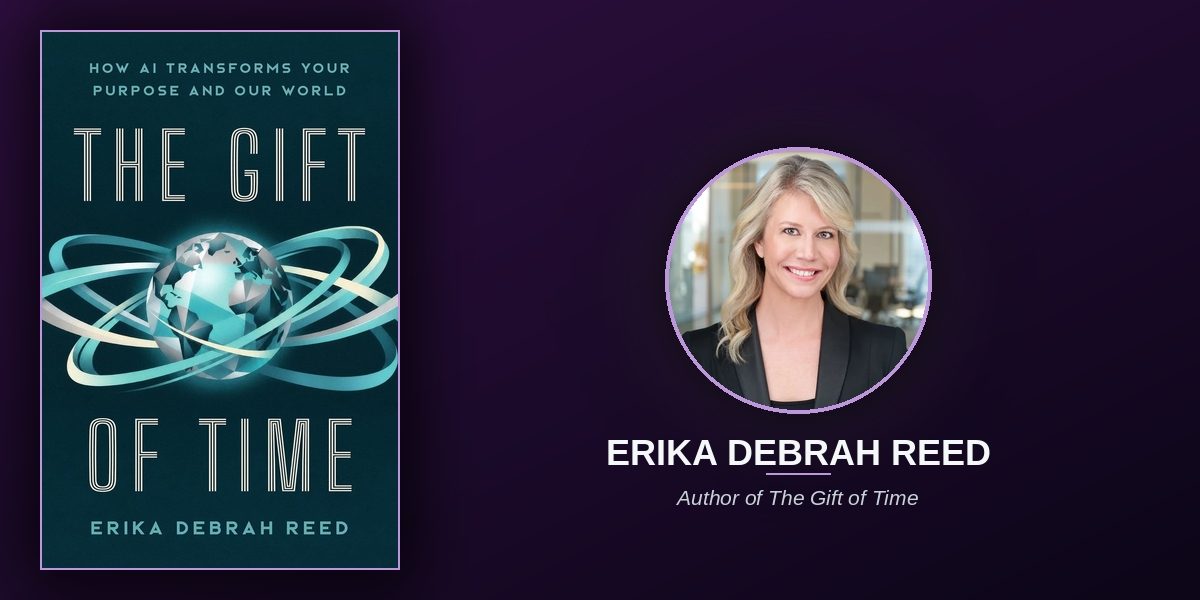
There is a specific and somewhat unusual quality that The Gift of Time produces in its reader, one that is worth naming before anything else. It makes you want to put the book down. Not because it is unengaging but because it is designed, deliberately and with considerable skill, to send you into your own life with questions you had not been asking. The five-minute reflection prompts woven through every chapter of Erika Debrah Reed’s book are among the most practically valuable features in any nonfiction book published in recent memory, and that is before you have absorbed the rigorous philosophical and empirical content they are there to help you integrate.
The first reflection asks you to think about what windows of time opened and closed throughout your day yesterday. What tasks occupied your time? Where did you feel the pressure of time, and where did it feel most free? If you had found an additional hour, how would you have spent it? That question sounds simple until you try to answer it honestly, and Reed has built the entire book around the discomfort of discovering that you might not have a very good answer.
She traces the philosophy of time from ancient sundials through Aristotle and Augustine and Kant and Einstein to the contemporary reality of a world in which the average American spends 157 hours a year behind the wheel in traffic in Los Angeles alone. She explores the psychology of automation trust through the history of the elevator operator strike and the specific campaign of psychological reassurance that made driverless elevators ordinary. She examines the economics of autonomous vehicles and the specific transformation of commuting from suspended life into inhabitable time. She traces the history of robotics from Karel Čapek’s terrifying automata through Isaac Asimov’s ethical robots through George Devol’s Unimate through Honda’s ASIMO through Boston Dynamics’ Atlas to the Tesla Optimus serving popcorn at a diner in 2025. She documents the shortened work week movement and the autonomous divide that threatens to leave the most vulnerable workers further behind and the education renaissance that AI is both disrupting and enabling.
All of it returns, chapter by chapter and reflection by reflection, to the question Tolkien’s Gandalf posed in the depths of Middle-earth and that Reed has made the animating purpose of this book: what will you do with the time that is given you? Not as a rhetorical flourish but as a genuinely practical and genuinely urgent question for the specific human being holding this specific book at this specific moment in civilizational history.
Reed writes with the particular intelligence of someone who has spent her career making consequential predictions about the future of commerce and transportation and who understands, from direct professional experience, that the most important variable in any technological transition is not the technology but the human being on the receiving end of it. That understanding is what makes The Gift of Time essential rather than merely interesting.
If you want a book that does not just inform you about the AI era but genuinely prepares you to live within it with intention and with purpose, The Gift of Time by Erika Debrah Reed is the most practically valuable and most humanistically rich guide currently available. Grab your copy on Amazon today and start with the first five-minute reflection. Everything else will follow.