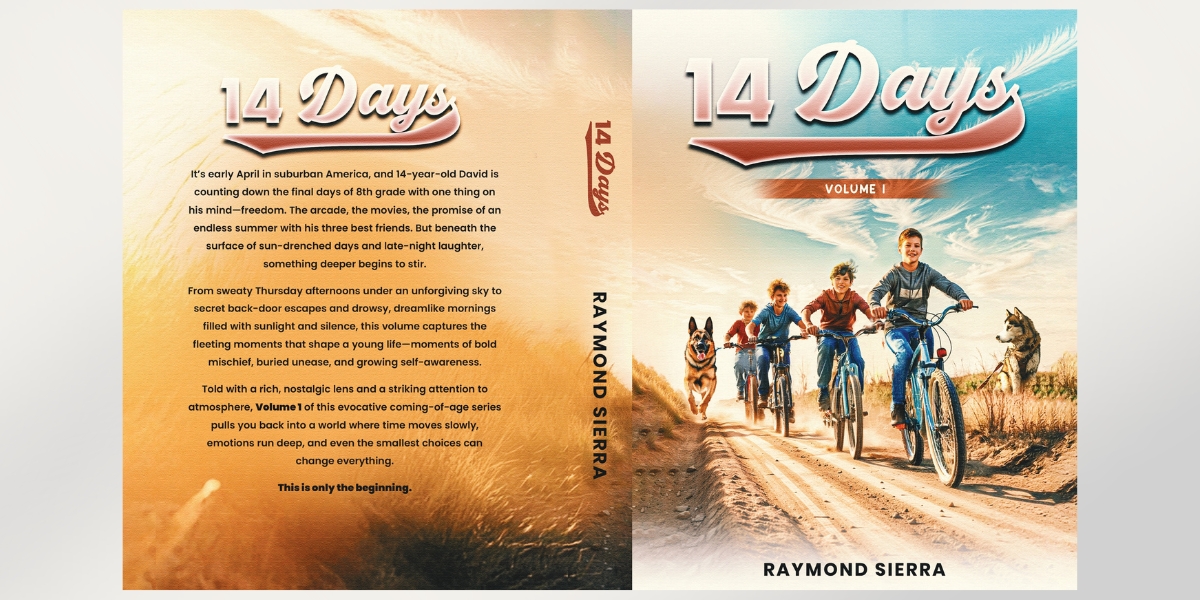


Middle school can feel like a battlefield. Lockers slamming and corridors full of whispers set a tense scene for anyone who dares to stand out. In Raymond Sierra’s novel Fourteen Days, David faces that tension when Jason, a bully in his grade, singles him out. Sierra captures the fear that builds in your chest when harsh words or a shove come from someone meant to be your peer.
David first meets Jason on a brisk afternoon in the school yard. Jason squares up to David and demands that he hand over the lunch money or face the consequences. David’s heart races as students scatter. Sierra describes every moment with a teenager’s raw honesty, so we feel David’s fear as if it were our own. In that scene, the harsh voice and jeering laughter become tangible threats.
Before David can reply, Nick steps between them. Nick speaks quietly but firmly, telling Jason to back off. In Fourteen Days, Sierra uses Nick’s calm intervention to reveal the power of friendship. This moment shows that bravery does not always roar. Sometimes it whispers. Nick stands his ground, deflects Jason’s anger, and gives David space to breathe.
David learns that courage comes in many forms. After this first confrontation, he sees Nick as a model of quiet strength. Sierra gives readers a close look at how one friend’s act of kindness can shift the balance of power. David begins to believe that he does not have to face his fears alone. He feels the warmth of support and remembers it in every tense encounter.
When Jason returns to pick on David again, David finds inner resolve. He recalls Nick’s stand and finds the words to say, “Stop.” Sierra shows that repetition of small acts builds confidence. David’s voice may tremble, but he holds his ground. When Jason walks away in frustration, David feels a rush of relief. That small victory proves to David that even a whisper can carry weight.
Fear still lingers, but Sierra reminds us that bravery need not be perfect. David stumbles during a second showdown. He forgets his own plan and stammers. Yet Jason pauses, surprised by David’s partial stand. That pause becomes enough. Sierra uses that moment to demonstrate that any act of resistance chips away at the bully’s power.
David shares these moments with Jessie and Evan. Jessie listens quietly and offers encouragement, and Evan cracks a joke to lift David’s mood. Sierra weaves these friendship threads into the narrative, showing that bravery often grows in a circle of people who believe in us. David finds strength in knowing his friends stand beside him, ready to back him up.
Back at home, David replayed these schoolyard fights in his mind, comparing himself to his older brother Johnnie. He sees how Johnnie tackles challenges in his daily life. Sierra uses this family contrast to show that bravery extends beyond one scene. David internalizes the lessons from Jason, Nick, and Johnnie and builds a broader sense of self.
By the end of Fourteen Days by Raymond Sierra, David faces the bully not because he has no fear but because he no longer feels alone. He learns that courage can be quiet, that a friend’s word can ring louder than a bully’s scream, and that each small decision to stand up matters. Sierra’s novel speaks to every young reader who wonders how to find strength in the face of intimidation.
If you want a clear look at how small acts of courage shape a young life, pick up Fourteen Days by Raymond Sierra. This novel delivers honest emotion and true friendship in each page, showing how bravery grows one step at a time.