

By: Judith S. Davis
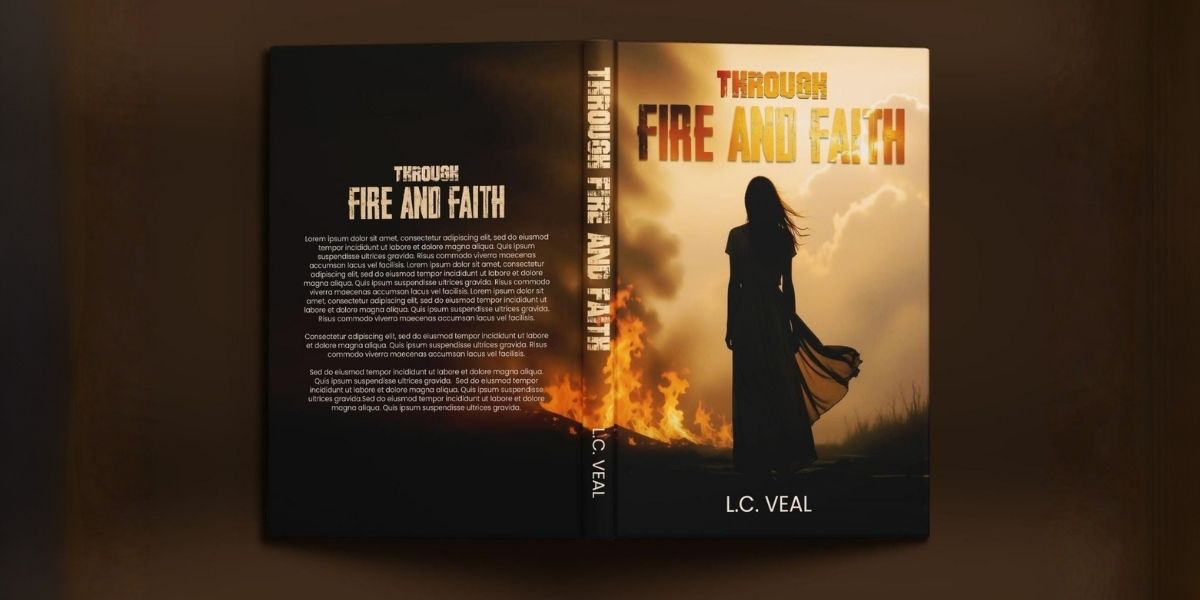
The first impression is clarity. Not the cold clarity of a manual, but the warm exactness of someone who has chosen every word because it matters. In Through Fire and Faith, Laura Veal practices a kind of dexterity that you can feel as you read. Paragraphs end one breath early. Verbs carry weight. The pages move with quiet confidence, inviting you to lean in. Nothing is showy. Everything is deliberate.
The promise of this exactness is more than style. It is an ethic. Veal writes as if language can be a form of care. Precision in her book is not a parlor trick. It is a way to keep the reader safe from confusion while still letting the truth do its intricate work. In a literary climate that sometimes mistakes volume for importance, she argues for the opposite. Careful frames. Honest stakes. The courage to leave a sentence when it has done its job.
At the craft level, Through Fire and Faith offers a small master class. Veal trims modifiers until the line rings true. She prefers the proper noun to a paragraph of explanation. Dialogue advances thought rather than winning points. Silences are marked and respected. Even the white space works for the story. You begin to read not for a twist, but for a turn of understanding. The book feels trustworthy because it never demands more attention than it earns.
Structure supports the sentence work. Chapters read like well-lit rooms with a single purpose. Each scene has a focal point and a boundary that the narration will not cross. This restraint does not flatten emotion. It intensifies it. By limiting what we see, Veal increases what we feel. A hand that does not move can say more than five pages of speech. A policy repeated by heart can tell its own story about pressure and fear. The book asks you to notice, and then rewards the attention you give.
Veal’s exactness is also moral. She refuses caricature. Systems behave like systems, with all their blind corners and incentives. People act like people, with mixed motives that shift under stress. Harm is acknowledged without turning anyone into a prop. In this way, the novel protects both truth and dignity. It teaches, by example, that fairness is not softness. It is rigorously tested in ordinary rooms.
Readers who meet this kind of discipline often report the same thing. They finish with better questions than they started with. They find themselves speaking more carefully at home and at work. They listen longer. The book does not preach. It equips. This is one mark of a novel’s high usefulness. You do not need to agree with every choice on the page to leave better prepared for your own cdecisionsin life.
There is a tradition in American letters that prizes clean lines and moral attention. Call it plain style with a whole heart. Veal is working there, though she is no revivalist. The exactness she practices belongs to the present. It understands how emails, memos, and meetings carry pressure. It hears what a pause can protect and what it can hide. It knows how group loyalty can push a person to edit themselves, even when no rule demands it. The book notices these forces without scolding, and that is why its guidance lands.
Of course, restraint can go wrong. It can drift toward evasion or numbness. Veal sidesteps this risk by keeping the stakes human and visible. Responsibility sits at the center of the story. Choices are weighed not only by personal cost but also by who else might be affected. That steady accounting produces suspense that feels grown-up. What happens matters, but what it means matters more. Exactness here is not about tidy outcomes. It is about honest accounting.
What, finally, makes this a new exactness rather than a simple return to old virtues? It is the way Veal integrates craft with social intelligence. The result is a novel that clears the air. You read, and then you breathe a little easier.
Through Fire and Faith is exact because life deserves that care. It is accurate because readers do. It is precise because moral questions deserve a language that can carry them without dropping their weight. In this, Laura Veal has given American fiction a gift that feels both timely and durable. The book does not shout its importance. It shows it, one true sentence at a time.