


By: Elena Mart
In the realm of literary exploration, few authors are as bold and unflinching as Lawrence D. Taplah. Born in Liberia and steeped in the complexities of its dual histories, Taplah’s body of work delves into the intersections of identity, labor, and societal divisions. Through his three thought-provoking books, Liberia, a Bulwark of Rage: My First Home, We Are Hourly Labors. Not Paupers., and Liberians Not Americans, Taplah offers readers a lens into the enduring struggles of a nation and its diaspora while reflecting on the dignity of work and the search for unity in a fractured world.
A Voice Rooted in Dual Histories
Taplah’s journey began in the vibrant yet troubled land of Liberia. Born on March 18, 1955, he grew up witnessing the societal schisms that have long shaped his homeland. Educated both in Liberia and the United States, his life straddles two worlds, giving him a unique vantage point to critique the lingering divisions between the descendants of freed African-American slaves and native Liberians.
As an educator, administrator, and eventually an hourly laborer in the United States, Taplah’s life experiences are a mosaic of perseverance, cultural tension, and intellectual growth. These experiences profoundly inform his writing, transforming personal struggles into narratives that resonate with broader societal challenges.
Exploring Identity and Division in Liberians Not Americans
In Liberians Not Americans, Taplah grapples with the existential duality of Liberian identity. The book explores the deep-rooted tension between those seen as “despisers” and “erudite learners,” categories that reveal the stratified social dynamics in Liberia. Taplah’s thesis revolves around the cultural and historical dualism that pits descendants of freed African-American slaves against indigenous Liberians.
“Liberians have failed to reconcile their complex identity,” Taplah writes, challenging readers to examine how discrimination has become an ingrained mechanism in maintaining societal divides. With an analytical lens, he examines the culpable negligence of both groups, questioning whether unity is possible in a nation fractured by historical grievances.
While the narrative is steeped in Liberia’s history, its themes of discrimination and dual identity resonate universally. The book is not just an exploration of Liberia’s past but a call to its citizens to embrace their shared humanity.
Rage and Reflection in Liberia, a Bulwark of Rage
Taplah’s first book, Liberia, a Bulwark of Rage: My First Home, is an emotionally charged exploration of racial profiling and historical tension. Here, Taplah revisits Liberia’s early days, tracing how the American Colonization Society’s settlement project created an enduring hierarchy.

Photo Courtesy: Lawrence D. Taplah
The book examines the legacy of 1821, when freed African-American slaves settled in Liberia, inadvertently sowing the seeds of division. Taplah interrogates the accusations and counter-accusations that have fueled hostility between these groups for centuries.
By framing Liberia’s story within the broader context of racial and cultural conflict, Taplah provides readers with a nuanced understanding of the socio-political dynamics that continue to impact the nation. His hope is clear: to spark meaningful conversations about reconciliation and identity.
Championing the Hourly Worker in We Are Hourly Labors. Not Paupers.
Taplah’s second book, We Are Hourly Labors. Not Paupers., takes a detour from the Liberian narrative to focus on the struggles of hourly laborers in America. Drawing on his 18 years at Lincoln Industries Inc., Taplah sheds light on the oft-overlooked dignity of hourly work.
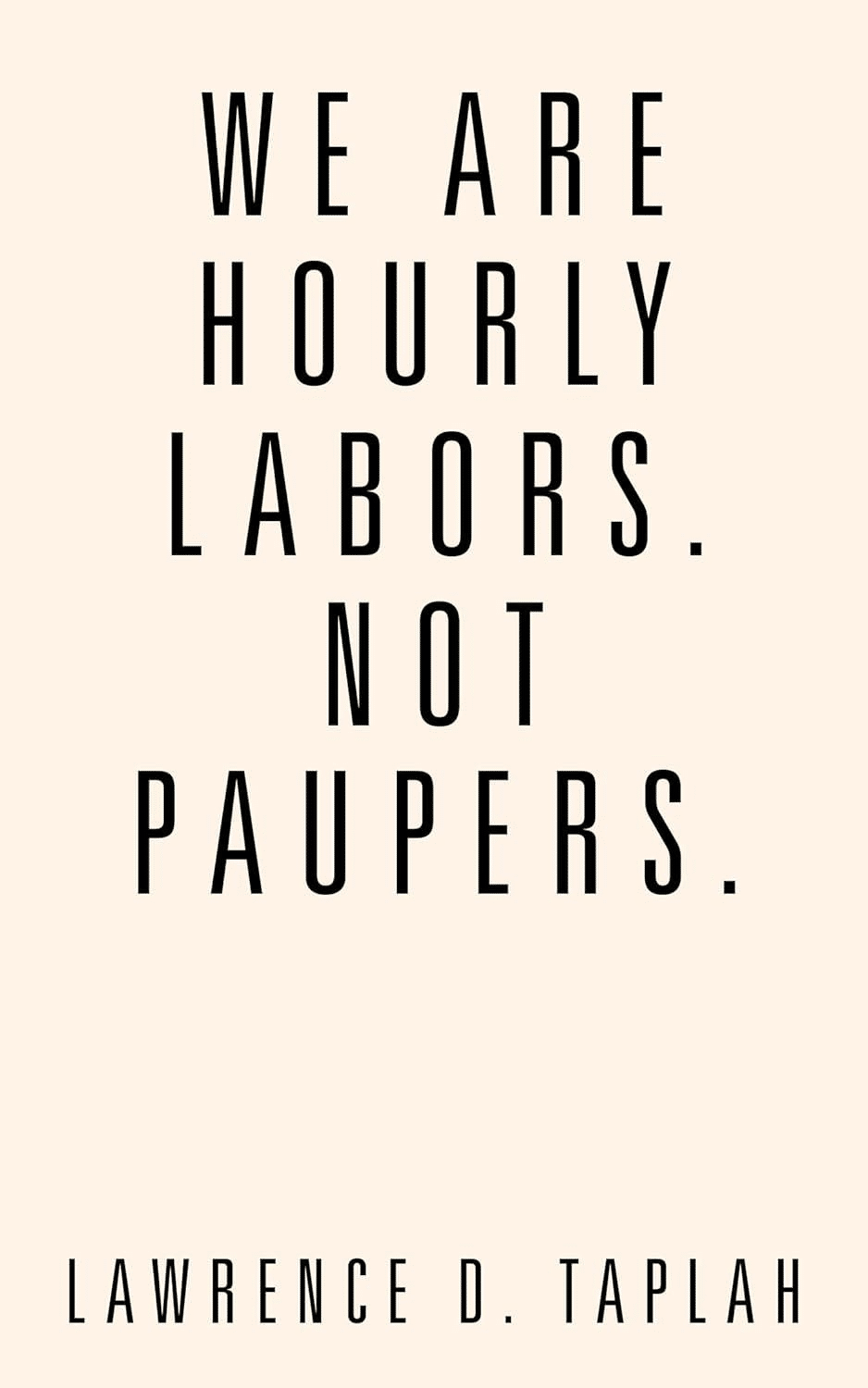
Photo Courtesy: Lawrence D. Taplah
“Hourly labor is not a sentence to poverty,” he asserts, challenging the stereotypes surrounding non-salaried workers. Taplah’s insights offer a powerful counter-narrative to the American Dream, focusing instead on the commitment and resilience of workers who drive industries.
Through vivid anecdotes and reflections, Taplah examines the power dynamics in the workplace and how immigrant labor contributes to the economy. His message is both inspiring and sobering: respect and recognition must be mutual in any workplace.
The Journey of an Author
Taplah’s literary journey has been marked by challenges and triumphs. With no formal training as a writer, he turned to books and self-reflection to hone his craft. The rejection he faced from publishers did not deter him; instead, it fueled his determination to tell stories that matter.
Despite the controversies and criticisms his books have sparked, Taplah remains steadfast in his mission. Feedback from Liberian readers has often been polarizing, with some accusing him of airing the nation’s dirty laundry. Yet, Taplah views these reactions as proof of the urgency of his work.
Writing after long hours of physical labor, Taplah epitomizes perseverance. His stories are a testament to the transformative power of words, serving as a bridge between disparate worlds and experiences.
A Legacy in the Making
Taplah’s books are not merely narratives; they are tools for introspection and dialogue. Whether dissecting Liberia’s historical divisions or advocating for labor rights, his work challenges readers to confront uncomfortable truths.
As he continues to write, Taplah remains committed to fostering understanding and reconciliation. His upcoming book, Liberians Failed Themselves in Liberia on the West Coast of Africa, promises to be another incisive examination of Liberian society, shedding light on the failures and potential paths forward.

Photo Courtesy: Lawrence D. Taplah
Conclusion
Lawrence D. Taplah’s journey as an author is as compelling as the stories he tells. From the historical streets of Liberia to the industrial floors of America, his experiences imbue his writing with authenticity and urgency. Through Liberia, a Bulwark of Rage: My First Home, We Are Hourly Labors. Not Paupers., and Liberians Not Americans, Taplah has created a body of work that transcends borders, resonating with anyone grappling with issues of identity, labor, and social justice.
In Taplah’s words, “The awakening of consciousness begins with dialogue.” His books are an invitation to engage in that dialogue, offering readers a chance to reflect on their own lives and the societies they inhabit. With each page, Taplah carves out a space for understanding, empathy, and, ultimately, change.
Explore Lawrence D. Taplah’s Work:
Visit Amazon to purchase Liberia, a Bulwark of Rage: My First Home, We Are Hourly Labors. Not Paupers., and Liberians Not Americans.
Published by Zane L.