Rob Bowen’s Insights on Creativity and Building a Brand

By: Joshua Finley

What does it take to craft award-winning interiors year after year? Interior designer Rob Bowen has spent over 20 years cultivating his creative vision and building an international brand. With a passion for travel and collaboration, he fuses global inspiration into bespoke living spaces. As Rob reflects, “Design runs in my blood.”

Recently, Rob Bowen shared his valuable insights on how one can be creative and build a brand from ground up:

Laying the Groundwork

Rob knew from an early age he felt called to create. However, he bided his time and first earned business and communications degrees. “I always figured if I was smart enough in business, I could always do design later,” Rob explains.

His initial foray into real estate development allowed him to dip a toe into shaping spaces. A chance feature of his modern home in a local paper quickly transitioned him into full-time design work. “That day, I got a call from someone saying, ‘Hey, we’ve been looking for someone like you. We want you to do our house,’” he recalls.

When asked what sparked his talents, Rob acknowledges his inherent “raw creativity.” However, he’s quick to note the decades of work honing his skills. “Design is in my blood,” he states, while emphasizing “I’ve spent 20 years cultivating my creative vision.”

Fostering Team Creativity

At his firm, Rob Bowen Design, he fosters a collaborative, energetic team. “I want to capture designers before they’ve been taught what’s wrong with design. I want to see that raw energy, that raw creativeness,” Rob shares. He encourages respectful debate and outside-the-box thinking.

To keep his team inspired, Rob allows flexible “creative time” for employees. He states, “If it involves walking across the street and walking the park, if you want to get your hair done, if you want to go to Zumba class – whatever makes you creative.” Rob knows one-size motivation doesn’t fit all, but personalized flexibility unlocks each employee’s potential.

Client-Centered Design

While his team adds invaluable insights, Rob stresses design centers on clients. “Design is not about me. It’s about the client. This is not my house, it’s your house,” he notes. He spends extensive time learning each client’s lifestyle and preferences for a custom result.

Rob states his favorite projects are when clients say, “I never envisioned myself living in something like this. You have taken what I wanted and elevated it.” This praise motivates him to keep enhancing his creative process.

Pushing Creative Boundaries

To avoid repetitive work across projects, Rob constantly tweaks designs. “We never really try to repeat any single piece whatsoever,” he explains. He tailors lighting, textiles, furnishings, and art so each client has “a one of a kind piece.”

In addition to aesthetic details, he explores sensory experiences. Rob shares, “It’s a full departure from reality when they get home. It’s fun.” He indulges in signature scents, soundscapes, and tactile choices for a multi-layered environment.

Expanding His Brand

While residential projects remain Rob’s bread and butter, he increasingly moves into product design. He envisions launching lighting, rug, and furniture collections to bring his vision to wider audiences.

Rob also stretches his talents to hospitality spaces like his popular St. Petersburg restaurant, Social Roost Kitchen & Bar. He reflects, “We created this globally inspired scratch kitchen and brought it to downtown St. Pete.”

Though his brand flourishes, Rob keeps his firm small and nimble. He states, “Keeping our staff extremely small, paying them and empowering them to just be super badass is probably one of my secrets to success.” A tight-knit team delivers his trademark attention to each project.

For those hoping to craft equally creative careers, Rob advises taking risks. He encourages, “Don’t be so stubborn not to try again and again.” He also stresses the value of mentors. “Hire very smart people to help run your business,” Rob urges.

By fusing global influences, local contexts, and client-centered design, Rob continues growing his brand. To learn more about him, visit his website.


Published by: Khy Talara

Advisor Associate Redefines Financial Advisory with its Cutting-Edge Technology and Comprehensive Support

By: Maria Williams

Today, when transparency and efficiency in financial services are of utmost importance, Advisor Associate aims to be at the forefront as it unveils its groundbreaking platform designed to empower financial representatives or advisors and revolutionize client management. With over two decades of industry expertise, the company addresses the complexities faced by financial professionals with a comprehensive suite of tools and services. 

“We, at Advisor Associate, are redefining the landscape by integrating advanced technology with unparalleled client-centric solutions,” Ryan says. Central to their approach is a customizable proprietary data integrating platform that optimizes client data management, offering seamless integration across multi-custodial platforms. This capability allows advisors to access client information from major financial solutions entities through Advisor Associate’s platform with the assurance of data security compliant with SOC II and regulatory standards. 

“With our data integration platform, we aim to enable advisors to focus on client needs while we handle the backend operations,” Ryan explains. From automated data feeds that eliminate manual entry to a robust compliance framework embedded within the platform, Advisor Associate streamlines everything from rebalancing, transitions books of business, operations and billing, to asset management and holistic asset aggregation. 

One of the platform’s standout features is its automated calendar for client meetings, coupled with a secure client portal that facilitates easy access and engagement across diverse client portfolios such as trusts, estates, and transgenerational asset protection planning. 

Looking beyond the domestic borders, this company provides advisors to scale operations seamlessly across multiple countries and states in real time. “Whether you’re managing clients across different time zones or navigating regulatory landscapes. Our platform offers a unified solution,” Ryan emphasizes. 

Advisor Associate even offers a low-cost global network infrastructure that is designed to integrate seamlessly with pre-existing systems. This allows advisors to incorporate a network of offices into one cohesive global entity, covering everything from communication to compliance to backend operations with minimal capital costs. 

This approach further minimizes the need for multiple consultants and excessive human resources, providing a streamlined and efficient solution for expanding the practice. Advisors can run this system in parallel with their current infrastructure, ensuring a smooth transition with minimal disruption. This ease of integration not only simplifies the implementation process but also supports scalability across multiple RIA’s, aligning for economies of scale. With a focus on cost-effective technology, Advisor Associate bridges the gap, enabling advisors to implement a global infrastructure without the typical high costs and dependencies associated with tech integration.

This technology financial services company also excels in succession planning, offering a transparent and easy transition for advisors looking to retire. Ryan states, “Our model supports over 20 successful transitions, where we have executed and implemented buyouts with capital ready to purchase without the need for financing. This provides retiring advisors the peace of mind to monitor their assets through our compliant and administrative oversight, ensuring their clients’ continuity and care.” The company model’s ability to maintain and manage the business into the advisor’s retirement, while allowing them to observe everything without being involved, is a testament to its commitment to uninterrupted succession planning.

The company eliminates the traditional barriers associated with transitioning from major wirehouses to independent models. “For these financial representatives, our platform offers a turnkey solution and zero-touch data integration within 24 hours, advisors can seamlessly migrate their practices with minimal disruption,” Ryan adds. By simplifying the transition process and offering real time visibility into account migrations, Advisor Associate mitigates the challenges typically associated with such moves. “We provide the infrastructure through our platform, allowing advisors to maintain operational continuity while gaining autonomy,” Ryan highlights.

Moreover, Advisor Associate stands out by sourcing products from a wide array of sources, ensuring advisors have access to the best-in-class solutions tailored to client needs. This approach contrasts sharply with traditional models that promote proprietary products, reinforcing Advisor Associate’s commitment to transparency and client-centricity.

“In an industry where transparency and compliance are the focal point, along with speed and accuracy, we deliver data retention and document storage solutions that provide an ease of functionality across the entire corporate structure,” Ryan notes. By transitioning from cumbersome legacy systems to streamlined, compliant workflows, Advisor Associate empowers advisors to enhance client service and operational efficiency.

With a clear focus on scalability, compliance, and client satisfaction, Advisor Associate sets a new standard for the modern financial platform.

Registered Representatives offering securities through Independent Financial Group, LLC (IFG), Member FINRA/SIPC. Investment Advisor Representatives offering advisory services through Independent Financial Group, LLC (IFG), a Registered Investment Adviser. Additional advisory services offered through X Advisors, LLC, and Pash & Benson International, Ltd., both Registered Investment Advisors. Advisor Associates, Cherry Creek Capital, Paxton Consulting Group, Crosby Investment Group, Pash & Benson International and IFG are unaffiliated entities.


Disclaimer: This content is for informational purposes only and is not intended as financial advice, nor does it replace professional financial advice, investment advice, or any other type of advice. You should seek the advice of a qualified financial advisor or other professional before making any financial decisions.

Published by: Martin De Juan

Eastern Shoshone Tribe Member Damon Grant On His Mission To Evolve Democracy

By: Maria Williams

Experts suggest that the Eastern Shoshone Tribe has existed for over 12,000 years. In the early 1800s, these indigenous people were key to America’s development. Sacajawea, a young Shoshone girl guiding Lewis and Clark on their expedition of the western area of the Louisiana Purchase, was a pivotal figure in the nation’s history. Today, Shoshone individuals live across Utah, Idaho, Montana, and Wyoming. The Wind River Reservation is where the majority of the Eastern Shoshone Tribe resides. Their community is a little more than 4,000 people and is well-known for the Plains horse culture.

Damon Grant, an Eastern Shoshone Tribe member who has lived on the reservation for his whole life, is very familiar with this unique practice. However, he recognizes some limitations and hopes to address them through advocacy and the development of technology. 

While direct democracy has a relatively positive history, it has limitations when used for larger communities. It can be difficult for every person to share their opinion when government meetings have time limits. In some cases, direct democracy systems can also become vulnerable to corruption. Damon has witnessed these issues in his own community. This was partially why he was so motivated to bring awareness to the benefits of direct democracy and highlight society’s need to evolve, too. 

“Direct democracy can help communities address pressing issues faster and more in line with what the people are most concerned about,” says Damon. “However, people must be educated about problems and be able to share their thoughts in an effective way. If not, it can be easy for direct democracy outcomes to serve the interests of an individual rather than a group.”

Damon is at the forefront of designing a groundbreaking platform aimed at enhancing direct democracy voting and boosting community education. Recognizing the longstanding challenges in these areas, such as misinformation and the digital divide, Damon understands that creating a robust solution will require time, collaboration, and thorough research.

To tackle these issues, Damon is engaging with a network of technology experts, seeking insights that span various specialties within the tech field. He is committed to understanding the underlying issues deeply and exploring every potential avenue for innovation. His research is focused on developing methods to combat misinformation effectively and finding ways to foster stronger connections within communities through digital means.

Damon’s vision for the platform is multifaceted. He aims to create a tool that not only facilitates more informed and accessible voting processes but also serves as a central hub for educational resources tailored to community-specific needs and interests. By integrating real-time data analytics, the platform will be able to capture and analyze key concerns and interests within different communities. This feature is intended to provide a clear picture of priority issues, helping communities to focus their discussions and resources more effectively.

Furthermore, Damon envisions this platform as a dynamic space where community members can propose and vote on solutions directly. This participatory approach hopes to empower individuals by giving them a direct role in shaping their environment, thereby enhancing civic engagement and community cohesion.

In addition to its primary functions, the platform will include features designed to ensure ease of use and accessibility, such as multilingual support and mobile compatibility, ensuring that all community members have the opportunity to participate, regardless of language proficiency or access to traditional computing devices.

As Damon continues to refine the concept and develop the technology, he remains open to feedback and is prepared to iterate on the design to  meet the needs of diverse communities. His ultimate goal is not just to create a functional tool but to foster a more informed, engaged, and connected society.

Damon hopes to see more changes in the Eastern Shoshone Tribe and American communities overall. “Current systems of democracy in tribal communities and the United States in general are not serving the needs of the people,” he says. “Innovation is necessary for democracy to evolve with modern issues that desperately need solutions. I hope to be part of this shift to a more effective democracy, whatever it may look like.”

Published by: Nelly Chavez

The Sports Portal Ecosystem Offers Athletes, Sports Organizations, Parents, Coaches, and Brands Unparalleled Value

By: Maria Williams

While there is a lot of sports content on mainstream social media, most of it is drowned out by so much noise. While the jokes and memes can be entertaining, it can be very hard for users, especially athletes and their parents, to find serious sports content and information, such as sports clubs to join or coaches to train under. Because of how social media algorithms are structured, athletes may have to go through multiple platforms that have nothing to do with their sport before finding what they need, which feels like having to find a needle in a haystack.

The Sports Portal, a sports-centric social media platform, seeks to solve this issue by connecting athletes, youth sports players, parents, coaches, and other sports enthusiasts. Users can create profiles that showcase their involvement in the sport. For example, athletes’ profiles can include their physical stats, sports achievements, teams they’ve played for, increasing visibility for potential AAU teams and high school/college scouts. Coaches can highlight their coaching style, achievements, and reviews from former players or players’ parents. Both athletes and coaches can also post videos featuring their workouts and training sessions, giving other users a glimpse into their capabilities.

The Sports Portal Ecosystem Offers Athletes, Sports Organizations, Parents, Coaches, and Brands Unparalleled Value (2)

Photo Courtesy: The Sports Portal, Logo

Open to all sports, The Sports Portal has been experiencing growth of its user base, particularly in basketball, owing to the sport’s well-developed statkeeping and the outsized impact an individual’s performance has on the game. According to The Sports Portal Founder Maurice Barnett, the company is taking a grassroots approach, helping create excellent organizational profiles and working with parents to help them understand exactly the value it brings to their athletes’ development. Barnett, who is constantly gathering feedback from various sectors, shares that one program director told him that their program no longer needs to invest in a standalone website because their profile on The Sports Portal can perform all its functions. 

Barnett says that The Sports Portal has received positive feedback from players, which includes  his son, friends and basketball team. They say that the ability to give reviews for coaches, provides insight into how other players were impacted by particular coaches or organizations. This allowed them to make better informed decisions on their next opportunity. An upcoming feature will allow players to organize pickup games, a feature known as Who’s got next?, allows players and teams to issue friendly challenges. 

As for families, they tell Barnett that they appreciate being able to track their athletes progress using The Sports Portal as well as the coach reviews, increasing their chances for better player development. Meanwhile, coaches say that having a The Sports Portal profile helps them put forward their coaching profile, while highlighting what level of players they are looking for. The coach’s profile allows coaches to find more players to develop and work with, opening up potential revenue streams.

“From a user standpoint, The Sports Portal’s value lies in highlighting your achievements and your focus,” Barnett says. “It allows you to showcase your sports skills, interests, progress, and ensure that you’re standing out relative to where you are in your journey.”

Aside from athletes, parents, coaches, and sports clubs, The Sports Portal also benefits brands, especially those related to sports, including apparel, equipment, and nutrition. These brands can advertise directly to a demographic that is more likely to be relevant and interested in their business. By being on The Sports Portal’s platform, the brand’s presence is much more natural, and it allows them to build and establish organic relationships. 

“The Sports Portal is revolutionizing the way athletes, youth sports players, parents, coaches, and sports enthusiasts connect and engage.” Barnett says. “As the first sports-only social software platform, we provide a unique insight into local sports teams and organizations. We are transforming the sports experience for athletes, youth players, parents, coaches, and sports enthusiasts. We seek to go beyond being a social media platform, rather aiming to build a community where athletes shine and communities thrive. Join us today and become part of a dynamic sports community that celebrates your passion for the game.”

Published by: Holy Minoza

The Art of Giving Back: Michael Ciullo Improves Communities Through the Ciullo Foundation

By: Maria Williams

At first sight, entrepreneurship, and success reward business owners only with monetary gains, respect, renown, and boundless work opportunities. After experiencing and indulging in the surface-level advantages of wealth, Michael Ciullo, passionate and driven founder of Nsight Health, co-host of the Finding Faith podcast, and a leader of many other business ventures, embarked on a journey of giving back, sharing blessings, and improving local communities through the Ciullo Foundation. 

Michael, after turning his life around, generating millions of dollars in revenue, and founding multiple successful establishments, quickly realized the stress and anxiety that comes with successful entrepreneurship. “I felt like I was on a train going down at a hundred miles an hour, and half a mile up the road, I was laying down more rails so the train doesn’t derail,” says Michael. With the adrenaline of working over 100 hours a week pumping in his veins, Michael lost himself along the way, returning to old unethical behaviors. 

“It got to a point where I gave up and couldn’t control it anymore,” adds Michael. Overwhelmed, stressed, and with a weakened marriage on his shoulders, Michael, for the first time in years, went to church, seeking any form of solace amidst the chaos. What was supposed to be an escape from everyday struggles for Michael and Angelika, his wife, became the center of their lives. “From only attending church every Sunday, we started listening to worship music and reading Scripture every morning. Suddenly, we felt different and lighter, and our hearts have changed completely,” Michael shares.

The immense transformation that affected Michael’s work life, marriage, and every other aspect of his life inspired him to spread the kindness he’d received at the church. With a desire to contribute, he and Angelika began donating 10% of their income to a local church, volunteering, serving meals to the homeless, and working toward a more generous, amicable future. 

Recently, Michael’s business plans have expanded, and the entrepreneur is expecting many more successes to come his way. The optimistic news ignited a fierce desire to help more people and led to the creation of the Ciullo Foundation. Named after the young entrepreneur, the organization will be receiving 10% of Michael’s income, and all profits will be dedicated toward improving the surrounding communities. Whether through supporting churches, missionary trips, building homes, or assisting animal shelters, the Ciullo Foundation is bound to leave a lasting mark on the world. Currently, Michael is in the process of completing the 501(c)(3) tax exemption status, after which the foundation will be able to accept donations and external grants. Michael is expecting the official status change will happen in the next few months. 

Now, the Ciullo Foundation is self-funded and created purely out of Michael’s and Angelika’s sacred and unsated urge to give back. In the future, the altruistic pair hopes to attract more entrepreneurs and successful individuals to give back to their communities, either through the Ciullo Foundation or another organization. While both partners are involved in the creation, execution, and mission of the nonprofit, Angelika will be handling day-to-day tasks and ensuring the money received will be allocated to the most appropriate projects.

For Michael, entrepreneurship and success come with tremendous responsibilities. Fulfilling these responsibilities, either through donating, helping at local homeless centers, or simply spreading kindness, adds immense value to the multiple advantages, pleasures, and benefits of financial success. 

“If you’ve been blessed, you have a responsibility to be a blessing. I believe the quickest way for one’s soul to die is to accumulate enormous amounts of money, get greedy, and never share it,” shares Michael. “I’ve lived that life, too, and I would never go back. How much money you make will never resolve the troubles you feel from within, and if you spiral and become too materialistic, you will never feel real happiness. For me, the only solution that soothed my soul was the powerful combination of God, purposeful faith, and generosity.”

Michael Ciullo, a forward-thinking entrepreneur, driven business owner, devoted husband, believer of God, and compassionate community member, took an inspiring step toward fostering a more friendly and generous future. After witnessing the power 10% of his profits gave to a local church, he’s committed to spreading kindness further through the Ciullo Foundation and using his blessings to bless others.

Published by: Holy Minoza

Skills You’ll Develop With an Interior Design Course

The interior design industry is a popular industry for a career in helping to design beautiful and safe environments. Interior design courses can help teach you everything you need to get a job as a designer and work independently or as a group. This article lets you understand the essential skills you’ll learn and develop when you undertake an interior design course. 

Space Planning and Layout Design

An essential skill you’ll learn is the ability to create a functional space that can maximize efficiency while also being beautifully designed. Space planning and layout design involves learning how to properly arrange appliances, furnishings and other elements to suit a room’s overall purpose. Some things you’ll learn with an interior design course include:

  • Understanding spatial dimensions, circulation, and how people move through a room. By understanding how the space will be used can help determine where you can and can’t place items. 
  • Arranging furniture to maximize comfort and functionality at the same time. 
  • Creating zones within spaces (for example, living, dining, or work areas) while maintaining a cohesive look and feel.

Undertaking interior design courses, such as the American International University courses in Kuwait or other locations, can give you the skills you need to land that job you’re looking for in the interior design industry. 

Color Theory and Application

Colors have a significant impact on the way people feel when they walk into a room. When learning interior design, you’ll also learn about color theory and trends and how to apply color correctly within a space to achieve the feel and atmosphere you want from a room. An interior design course will: 

  • Help you understand the psychology behind colors and how they can affect mood, emotions and behaviors.
  • Help you master the different color combinations and allow you to experiment with other color schemes like monochromatic, analogous, and complementary. 
  • Help you create color balance for harmony within a room. 


Color theory will help you determine which colors work well in a room with a designated purpose. 

Materials and Finishes

An interior design course also teaches you the difference between the materials and their finishes when you’re looking to become an interior designer. This allows you to better understand the applications, characteristics, and environmental impacts they have on a space. Some things you may learn include: 

  • You may use different types of materials throughout your career, including metal, glass, wood, stone, textiles and synthetic materials. 
  • Choosing the suitable types of finishes for the project based on their durability and maintenance level.  
  • How to choose materials that are eco-friendly and which minimize the overall impact on the environment without sacrificing any quality in the design.


The materials and finishes you choose will determine whether the outcome looks as good as you want it to, so it’s important to learn how to use them wisely. 

Project Management

If you choose a more advanced Interior design degree, you’ll learn how to manage projects that may involve a team. This requires organizational skills, communication skills, and time management skills. Some areas you may learn include:

  • Managing budgets and working within client budgets to deliver designs that meet their needs without overspending.
  • Organizing and working with contractors, suppliers, and craftsmen to bring your design vision to life.
  • Developing realistic project schedules to ensure timely delivery of your designs.


Project management is essential if you want to run an interior design business in the long term. 

How Lighting Affects a Room 

Understanding how lighting works within a space is crucial. Whether artificial light or natural sunlight coming through a window, it’s critical to know how to balance the light in the most effective ways to enhance a room’s overall function, aesthetics and mood. You may learn:

  • The different types of lighting may include accent, ambient, or decorative lighting. 
  • How to layer lighting so it creates a balanced effect. 
  • How to incorporate the most energy-saving options while maintaining quality.

Endnote

An interior design course offers a comprehensive range of skills. These skills are essential for creating aesthetically pleasing environments and ensuring the safety, functionality, and sustainability of the spaces you design. Whether you’re pursuing a career in residential, commercial, or hospitality design, an interior design course is the starting point for success in this exciting industry.

Published by: Martin De Juan

Map-Collective Revolutionizes Environmental Sustainability Through AI-Driven Traceability and Transparency

With people becoming progressively conscious of environmental impacts, the need for robust tools to monitor and manage sustainability metrics is more urgent than ever. Enter Map-Collective, a company at the forefront of AI-driven automation for supply chain traceability, tracking greenhouse gas (GHG) emissions, and biodiversity transitions. Founded by Tara Gupta, Map-Collective stands on the dual pillars of traceability and sustainable supply chain transition, this approach could significantly influence how businesses and governments manage sourcing.

Tara Gupta’s journey to founding Map-Collective is as diverse as it is inspiring. With a background in filmmaking at Rhode Island School of Design (RISD), her interest in storytelling merged with a study of urban planning and systems design. This interdisciplinary approach led her to view the planet’s environmental crises as an opportunity to create a sandbox game view for Earth in digital space. This vision extended from the macroplanetary limits of Earth down to the organismal level. The idea crystallized into Map-Collective, officially launched on January 8, 2020. 

“The initial years of Map-Collective were dedicated to rigorous research and development, culminating in significant funding from the National Science Foundation,” shares Tara. This support helped the company develop innovative technologies, such as a comprehensive GHG emissions calculator that incorporates planetary boundaries’ tipping points.

Map-Collective’s approach to supply chain management emerged from its early work on carbon tracking. In 2021, the company delved into the carbon emissions landscape, working with various clients. These projects revealed the inadequacies and often speculative nature of existing supply chain emissions data. This realization propelled Map-Collective to enhance its methodology, leading to a more accurate and reliable system of supply chain emissions tracking by adding an AI-powered method for supply chain traceability. 

Map-Collective Revolutionizes Environmental Sustainability Through AI-Driven Traceability and Transparency

Photo Courtesy: Tara Gupta, Map-Collective

Map-Collective’s key differentiator lies in automating the tracking of Scope 3 category one flows and emissions, which are purchased goods and emissions, as defined by the GHG protocol. By leveraging an advanced AI model that taps into comprehensive data sources, including bill of lading data and satellite information, Map-Collective provides a detailed, verifiable picture of supply chain emissions, helping organizations meet stringent reporting requirements and achieve true sustainability. This AI model advances the state of current supply chain traceability by identifying and filling in major data gaps, as the bill of lading only covers about 40% of global supply chain data. Map-Collective’s intelligent model builds off of these connections to bridge the remaining 60% gap. 

Map-Collective is distinct in its use of the IOTA protocol, a distributed ledger designed for the Internet of Things (IoT). The IOTA protocol offers traceability without compromising the confidentiality of sensitive supply chain data. This approach ensures that while transparency is maintained, proprietary information remains secure, an essential feature for industries like defense contracting. 

Beyond carbon, Map-Collective integrates the planetary boundaries framework developed by the Potsdam Institute for Climate Impact Research. This holistic approach considers various environmental limits, such as freshwater use and land system change, ensuring that sustainability efforts are aligned with the planet’s ecological thresholds.

At the heart of Map-Collective’s success is a culture of continuous innovation. The team’s commitment to research and development ensures that they remain at the cutting edge of environmental systems design and data analytics. Tara envisions Map-Collective as a transformative tool for both businesses and governments, fostering a new era of resource stewardship in the Anthropocene.

Map-Collective’s mission extends beyond mere compliance; it aims to redefine how we interact with and manage the Earth’s resources. By providing unparalleled traceability and actionable insights, Map-Collective empowers organizations to make informed decisions that support sustainability and resilience. In doing so, it contributes to global efforts in combating climate change and promoting sustainable practices, setting a new standard for environmental accountability.

Published by: Martin De Juan

Shadow Six Racing Founder Sheds Light on How Typhoon and Its Unique Features are Truly Versatile

It’s time for a new class of aquatic vehicle. Versatile, easy to operate, and incredibly capable. This is the take of Ryan Goldberg, founder of Shadow Six Racing.

Traditional watercraft are not equipped to meet modern military and civilian needs, as they lack the versatility and performance required for tasks like troop deployment, reconnaissance, and coastal patrols. Jet skis, designed for recreational use, lack the ability to navigate extremely shallow waters or operate in rough surf conditions. As military strategies adapt to changing threats, and the world of watersports becomes ever more extreme, the demand for alternative watercraft continues to grow. 

There exists a pressing need for alternative watercraft that can address the evolving demands of extreme sports and rescue missions. In the world of extreme sports, athletes are constantly pushing the boundaries of what is physically possible, challenging themselves to conquer huge waves, faster speeds, and more treacherous conditions. However, watercraft like wave runners and jet skis often fall short of providing the stability, speed, and maneuverability required for these adrenaline-fueled pursuits. 

Similarly, in rescue operations, where every second counts and lives hang in the balance, the limitations of conventional watercraft can mean the difference between success and tragedy. 

Jet skis, long hailed for their maneuverability and speed, are inadequate for modern military needs. In scenarios like troop deployment, where precision and speed are crucial, conventional jet skis fall short. The need for alternatives that can handle rough surf conditions, shallow waters, and high-speed maneuvers has never been more apparent. This is where the Typhoon steps in, offering a solution that combines power, agility, and usability.

At the heart of this Aquatic Utility Vehicle’s (AUV) appeal is its usability. Unlike traditional watercraft that require extensive training to master, the Typhoon boasts intuitive controls and exceptional stability. With just a few minutes of instruction, even novice users can harness its full potential, reaching speeds of up to 90 miles per hour with ease. The vehicle’s innovative design ensures smooth handling and precise maneuverability, even in the challenging conditions.

Moreover, the AUV’s unmatched stability sets it apart from its counterparts. While wave runners and jet skis often struggle in rough waters, the Typhoon glides effortlessly, absorbing impacts and maintaining control with minimal effort. Its unique suspension design provides unparalleled stability, allowing users to navigate with confidence and without fear of capsizing or losing control. This level of stability not only enhances safety but also opens up new possibilities for extreme sports and rescue missions in treacherous conditions.

In the realm of extreme sports, the Typhoon aims to revolutionize the way we approach water-based activities. From surfing competitions to high-speed racing, its unmatched performance capabilities offer athletes unprecedented opportunities to push the boundaries of their sport. The Typhoon can get into extremely rough surf situations, allowing rescue teams to recover surfers and tow them to safety quickly, even in extreme conditions. Many surf teams have been interested in this solution, as they face similar scenarios when surfing on 100-foot waves. With its ability to navigate rough surf conditions and execute precise maneuvers at breakneck speeds, the Typhoon opens up new frontiers for thrill-seekers.

Furthermore, the Typhoon’s potential extends beyond the realm of recreation, offering a lifeline in critical rescue missions. The vehicle also has 360-degree cameras to monitor everything happening around the vehicle, making it easier to rescue individuals. Also, its ability to traverse shallow waters, navigate rocky shorelines, and operate in extreme conditions makes it an invaluable asset for coastguards and rescue teams worldwide. Whether rescuing surfers caught in massive waves or intercepting vessels in peril, the Typhoon’s versatility and power ensure swift and effective responses in any scenario.

“I’m not saying there are no risks, of course, there are risks,” says Ryan Goldberg. “But if people, like surfers, are going to chase adrenaline around the world, and service men and women are going to risk their lives out on the water, I believe they should have a vehicle that can handle the environment with ease. It also helps that the thing is incredibly fun to drive.”


Published By: Aize Perez

BasedLabs: Way to Use Flux 1

In the swiftly evolving global of gadget mastering and artificial intelligence, the want for present day tools to streamline model creation and fine-tuning has turned out to be more vital than ever. BasedLabs is rising as one of the green structures for operating with AI fashions, in particular when using Flux 1 Prompts. If you are searching for a powerful way to Train Flux LoRa, BasedLabs offers a solution.

What are Flux 1 Prompts?

Before diving into the blessings of BasedLabs, it’s vital to recognize the energy of Flux 1 Prompts. Flux 1 is an advanced framework for growing gadgets and getting to know fashions. One of its key features is the “Prompt” approach, in which the framework makes use of prompts to manual AI fashions to generate correct outputs. Flux 1 Prompts are especially beneficial for language generation tasks, along with text crowning glory, query answering, and summarization.

Flux 1’s Prompt generation lets developers create AI solutions which can interpret nuanced instructions and adapt to numerous consumer requirements. This makes it an ideal fit for everybody seeking to push the boundaries of AI-pushed responsibilities.

Why BasedLabs is a Good Platform for Flux 1 Prompts

BasedLabs: Way to Use Flux 1

Photo Courtesy: www.basedlabs.ai

BasedLabs takes the talents of Flux 1 Prompts to the next degree, offering an intuitive and powerful platform for users to work with. Here’s why BasedLabs stands out:

1. User-Friendly Interface

BasedLabs gives a smooth and clean-to-navigate interface that simplifies the process of working with Flux 1. Whether you are a seasoned developer or an amateur, BasedLabs reduces the studying curve, making it sincere to input activities, experiment with numerous configurations, and generate effects in a short timeframe.

2. Enhanced Prompt Optimization

Using Flux 1 Prompts correctly requires high-quality-tuning and customization to acquire the favored output. BasedLabs presents tools that enable customers to modify and refine prompts without difficulty, making sure that fashions generate accurate and relevant responses.

3. Scalability

One of the important features of BasedLabs is its ability to scale in keeping with the complexity of the venture. When working with Flux 1 Prompts, you could want to check more than one configuration or teach great fashions. BasedLabs lets in for scalable deployments, making it appropriate for initiatives of any size.

4. Integrated Support for Training

When it involves training AI fashions, BasedLabs helps the Train Flux LoRa procedure efficiently. LoRa (Low-Rank Adaptation) is a technique used to first-rate-music pre-trained fashions with minimal useful resource consumption. BasedLabs makes it easy to put in force LoRa, substantially lowering the computational overhead and making the education of models quicker and extra value-powerful.

How to Train Flux LoRa on BasedLabs

Training with Flux 1 Prompts on BasedLabs turns into seamless with the incorporated LoRa help. Here’s how BasedLabs complements the Train Flux LoRa technique:

1. Pre-Trained Model Integration

BasedLabs allows customers to start with pre-educated fashions, saving both time and computational resources. These pre-trained fashions can then be fine-tuned in the usage of LoRa, enabling customers to construct on the model’s existing understanding base without having to teach from scratch.

2. Customizable Training Parameters

BasedLabs gives quite a number of customization options in the course of the schooling procedure. You can modify parameters like studying rate, batch length, and optimization strategies to nice-tune the Train Flux LoRa procedure on your precise needs.

3. Resource-Efficient Training

One of the main benefits of the use of BasedLabs is its consciousness on aid performance. Training AI fashions may be resource-in-depth, but with LoRa and BasedLabs, the computational call for is substantially decreased. This allows customers to educate fashions faster and with decreased charges whilst maintaining high overall performance.

Conclusion: BasedLabs Unlocks the Potential of Flux 1 Prompt

BasedLabs is an vital device for anyone seeking to use the capacity of Flux 1 Prompt and efficiently Train Flux LoRa fashions. Its person-friendly interface, scalability, set off optimization equipment, and efficient LoRa training integration make it the satisfactory platform for working with Flux 1. By choosing BasedLabs, builders and statistics scientists can beautify their workflows, reduce expenses, and obtain better results with their AI tasks.

For the ones with severe AI development, BasedLabs is a way to leverage the strength of Flux 1 and take your projects to new heights.


Published By: Aize Perez

The Link Between Sleep and Mental Health: How to Combat Anxiety

Ever felt like your mind is racing even when your head hits the pillow? In our hectic lives, it’s easy to overlook how vital quality sleep is for our mental well-being. Yet, the link between sleep and anxiety is more significant than many realize. 

This blog will take you into how sleeplessness can profoundly impact your mental health and offer practical strategies to help you find peace and balance.

How Poor Sleep Disrupts Mental Health

Poor sleep disrupts the delicacy of our brain. It alters the level of neurotransmitters, particularly serotonin and dopamine, which play a significant role in maintaining mood. Studies show that sleep deficiency is linked to increased levels of cortisol, a major stress hormone, which triggers a great stress response.

This biological disruption significantly impacts key brain regions:

  • Amygdala: Becomes hyperactive, intensifying emotional responses
  • Prefrontal Cortex: Functions less effectively, impairing our ability to regulate emotions

These changes create a perfect storm for anxiety to thrive. For those struggling with severe anxiety or related issues, drug rehab services can be an essential resource for finding effective treatment. Particularly united healthcare drug rehab services provide valuable information and support for accessing comprehensive mental health care and tailored treatment options.

Psychological Consequences

The psychological consequences of disturbed sleep are just as astonishing. Research has shown that individuals with insomnia develop an anxiety disorder by a factor of 10 or more. This clearly demonstrates a strong correlation between sleep disturbances and higher anxiety.

Moreover, insufficient sleep can worsen pre-existing mental health conditions and become a self-reinforcing negative spiral. 

  • Poor sleep is associated with more anxiety.
  • Anxiety increases, and sleep is even more difficult.
  • A vicious circle like that only promotes deterioration in both sleep quality and symptoms of anxiety.

The Role of Sleep Quality in Anxiety Management

Quality sleep is a complex process that involves multiple cycles, each with its distinct role in maintaining our mental well-being. Understanding these cycles helps us appreciate how they contribute to our overall health.

Non-REM Sleep:

NREM encompasses three stages of sleep, which, though important in their ways, rejuvenate the body and mind. Deep stages in NREM are considered very vital in bodily repair and growth, hence helping in muscle, tissue, and immune system repairs and growth. 

This stage further strengthens non-emotional memories, which are important in learning and cognitive functioning.

REM Sleep:

REM sleep, on the other hand, has a great function in emotional processing and memory consolidation. During REM sleep, the brain is actively involved in daily emotion and experiences processing and incorporation. 

This stage is crucial for emotional regulation since it helps make sense of emotional memories, stores them, and balances mood and stress levels accordingly. It is during REM sleep that our brains process complex emotions and psychological stressors to help us work through our feelings.

The Impact of Sleep Disorders

Sleep disorders are very common, with millions of adults having them almost routinely. The two most prevalent insomnia and sleep apnea conditions are strongly linked with anxiety. Their links to anxiety happen in both cases.

Anxiety may make it difficult for a person to fall asleep easily or even sleep through the night because of severe mental activity and tension. Poor sleeping, on the other hand, can increase the levels of anxiety, thus making a vicious cycle where one problem feeds into another.

This is one important reason why it would be critical to consider addressing the two disorders together. Treating only one of them without addressing the other would cause incomplete recovery since the underlying cycle in this negative spiral goes on to feed both problems. Effective management must target both sleep quality and anxiety for long-lasting relief.

Effective Strategies to Improve Sleep and Reduce Anxiety

Improvement in sleep can have a dramatic effect on anxiety improvement since these two features of health interlink. Healthy sleep habits and making conscious changes to your routine can build conditions for restive sleep and emotional balance. 

Establishing a Sleep Routine

Creating a consistent sleep schedule is fundamental to improving sleep quality and managing anxiety. Consider these tips:

  • Set a regular bedtime and wake-up time, even on weekends.
  • Create a relaxing bedtime ritual (e.g., reading, gentle stretching).
  • Ensure your bedroom is dark, quiet, and cool.

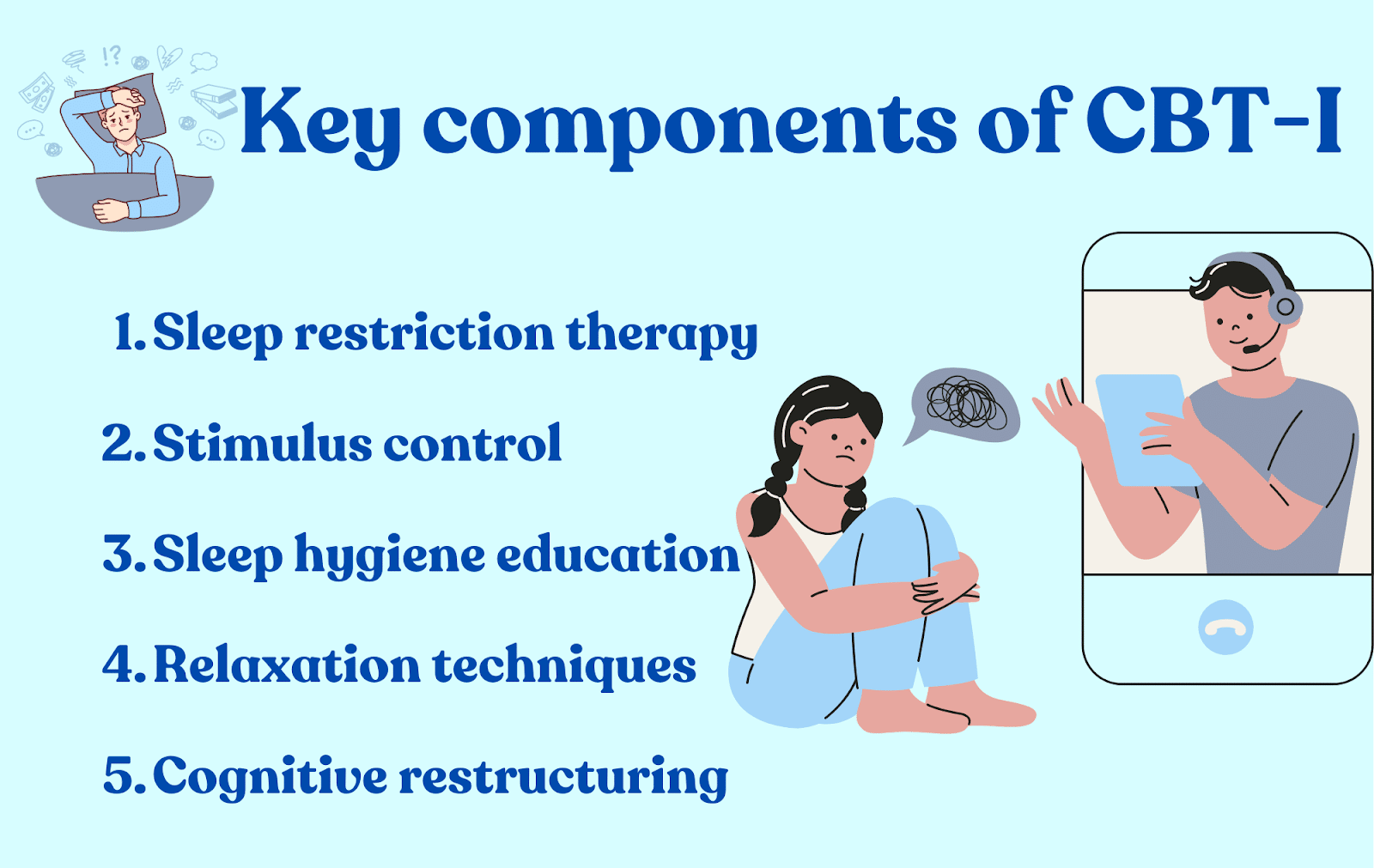
Cognitive Behavioral Therapy for Insomnia (CBT-I)

CBT-I (Cognitive Behavioral Therapy for Insomnia) is a guided therapy that is specifically designed to target cognitions and behaviors contributing to insomnia treatment. It accomplishes this by helping the individual to become aware of and challenge the negative sleep-interfering thought patterns, such as anxiety regarding one’s inability to fall asleep or any concern that keeps the mind racing at night.

The Link Between Sleep and Mental Health (3)

Photo Courtesy: addictionresource.com

Lifestyle Changes and Relaxation Techniques

Simple lifestyle modifications can significantly improve sleep quality and reduce anxiety.

  • Reduce caffeine intake: Especially in the afternoon and evening
  • Regular exercise: But not too close to bedtime
  • Limit screen time: Avoid blue light exposure before bed.

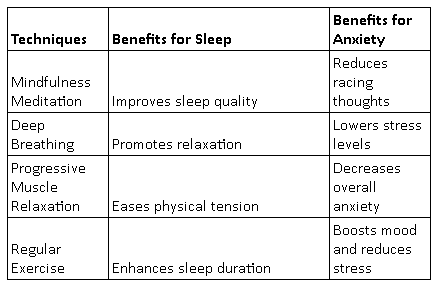
Incorporating relaxation techniques can also be beneficial.

  • Mindfulness meditation: Helps calm racing thoughts.
  • Deep breathing exercises: Reduces physical tension

Progressive muscle relaxation: Promotes overall relaxationThe Link Between Sleep and Mental Health

The Role of Professional Help

While self-help strategies are valuable, it’s important to recognize when professional help is needed. Seek medical advice if you experience:

  • Persistent anxiety that interferes with daily life
  • Severe sleep disturbances lasting more than a few weeks
  • Symptoms of sleep disorders (e.g., loud snoring, gasping for air during sleep)

In some cases, medication may be prescribed to manage anxiety or sleep issues. Always consult with a healthcare professional to discuss the best treatment options for your specific situation.

Conclusion

The connection between sleep and anxiety is clear and profound. By making sleep a priority and addressing anxiety simultaneously, we can disrupt the harmful cycle where one worsens the other. Improving your sleep quality isn’t just about feeling rested; it’s a crucial step toward managing anxiety and enhancing overall mental well-being. 

Embrace the strategies discussed, and remember that a better night’s sleep can pave the way to a calmer, healthier mind.

FAQs

1. How much sleep do I need to reduce anxiety? 

Most adults need 7-9 hours of quality sleep per night. Consistency is key; aim for a regular sleep schedule rather than focusing solely on hours.

2. Can anxiety medications affect my sleep? 

Some anxiety medications can affect sleep patterns. Always discuss potential side effects with your healthcare provider and report any sleep disturbances you experience.

3. Is it better to stay in bed when I can’t sleep or get up? 

If you can’t sleep after 20-30 minutes, it’s generally better to get up and do a calming activity until you feel sleepy. This helps associate your bed with sleep, not wakefulness.


Published by: Khy Talara