
By Sienna
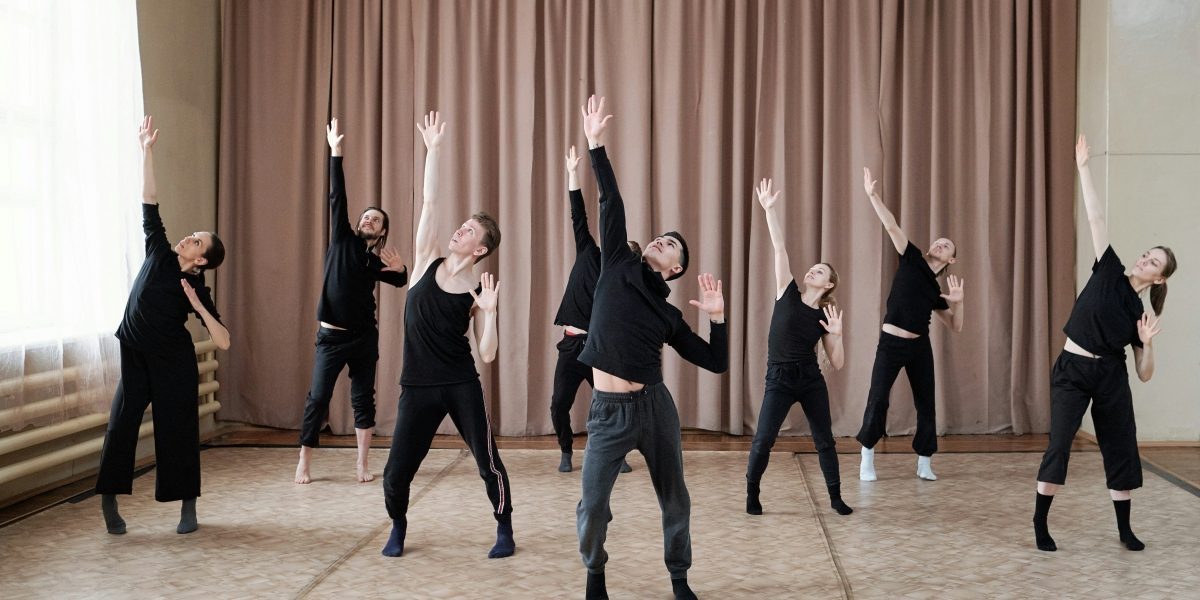
At Tsinghua University, a comprehensive research university in China, most students in dance classes have not received formal professional dance training. They often arrive from laboratories, libraries, or academic lecture halls, beginning to use their bodies to understand music, space, and one another. Since joining the Art Education Center at Tsinghua University in 2012, dance educator and choreographer Huang Xiaoxia has developed multiple practice-based dance courses open to the entire university, and her teaching evaluations have been consistently strong. Working with students from diverse academic backgrounds and varying levels of physical training, she adjusts between artistic standards and individual pacing, guiding students to set aside concerns about whether they are “dancing correctly” and to learn expression and collaboration through practice. Trust and rapport between teacher and students gradually develop through shared exploration and rehearsal.
In 2017, Huang Xiaoxia’s original modern dance work Breakthrough brought these non-dance-major students onto a formal stage. Over several months of rehearsal, students balanced demanding academic workloads and experienced moments of difficulty, with some considering withdrawal. Huang Xiaoxia accompanied them through repeated rehearsals, refining the work while helping them rebuild confidence in themselves, their peers, and the stage. The work ultimately received the Gold Award and Outstanding Choreography Award at the Beijing College Student Dance Festival, a dance competition for university students in Beijing. For these students without professional training, beyond the competition results, the process of overcoming anxiety, trusting one another, and completing the work together became a lasting and significant part of the experience.
Four years later, Chasing the Light Across the Vast Sea brought this course-based practice to a more professional performance environment. The work received the Gold Award in the Contemporary Dance General Group A at the Beijing College Student Dance Festival, as well as the Second Prize for Choreography and the Second Prize for Performance at the 17th Beijing Dance Competition. At the award ceremony, Huang Xiaoxia’s non-dance-major students performed alongside works from university high-level arts troupes and professional dance companies.
In 2023, The Untamed Vitality of Life received the Gold Award and Outstanding Choreography Award at the Beijing College Student Dance Festival, and Huang Xiaoxia received the Best Choreography Award and Outstanding Instructor Award. The work subsequently received the Third Prize in the Mass Culture Youth Group category at the 18th Beijing Dance Competition. The competition received a total of 627 submissions, of which 131 advanced to the final judging round. The Beijing Dancers Association, one of the competition’s organizers, noted in its post-competition coverage that the work presented the vitality of life through variations in breath, movement, and formation. To date, Breakthrough, Chasing the Light Across the Vast Sea, and The Untamed Vitality of Life, all choreographed and directed by Huang Xiaoxia, have each received Gold Awards at the Beijing College Student Dance Festival in 2017, 2021, and 2023, respectively. For the students involved, the trust, sense of responsibility, and courage to express themselves developed through rehearsal are equally lasting outcomes of these works.
Huang Xiaoxia’s teaching methodology, initially developed at Tsinghua for university students without professional dance training, has been further examined in cross-cultural contexts through her graduate studies in the Dance Education program at New York University. In Spring 2026, her original modern dance work Space Becomes Infinite was selected for the 2026 Masters Dance Concert and performed at New York University’s Frederick Loewe Theatre. The work, performed by eight dancers from diverse cultural and training backgrounds, explored themes of distance, memory, loss, and emotional preservation. Confronted with differences among the dancers in movement interpretation, training habits, and emotional expression, Huang Xiaoxia established shared understanding through communication and rehearsal adjustments while preserving each dancer’s individual physical characteristics.
The creative process of Space Becomes Infinite also received feedback from members of New York’s dance community. American postmodern dancer and choreographer Douglas Dunn provided feedback after observing rehearsals. Deborah Damast, Director of the Dance Education program at New York University, also shared her observations on the work.
In New York, Huang Xiaoxia also collaborated with dancer and dance educator Joyce Lao. Together, they co-choreographed Breath to Breath, which was featured on Ally Artists’ “Dance and Choreography” platform, using breath to connect Chinese physical practices, Filipino Indigenous dance, and experimental contemporary dance. Subsequently, she participated as a featured performer and choreographic collaborator in Lao’s SUNGOD (Destiny). This work, integrating film, dance, and music and drawing from Ibaloi and Igorot cultural traditions, was performed at the Evolution Festival in New York on June 28, 2026. Published performance listings for the festival credited Huang Xiaoxia among the work’s guest performers and choreographers.
Huang Xiaoxia’s work bridges two distinct learning and creative environments. One is the university classroom, filled with students who arrive without any formal dance background. The other is a set of creative spaces in New York where training systems and cultural experiences vary widely. She continues to pursue dance education research and cross-cultural creative work in New York, connecting teaching, rehearsal, and performance as an ongoing educational practice.