

By a quarter to six on the morning of August 18, 1847, a Paris police commissioner was already writing his first report at No. 55 rue du Faubourg Saint-Honoré. He had a dead duchess on his hands. Fanny Sébastiani, Duchesse de Choiseul-Praslin, was 40 and the daughter of a marshal of France. The doctors who examined her that day recorded more than 30 wide, deep wounds to her head, neck and hands, some from a blade and others from a blunt instrument. Later tellings would raise the number to 47.
It took investigators about a day to fix on a suspect. He was the one person in the house whom no ordinary court could try. He was her husband.
Charles, Duc de Choiseul-Praslin, carried one of the great names of the French nobility and had sat since 1845 in the Chamber of Peers. A Peer of France accused of a crime answered only to his fellow peers. What followed would help bring down a king and give one family a story it still tells.
The Duke Who Never Faced His Judges
Things looked bad for the Duke from the first day. Doctors who examined him on August 18 noted fresh scratches and bruises that could have come from a struggle. The marriage had been unhappy for years, and a month earlier the Duchess had the children’s governess dismissed, suspecting her of being his mistress. On August 19, King Louis Philippe signed an order convening the peers as a court, citing serious evidence against him.
The court never got its chance. Early on August 21, too weak to walk, the Duke was carried on a chair into the prison of the Luxembourg Palace. Questioned that day by the Chancellor of France, he pleaded exhaustion. At one point, the transcript shows, he denied the crime. Asked to say so plainly, he fell silent, then said he could not answer such a question.
He was dead three days later, on the afternoon of August 24. The court’s experts found arsenic in his organs and concluded he had swallowed it on the evening of August 18, before he was ever taken to prison. There would be no trial and no verdict. In the small hours of August 27, a police report records, his coffin was taken to the Cimetière du Sud, now Montparnasse Cemetery.
Paris was having none of it. On the evening of the autopsy, a crowd around the prison demanded to see the body and refused to believe the Duke was dead, until soldiers dispersed it. So said Paris reports carried on August 28 in The Spectator, a London weekly. The paper itself observed that it was “all but openly asserted” that the government had let the police supply him with poison, sparing the peerage the disgrace of a trial. Another rumor had him slipping abroad, perhaps to England. Neither suspicion was ever proved. What stuck was the belief that a duke and a commoner did not face the same justice.
A Monarchy Already on Trial
The scandal could hardly have come at a worse moment for the crown. Only weeks earlier, the peers had tried two former ministers in a bribery case. France was living through food shortages, a financial crisis and rising unemployment, and the government kept refusing to extend the vote beyond the wealthiest taxpayers.
The George Washington University Law Library notes that distaste for the aristocracy grew as news of the case spread, and it counts the murder among the immediate causes of the monarchy’s fall. It was one cause among several. When the government banned a reform banquet in Paris in February 1848, protest turned into an uprising. Louis Philippe abdicated on February 24, and within a day France was a republic. He was the last king to reign in France, though Napoleon III later ruled as emperor.
The Story a Family Kept
There the documented history ends, and another story begins. According to an oral tradition that author Jaime Pasquier says his family has passed down for generations, the Duke did not die in Luxembourg. In that account, he left France under another name, crossed the Atlantic, and lived out a second life in Nicaragua. It remains an unverified family legend, and Pasquier does not claim otherwise. The historical record documents the Duke’s death, while the family’s oral tradition offers a different story.
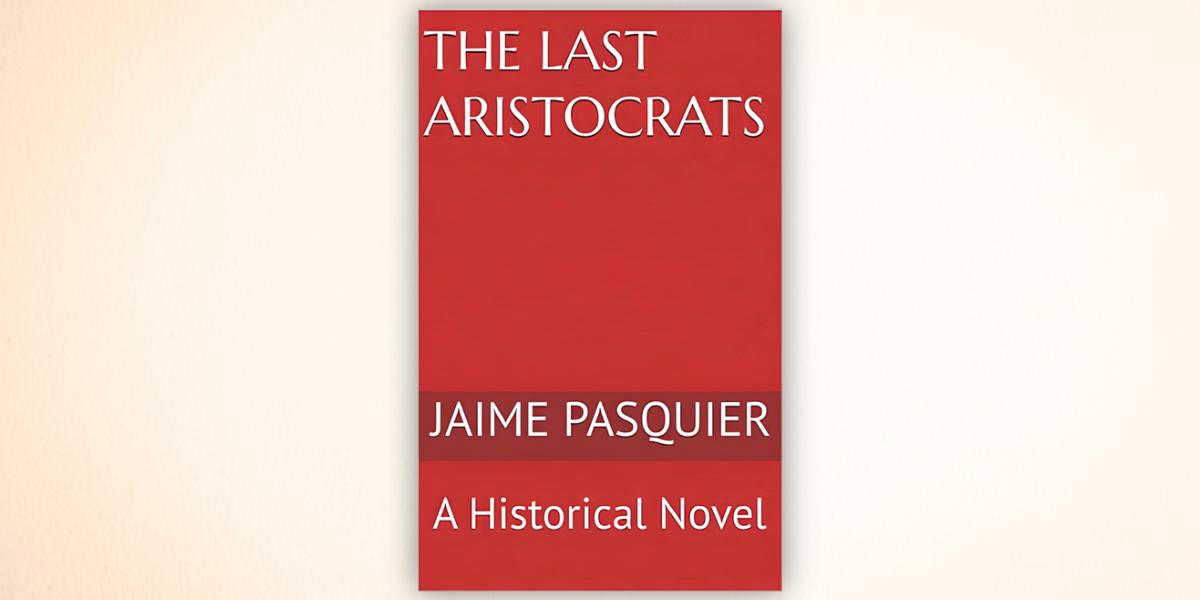
Pasquier spent 15 years on the genealogical research behind his novel, The Last Aristocrats. The book draws on historical material and on that oral tradition to imagine what might have followed. Its story spans some 35 years and two continents, following a man officially dead from Paris through New York to Nicaragua, where he lives under a borrowed name. Its themes are guilt, exile, identity and family memory. At its center is a moral question about what redemption could mean for a man trying to live beyond a terrible crime, and what his violence costs those around him. All of it is invention, offered as fiction and never as a finding.
Born in Nicaragua and based in Washington, D.C., Pasquier studied economics at George Mason University and the humanities at Marymount University. He writes across history, philosophy and historical fiction.
The Duke died before any court could weigh the evidence in public, so the judging was left to rumor, to family memory and, in time, to storytellers. No novel can reopen the case. But a novel can imagine what a reckoning might have looked like, and what a life after such a crime would be worth. Readers who want to follow that question can learn more about The Last Aristocrats and purchase a copy at https://www.jaimepasquier.com/the-last-aristocrats.
Los últimos aristócratas, la novela de Jaime Pasquier sobre el crimen de Praslin y la caída de la monarquía de Luis Felipe, también está disponible en español: www.jaimepasquier.com/es
Disclaimer: This article is intended for informational purposes only. Certain accounts, interpretations, and narratives may be based on historical sources, personal perspectives or creative storytelling and should not be considered independently verified facts.