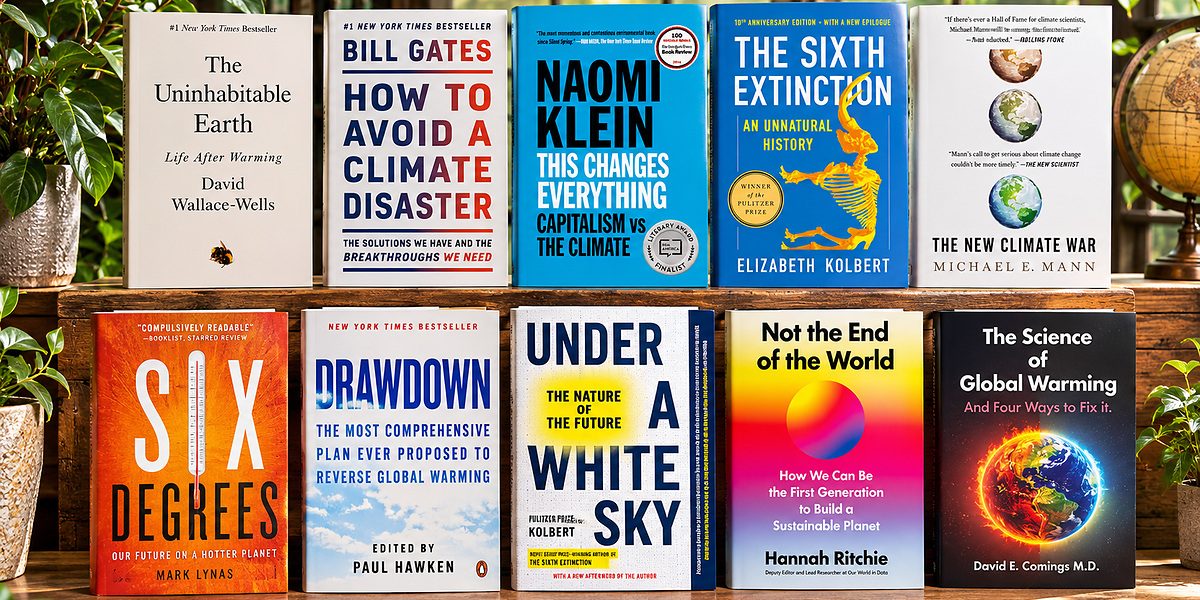

From scientific discoveries and environmental challenges to practical solutions, these books offer different perspectives on climate change and its impact on the world.
Climate change has become one of the most significant challenges of the modern world, influencing ecosystems, economies, public health, and the future of communities worldwide. As global temperatures rise and environmental concerns intensify, authors, scientists, and researchers continue to examine the causes of climate change, its long-term consequences, and the solutions that could help protect the planet. Several books approach this subject from different perspectives, combining scientific research, environmental observations, and practical recommendations.
David Wallace-Wells explores the potential consequences of unchecked global warming in The Uninhabitable Earth: Life After Warming. Through scientific findings and compelling observations, the book examines how rising temperatures could affect food production, economic stability, migration, and everyday life. Similarly, Mark Lynas presents a detailed examination of possible warming scenarios in Six Degrees: Our Future on a Hotter Planet, explaining how each additional degree of global temperature increase could transform natural environments and human societies. Elizabeth Kolbert’s The Sixth Extinction: An Unnatural History broadens the discussion by investigating biodiversity loss and the growing influence of human activities on the survival of species worldwide.
While these books examine the consequences of environmental change, others explore the economic, political, and technological challenges of addressing it. Naomi Klein’s This Changes Everything: Capitalism vs. the Climate examines the relationship between economic systems and environmental protection, questioning whether existing approaches can adequately respond to climate change. In The New Climate War: The Fight to Take Back Our Planet, climate scientist Michael E. Mann discusses climate misinformation, political resistance, and the importance of collective action. Bill Gates takes a more technology-focused approach in How to Avoid a Climate Disaster, examining innovations, energy systems, and strategies that could help the world achieve net-zero greenhouse gas emissions.
Practical solutions are also central to Drawdown: The Most Comprehensive Plan Ever Proposed to Reverse Global Warming, edited by Paul Hawken. Bringing together research on numerous climate solutions, the book considers opportunities involving renewable energy, agriculture, transportation, and land management. Hannah Ritchie’s Not the End of the World: How We Can Be the First Generation to Build a Sustainable Planet offers a data-driven perspective, examining environmental progress alongside continuing challenges and opportunities for improvement. Meanwhile, Elizabeth Kolbert’s Under a White Sky: The Nature of the Future investigates humanity’s attempts to manage environmental problems through scientific and technological interventions, raising questions about the unintended consequences of altering natural systems.
Adding another scientific perspective, Dr. David Edward Comings examines the mechanisms behind climate change in The Science of Global Warming: And Four Ways to Fix It. The book addresses rising atmospheric carbon dioxide, fossil fuel emissions, Earth’s energy imbalance, ocean acidification, and the environmental effects of global warming. It also explores potential responses, including enhanced weathering and carbon sequestration, linking the scientific understanding of climate change to possible ways to reduce its impact. Its approach contributes to the broader discussion of how research and technological developments can inform environmental solutions.
Together, these books demonstrate the complexity of the global climate crisis. Some emphasize the environmental and social consequences of rising temperatures, while others explore economic policies, technological innovation, scientific research, and practical strategies for reducing emissions. Although their approaches differ, they collectively show the importance of understanding both the causes of climate change and the range of available responses.
As climate discussions continue to shape international policies and public awareness, literature remains an important resource for examining environmental challenges. By presenting scientific evidence, differing interpretations, and possible solutions, these works encourage readers to engage more deeply with the decisions that will influence the planet’s future.