
Why unit price is only one part of the real cost of PCB and PCBA sourcing.
A PCB quote can look remarkably precise. Board quantity, unit price, tooling, freight and lead time may all fit neatly onto a single page.
What that page does not always show is what happens after the purchase order is placed.
Two manufacturers can quote the same PCB from the same Gerber files and arrive at noticeably different prices without necessarily offering the same manufacturing scope. One may include engineering review, material controls and electrical testing as part of its normal process. Another may quote closer to the minimum information supplied and address additional requirements only after production questions arise.
That does not mean the lower quote is automatically the wrong choice. It means price only becomes useful when buyers understand what is included behind it.
This distinction is not unique to electronics. The U.S. National Institute of Standards and Technology’s Manufacturing Extension Partnership has specifically cautioned manufacturers against evaluating suppliers primarily on unit cost. Its guidance on total cost of ownership includes freight, lead time, inventory, supplier management, quality and disruption risk alongside the purchase price itself.
The Lowest Quote May Not Represent the Same Work
Before comparing two PCB prices, the first question should be whether the two suppliers are actually quoting the same product.
A fabrication package can define board dimensions, copper layers, drill data, solder mask and other basic requirements, but important manufacturing assumptions may still remain unresolved. These can include laminate system, copper construction, controlled impedance requirements, via treatment, surface finish, inspection criteria, tolerances and special testing.
PCB standards reflect this complexity. IPC-6012F establishes qualification and performance requirements for rigid printed boards, while IPC-A-600 addresses observable acceptance conditions. In other words, “make this board” and “make this board to these defined acceptance requirements” are not necessarily equivalent instructions.
A lower quotation may therefore be completely legitimate while still being based on a narrower interpretation of the job.
The commercial problem begins when those differences are discovered only after the order has started.
Poor Manufacturability Is Usually More Expensive Than an Engineering Review
Many PCB problems are not obvious electrical design errors. A circuit may work perfectly in CAD and still contain details that are difficult, expensive or unnecessarily risky to manufacture.
Trace-to-copper clearances may be marginal for the selected process. A drill specification may create an unfavorable finished-hole condition. A stackup may need adjustment. Solder mask features may be too tight for stable production. A dense BGA area may require different via construction than originally expected.
These are exactly the kinds of issues that a meaningful design-for-manufacturability review is intended to identify before fabrication.
The same principle applies to cost optimization: many of the most effective ways to reduce PCB cost come from design decisions involving materials, layer count, via structures, surface finish and production efficiency, not simply from negotiating a lower unit price.
The value of that review is not that the manufacturer redesigns the product. It is that manufacturing constraints are resolved while changes still exist mainly as data rather than as physical boards, components and production schedules.
If those questions appear later, the consequences can spread beyond the PCB itself. New fabrication data may need to be released. Assembly documentation may need revision. Components or stencils may already have been ordered. A prototype schedule can move while engineers repeat work they believed was already complete.
The cost is therefore rarely just the value of a scrapped board. It is also engineering time and lost schedule.
“Electrical Test Included” Does Not Describe the Entire Quality Plan
Testing is another area where quotations can appear more similar than they actually are.
Electrical testing of an unpopulated PCB is important because it verifies that conductive networks correspond to the electrical design. But IPC’s own electrical-testing guidance makes an equally important point: electrical test alone does not confirm every physical feature or every customer requirement. Characteristics such as geometry, solder mask, holes and other physical conditions require different forms of verification.
That is why a useful supplier comparison goes beyond asking whether boards are “tested.”
For bare boards, the relevant discussion may include electrical test coverage, visual inspection, dimensional inspection, impedance verification or microsection evaluation depending on the design and application. For assemblies, inspection may extend to solder paste inspection, automated optical inspection, X-ray examination or functional testing where appropriate.
What matters commercially is whether the required inspection and testing have been defined before price comparison.
Otherwise, one supplier may be pricing a basic build while another is pricing the controls the buyer actually expects to receive.
Component Sourcing Can Change the Economics of PCBA
The issue becomes more complicated when the order includes assembly.
A PCBA quotation contains two fundamentally different cost structures: the manufacturing process and the bill of materials. For many projects, component sourcing represents a substantial portion of the commercial and operational risk.
A low BOM price deserves the same scrutiny as a low PCB price.
The important questions are not limited to component brand and part number. Buyers should understand the proposed source, whether substitutions require approval, how date codes or lot information are handled where necessary, and what happens when an approved component becomes unavailable.
This becomes especially important when parts have to be purchased outside normal authorized channels.
The concern is not theoretical. NASA’s counterfeit-parts requirements call for additional risk assessment, traceability and authentication when electronic parts cannot be traced to the original component manufacturer. U.S. defense acquisition rules likewise contain explicit provisions addressing counterfeit and suspect counterfeit electronic components and the corrective work they can create. These requirements are designed for high-assurance environments, but they illustrate a broader procurement principle: component provenance has economic value.
Saving money through an approved alternative is normal engineering. Receiving an unapproved alternative because it was cheaper is a different matter.
Lead Time Has a Cost Even When It Is Not on the Invoice
Procurement teams often compare unit price carefully while treating lead time as a secondary line item.
For an active electronics program, lead time can influence inventory levels, engineering schedules, launch dates and the amount of flexibility available when something changes.
A supplier that provides a low price but requires frequent clarification after order placement can consume several days before production even begins. A material shortage discovered late may force a new approval cycle. A component issue found during assembly may stop the entire lot while purchasing and engineering review alternatives.
None of these events appears in the original unit price.
For PCB buyers, this means quoted lead time should be understood as part of the manufacturing process rather than simply a promised number of days.
A useful question is not only, “How fast can you build it?” but also, “What has to be confirmed before that lead time begins?”
Rework Still Costs the Customer When the Supplier Pays for It
A supplier may agree to remake defective boards at no charge. On paper, the customer has been financially protected.
Operationally, the project may still have paid a price.
Engineers have to investigate the problem. Purchasing has to communicate with the supplier. Quality teams may need to isolate affected units. Production can lose its planned material. Replacement boards must be manufactured, shipped and inspected again.
When assemblies are involved, the situation can become more expensive because components, labor and test time have already been added to the PCB.
Rework itself is a recognized manufacturing discipline. IPC maintains IPC-7711/7721 specifically for the rework, modification and repair of electronic assemblies, reflecting the fact that correcting electronics hardware requires controlled procedures rather than simply “fixing the board.”
This is why supplier quality should not be measured only by whether a factory eventually replaces a nonconforming product. The time required to identify, contain and recover from the problem also matters.
Traceability Seems Expensive Until There Is a Problem
For a simple consumer prototype, detailed material and process traceability may provide little practical benefit.
For repeat production, regulated products or equipment expected to remain in service for years, the calculation changes.
If a field problem appears six months later, can the manufacturer identify the production lot? Can it determine which laminate batch, component lot or process record was associated with the affected units? Can it determine whether the issue is isolated or whether other shipments need review?
IPC-1782 exists specifically to define different levels of manufacturing and supply-chain traceability according to risk. The standard is deliberately scalable rather than requiring the same traceability for every electronic product.
That is an important purchasing principle.
More documentation is not automatically better. The right level is the level that allows a business to control the risks that matter to its product.
The mistake is assuming traceability has no value because it does not change the appearance of the board being purchased today.
Compliance Assumptions Can Be Costly to Correct Later
Certification requirements create another potential gap between quotation price and actual project cost.
A manufacturer may be fully capable of producing a board electrically equivalent to the design while using a material system or manufacturing condition that does not match the compliance assumptions of the finished product.
For products subject to safety certification, those details matter.
UL Solutions notes that PCB materials and recognized components are evaluated under specific conditions, and UL 796 addresses printed wiring boards used in certified products. UL has also emphasized coordination between board fabrication and assembly processes because soldering conditions can affect PCB qualification and thermal-stress requirements.
Changing those assumptions after prototypes have already passed functional testing can create unnecessary qualification work.
This is another reason the least expensive technically functional board is not always the least expensive board for the complete product.
How to Compare PCB Quotes More Accurately
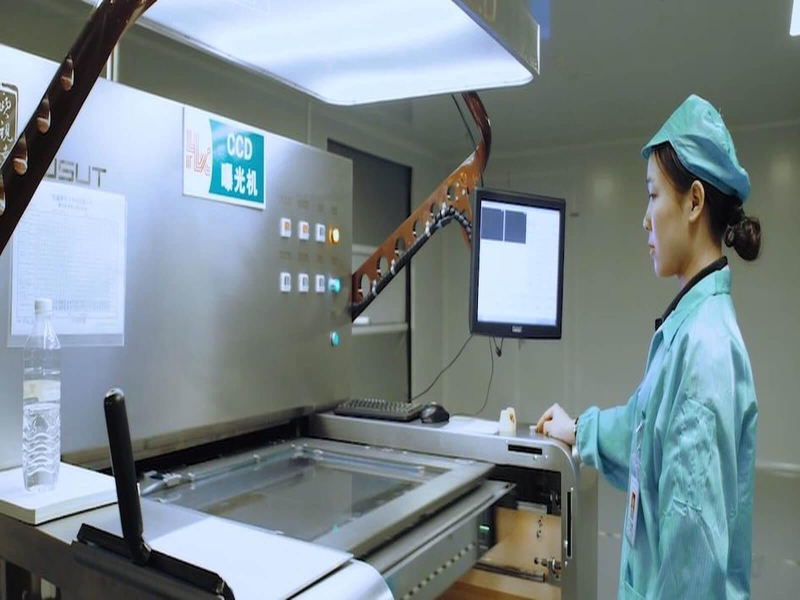
The objective should not be to avoid low-cost manufacturers. A reliable PCB manufacturing partner still offers competitive pricing when its process, sourcing, testing, and production controls are efficient.
The objective is to make sure the prices being compared represent substantially the same requirement.
Before awarding an order primarily on price, buyers should be able to answer a few basic questions:
• What laminate, stackup, copper construction and surface finish are included?
• Which DFM issues will be reviewed before production, and which changes require customer approval?
• What inspection and electrical testing are included in the standard quotation?
• For PCBA, where will components be sourced and how are substitutions controlled?
• What production records or lot traceability will be retained?
• Which compliance, workmanship or acceptance standards actually apply to the order?
• What happens commercially and operationally if a board or assembly fails to meet the agreed requirement?
These questions do not make procurement unnecessarily complicated. They make quotations comparable.
Price Still Matters, but It Needs Context
There is nothing inherently risky about choosing the least expensive PCB manufacturer.
If two suppliers can demonstrate equivalent manufacturing capability, materials, quality controls, sourcing practices, lead time and support, choosing the lower price is simply good purchasing.
The danger is assuming those conditions are equivalent without verifying them.
A PCB enters a much larger economic system once components are mounted, firmware is programmed, testing is completed and the finished product reaches a customer. At that point, the bare-board purchase price becomes only one part of what the company has invested in the hardware.
The more expensive problems in electronics manufacturing often begin with something inexpensive: an unresolved fabrication detail, an unclear material assumption, an uncontrolled component substitution or a test requirement that nobody realized had been excluded.
A good PCB quotation therefore does more than state a price.
It makes clear what the buyer is actually paying for.