
By: Eva Keller
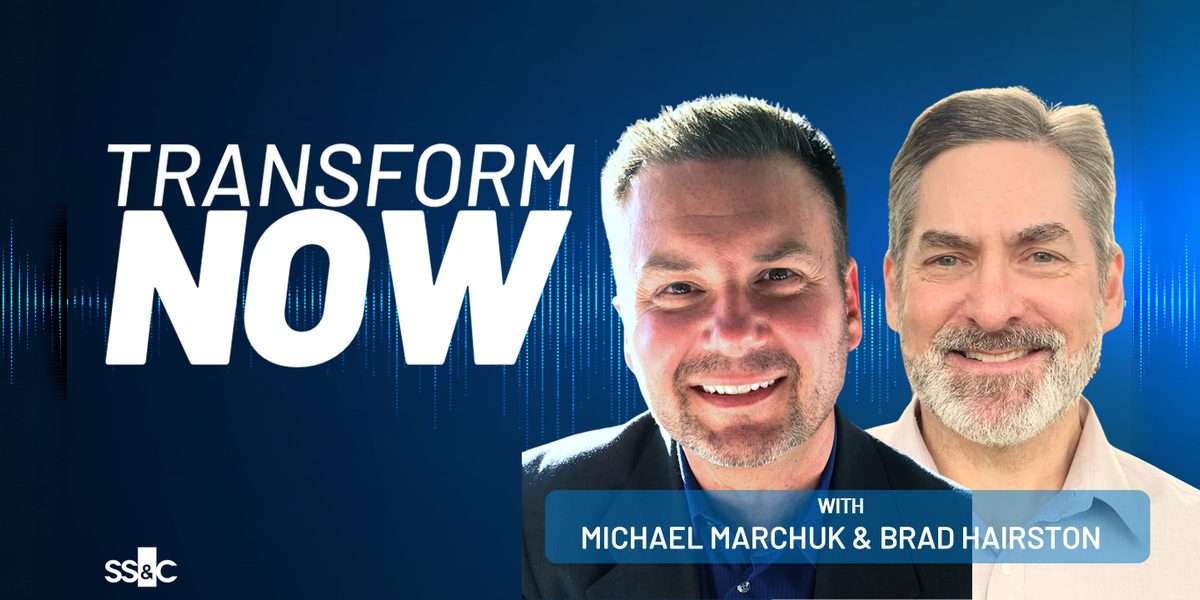
Six years and 500 episodes in, Michael Marchuk and co-host Brad Hairston have earned the right to a victory lap with Transform NOW. Michael treats the milestone more like a checkpoint. As VP of Asset and Alliances Ecosystem, his brief hasn’t really changed since day one: create thought leadership in AI and automation that shows how digital transformation is reshaping how work gets done.
What has stayed constant is the filter. Plenty of shows talk about tools. Transform NOW keeps asking what those tools do to the people inside the organization.
The ideal listener is an executive or manager trying to make the most positive impact on their organization, their customers, their employees, and their shareholders through forward-thinking adoption of AI and automation. That list matters, because it forces the conversation past a single KPI. A workflow change that looks efficient on a dashboard can still land badly with customers, burn out employees, or create risk for shareholders. Michael puts all four stakeholders in the same sentence on purpose; if an adoption story can’t speak to each of them, it’s incomplete.
That’s part of why the guest mix leans into industries where work is already complex: financial services, banking, insurance, healthcare. According to Michael, these guests bring real-world application of both technology and organizational design that have created real value for their organizations. The pairing is deliberate. Technology alone rarely explains why a transformation stuck. Organizational design (how teams decide, hand off work, measure progress, and absorb change) is usually what separates a pilot that looked promising from a program that actually changed how the company operates.
One of the show’s regular formats is the Weekly Pulse Check, where the co-hosts run through news stories from the week and break down how they might affect organizations mid-transformation. It sounds simple, but it’s a useful filter. News in AI and automation moves fast, and executives don’t need another highlight reel of announcements; they need someone to translate a headline into an operating question: what does this change for our workflows, our people, our customers, this quarter? Michael says it’s consistently one of the most well-received parts of the show, which tracks: managers want signal they can act on, not volume.
Across six years, Michael and Brad have built Transform NOW into a broader effort to help executives and management teams understand what technology does to people. They talk plenty about AI and automation, but the human side never drops out of frame. Whenever an organization changes how work gets done, people feel it. That’s not a soft afterthought tacked onto a tech story; it’s the reason the tech story is worth telling in the first place.
The optimism is intentional, too. The show leans toward highlighting the upside of that impact, so people can grow and flourish, not by pretending change is easy, but by looking for the version of transformation where employees get better work, customers get clearer outcomes, and leaders can explain the tradeoffs without hiding behind jargon.
Five hundred episodes in, the throughline is clearer than it was at episode one: digital transformation isn’t really a technology story. It’s a people story that happens to run through technology. For executives and managers adopting AI and automation, that’s the takeaway from Michael’s run so far, measure success by the impact on the organization, customers, employees, and shareholders together, and treat every workflow change as a human change first.