
Gold doesn’t tarnish. That’s the first thing to understand, because almost everything people do to “clean” their jewelry is aimed at a problem gold doesn’t have.
What gold does is collect a film: soap, lotion, sunscreen, skin oil, dust, and that film is what makes a piece look dull. It isn’t damage. It comes off in about four minutes with things you already own. Here’s the whole method.
The four-minute clean
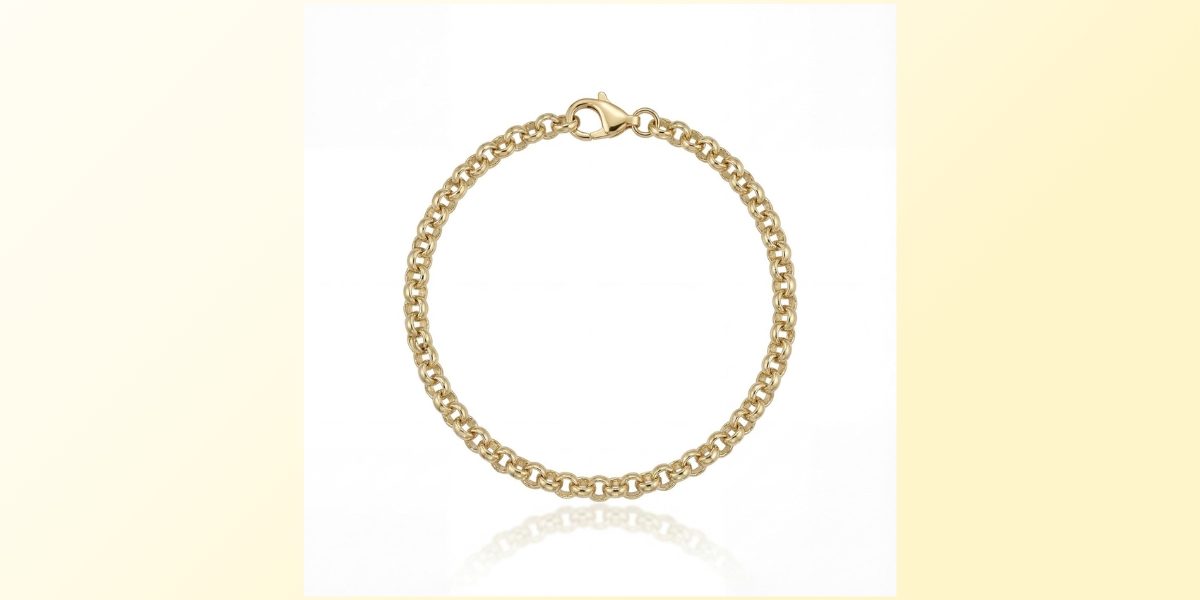
Bracelets take more contact than any other piece, which is why the metal matters. Golden Planet Jewelry.
You need: a small bowl, warm water, a drop of plain dish soap, a soft-bristled toothbrush you’ve retired, and a lint-free cloth.
- Soak. Warm, not hot, water with one drop of dish soap. Ten to fifteen minutes. That’s it. Most of the film lifts on its own.
- Brush gently. Soft bristles, light pressure, and pay attention to the places you can’t see: behind a pendant, inside a clasp, the underside of a setting. That’s where the film actually lives.
- Rinse in a bowl, not a sink. This is the single most important line in this article. Rinse in a second bowl of clean water, then empty it deliberately. Every jeweler has the same story about a customer and an open drain.
- Dry completely. Pat with a lint-free cloth and let the piece finish air-drying before it goes away. Water trapped in a clasp or a chain link is the one thing that will cause a problem over time.
Do this every four to six weeks for pieces you wear daily. That’s the entire maintenance routine for gold.
What not to use
Toothpaste. It’s an abrasive. It will polish gold by removing a microscopic layer of it, and it will scratch softer stones. The internet has been recommending this for twenty years and it has always been wrong.
Baking soda, vinegar, lemon juice. Same problem, either abrasive or acidic. Fine for silver tarnish, unnecessary for gold, and bad news for anything with a stone or a finish.
Ultrasonic cleaners at home. Excellent in a professional setting, risky on your kitchen counter. The vibration can loosen stones in older settings and worsen any existing hairline in a stone.
Alcohol, acetone, household cleaners. No benefit on gold, actively damaging to many stones and to any coloured or textured finish.
Golden Planet keeps a fuller reference on how to care for gold jewelry if you want the version with stone-by-stone notes.
Storage is where pieces actually get damaged
Cleaning gets all the attention; storage causes most of the harm. Gold is a soft metal, and the main thing that scratches gold is other gold.
Separate everything. Individual pouches, a compartment box, or at minimum a soft cloth between pieces. Loose in a dish together means they abrade each other every time you rummage.
Hang or lay chains flat. A chain thrown in a drawer will knot, and working a knot out of a fine chain is how fine chains get stretched. Hanging is best; laid flat in its own compartment is fine.
Keep it dry and dark. Not because gold needs it, but because whatever else is in the piece might. Bathroom humidity is the enemy of clasps, springs and glued settings.
Skip the cotton wool. It snags on prongs and leaves fibres behind. Soft fabric, not fluff.
What to take off, and when
The honest answer is that 14K gold survives daily life better than people expect. Still, four moments are worth a habit:
The pool and the hot tub. Chlorine is the one genuine chemical threat to gold alloys, over repeated exposure it attacks the alloy metals and can make a piece brittle at stress points. This is the one to take seriously.
The gym. Not for the sweat, which is harmless, but for the impact. Bars, dumbbells and machines dent and scratch metal.
Lotion, perfume, sunscreen. Not damaging, just the main source of the film. Jewelry last, after everything else has absorbed.
Deep sleep, for delicate pieces. A fine chain can catch on bedding and stretch. Chunkier pieces are fine.
Note that none of these are about protecting the gold from wearing away, real gold has no coating to lose. That’s why the care routine for a 14K piece is genuinely this simple, and why plated jewelry needs a much longer list of rules.
The pieces that need the most attention
Bracelets take more punishment than anything else you own. They’re in constant contact with desks, doors, car doors, bags and sleeves, and their clasps open and close hundreds of times a year.
Check a bracelet clasp every few months, open and close it, feel whether the spring still has snap, look at whether the connecting link has worn thin. A clasp that’s gone soft is the most common way a bracelet gets lost, and it’s a five-minute fix at a jeweler if you catch it.
Golden Planet’s 14k gold bracelets are made to order in New York in 14K gold, never plated, never gold-filled, which means there’s no plating to wear through at exactly those contact points, the failure mode plated bracelets are most prone to.
The short version
Warm water, one drop of soap, soft brush, rinse in a bowl, dry completely. Store pieces apart, hang chains, keep them out of the pool. Do that and real gold doesn’t age. It just gets worn in.