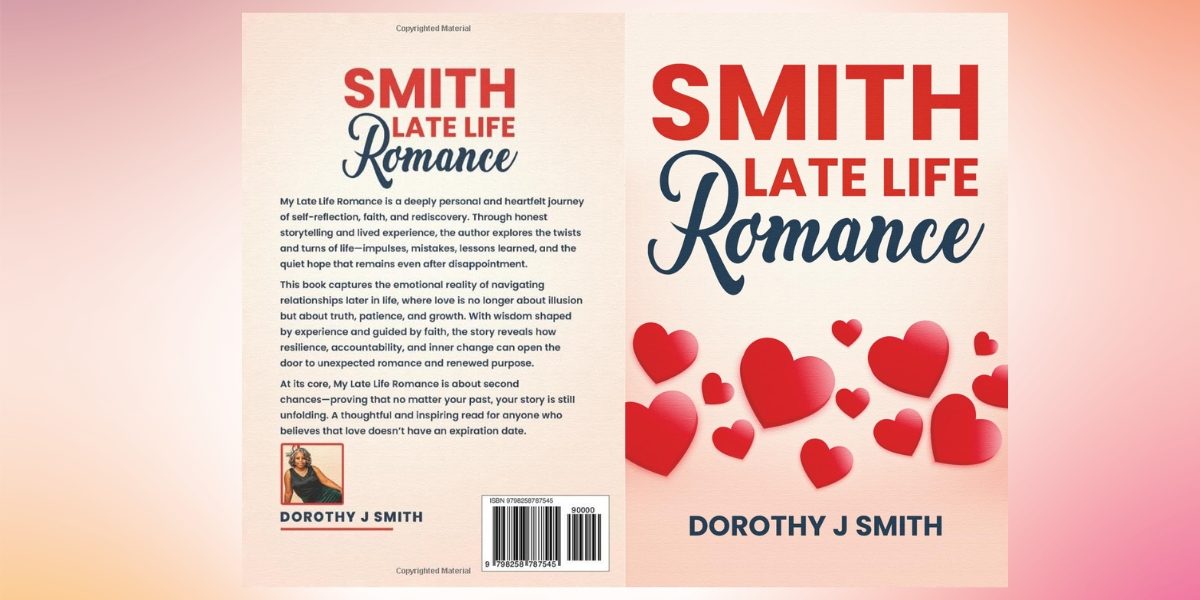

Dorothy Smith’s Late Life Romance arrives with a title that is simple on the surface and quietly bold underneath. In four words, it names a kind of story that mainstream romance has not always made room for: a love story shaped by age, experience, longing, and the courage to begin again.
Smith does not write about romance as if it belongs only to the young. She writes about it as something deeply human, something that can stir after years of silence and still carry the force of a first awakening. That perspective gives the book its emotional distinction.
What makes Late Life Romance compelling is not just the possibility of love, but the inner life that surrounds it. Smith is attentive to doubt. She understands hesitation. She gives weight to the private questions people ask when something unexpected enters their life.
Is this real?
Is it safe?
Is it too late?
Am I still worthy of being chosen?
These questions give the book its heartbeat.
Rather than revealing the story through dramatic summaries, the better way to understand Late Life Romance is through its emotional promise. It is a book about being seen after feeling overlooked. It is about the fragile return of confidence. It is about the strange, almost unsettling power of connection when it arrives outside the timing a person imagined for themselves.
Smith brings a rare sincerity to the page. Her writing is not overly polished into distance. It feels close, reflective, and personal. That closeness allows readers to feel the tension of small moments: a look that lingers, a comment that unsettles, a silence that says more than conversation. In this book, emotion often lives in the details.
That is one reason the story may appeal strongly to readers of mature romance and inspirational women’s fiction. Smith is not only writing about romance. She is writing about dignity, self-perception, and the ways love can challenge the stories people have told themselves for years.
The book also carries a meaningful spiritual undertone. Faith, reflection, and inner searching are part of Smith’s voice. She does not use them as decoration. They help shape the emotional world of the book and deepen the sense that love, timing, and personal growth are connected in ways people do not always understand at first. This gives Dorothy Smith’s work a distinctive identity.
Late Life Romance is not built for readers seeking a shallow escape. It is for readers who want feeling with substance. It is for those who understand that the heart can be both hopeful and guarded. It is for anyone who has reached a certain point in life and wondered whether the most intimate chapters are already behind them. Smith’s answer is gentle but powerful: not necessarily.
The book matters because it expands the image of who gets to be at the center of a romance. It gives room to a woman with memory, faith, insecurity, humor, and emotional hunger. It allows her to be complex. It allows her to desire and be desired. It allows later life to hold surprise. That is a story worth paying attention to.
Dorothy Smith has written a book that feels personal without becoming narrow, romantic without becoming unrealistic, and hopeful without ignoring the scars people carry. Late Life Romance invites readers to consider that love may not always arrive when expected, but it can still arrive with meaning.
For readers who believe the heart remains alive beyond youth, this book offers a tender and thoughtful reminder: time may change the body, the routine, and the expectations, but it does not have to close the door on wonder.