
The desk lamp looked good on the storyboard. The problem started when the team tried to imagine the actual ad.
Should the lamp be visible from the first shot, or only become noticeable when it turns on? Should the room feel neat and designed, or more like a desk someone actually works at? And when daylight fades, should the camera keep moving or stop long enough for the change to register?
None of these questions seemed important when the idea was first pitched.
Together, they changed the whole spot.
The campaign was for a small homeware brand launching a modular desk lamp. The basic idea was to follow a workspace from late afternoon into the evening. Daylight would fade, the lamp would come on, and the mood of the room would change.
Before booking a studio and working out the shot list, the team needed to see whether that simple idea actually worked in motion.
Start With One Unanswered Question
There was no reason to build the whole ad first.
The most important question was obvious:
Would the switch from daylight to lamplight feel strong enough to carry the scene?
The team already had a product image, a rough storyboard, a few workspace references, and an example of the slow camera movement it wanted.
Those materials could be used with Seedance 2.5 to make a rough version of the scene.
It did not need finished titles, perfect backgrounds, or a polished edit. The team only needed enough to see the transition.
If the change felt flat, they could rethink it now rather than discover the problem during production.
Keep the Reference Folder Small
Real campaign folders are rarely tidy.
There might be 20 product photos, screenshots from old campaigns, packaging files, interior references, saved social posts, lighting ideas, and several versions of the mood board.
Most of that can stay in the folder.
For an early test, the team might pull out one clean product image, two room references, a lighting reference, the storyboard, and a short example of the camera movement.
That makes the result easier to read.
If the room starts looking too polished, check the environment references. If the lamp loses an important design detail, look at the product reference.
When everything goes in at once, it becomes harder to tell what is helping and what is getting in the way.
Make Both Versions
The first clip did not settle everything.
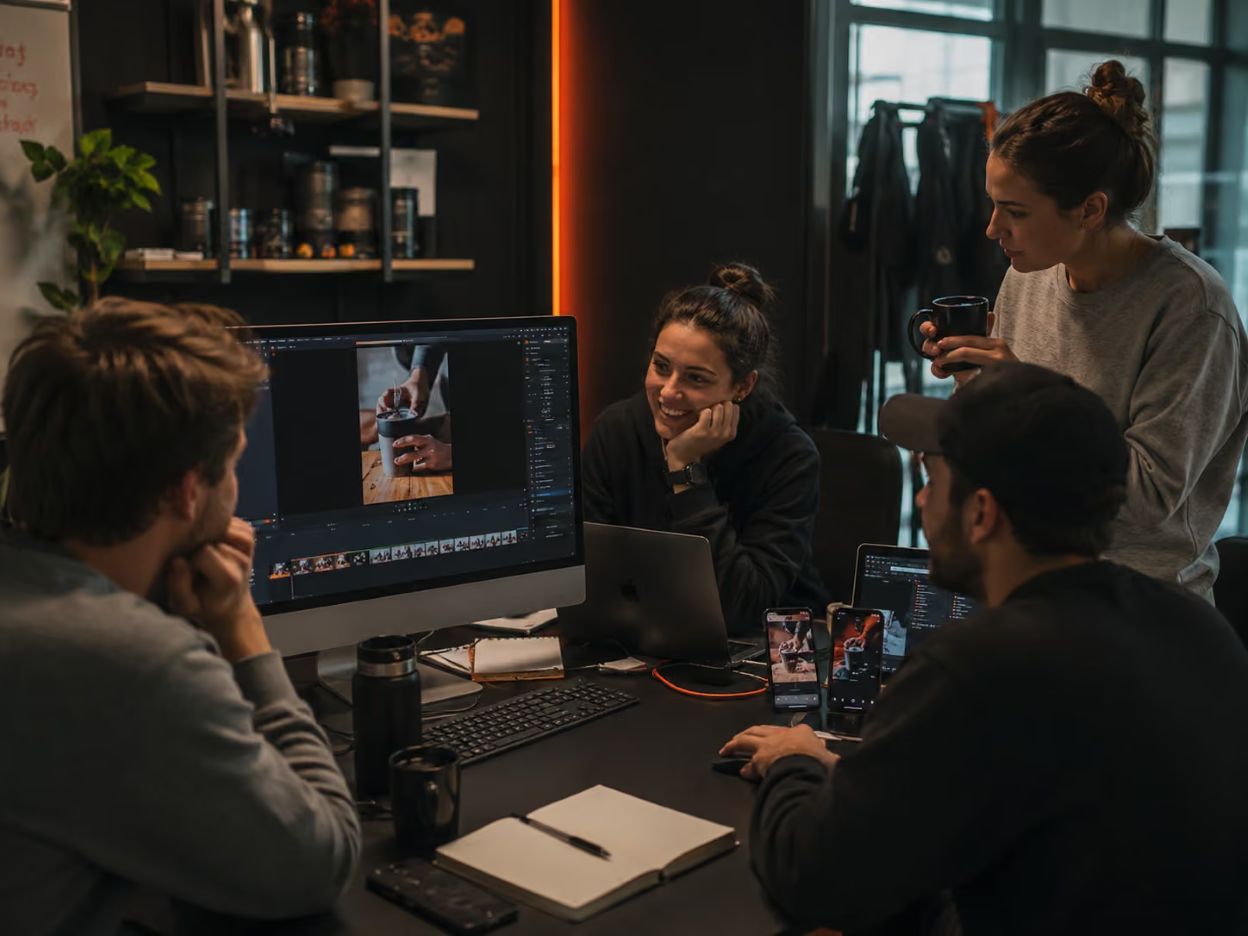
One person still wanted the lamp visible from the beginning. Another thought the reveal would work better if the product stayed in the background until the room became darker.
Instead of continuing the discussion, the team could make both versions.
In the first, the lamp is obvious from the opening frame.
In the second, it sits quietly on the desk and becomes the focal point when it turns on.
Side by side, the trade-off is easier to see.
Maybe the first version explains the product too quickly and feels like a standard ad. Maybe the second waits too long and leaves the opening without a clear focus.
Neither needs much polish. Seeing both is usually more useful than another 20 minutes spent explaining why one should work better.
Look at the Part That Matters
A rough concept will have flaws. That is normal.
A strange object in the background does not automatically make the test useless. Neither does an imperfect transition.
For this idea, the important moment is when the lamp comes on.
Watch that part closely.
Does the camera move past it too quickly? Does the room get dark before the product becomes noticeable? Does the lighting change feel natural, or does it look like two unrelated scenes joined together?
Suppose the concept works until the lamp turns on, but the camera keeps moving and pulls attention away from the product.
The next attempt has a simple job: ask for a slower camera move and a slightly longer hold, then review the full clip again.
Some Ideas Get Cheaper When You See Them
The original concept might also include something more ambitious.
Perhaps when the lamp turns on, the entire workspace changes with it. Books move, objects disappear, the wall shifts color, and the messy afternoon desk becomes a clean evening setup.
It sounds good in a pitch.
Then the team sees it moving.
The transformation gets all the attention. The lamp becomes almost incidental.
A real version of that sequence could mean more props, set changes, lighting work, shooting time, and post-production. If the idea is already distracting in a rough concept, there is little reason to start pricing all of that.
The simpler version may be stronger anyway: daylight fades, the lamp turns on, and the same room suddenly feels different.
A Concept Is Still Only a Concept
A polished rough cut can be surprisingly persuasive. It can also make people trust details that have never been tested in the real world.
The physical lamp may cast different shadows in the chosen room. A camera move that looks effortless in a generated space may not work at the actual location.
Generated footage should not be treated as evidence of actual light output, energy efficiency, durability, safety, or other product characteristics that require real verification.
It can help the team judge the creative direction. The physical product and production setup still need their own checks.
Leave Something for the Shoot
There is little value in polishing a concept until every detail becomes fixed.
By the end of these early tests, the team may only need to agree on three things:
- The room gradually loses its natural light.
- The lamp turning on is the main visual beat.
- The final shot feels calm rather than staged.
Everything else can stay open.
The director may choose another angle. The cinematographer may find a better way to handle the lighting. The production designer may build a workspace that feels more natural than the one in the concept.
The rough version has already done its job if everyone arrives with the same understanding of what matters.
Sometimes the Best Idea Is the One You Drop
Not every promising storyboard deserves to become a shoot.
The elaborate workspace transformation is a good example. It sounded memorable when the campaign was being discussed. Once it was moving, it competed with the product.
So it goes.
What remains is simpler: daylight fades, the lamp comes on, and the room changes mood.
No extra transformation. No visual trick that needs explaining.
And no production budget spent solving a problem the campaign did not need.
Find the Idea Worth Shooting
By this point, the team has not made an ad.
It has simply removed a few bad decisions before they became expensive ones.
The lamp does not need an elaborate reveal. The room does not need to transform. The camera does not need to keep moving.
The moment worth shooting is much quieter: daylight fades, the lamp comes on, and the workspace suddenly feels different.
Now the production team has something clear to build around.
Sometimes an early concept makes an idea better. Sometimes it shows which part should be cut.
Both are useful things to know before the cameras arrive.