
Property owners face a recurring decision when carpets begin to show wear: invest in professional restoration or replace entirely. The choice has significant financial implications, yet many owners default to replacement without fully understanding the cost differential or the restoration potential of existing flooring.
Carpet replacement costs between $2 and $9 per square foot, with a typical 1,000 square foot installation running $2,500 to $9,000 depending on material quality and labor. For commercial properties or larger residential portfolios, these figures multiply quickly. Professional carpet cleaning, by contrast, averages $0.20 to $0.50 per square foot. The economic gap is substantial, but the decision depends on more than upfront cost. It requires understanding carpet lifespan, the mechanics of wear, and the conditions under which cleaning genuinely restores value versus merely delaying inevitable replacement.
For property owners in San Antonio evaluating Carpet Cleaning Services in San Antonio providers, understanding these variables ensures informed decisions that protect both asset value and cash flow.
Understanding Carpet Lifespan and Wear Patterns
Carpet lifespan varies significantly based on quality, traffic, and maintenance. Residential carpets typically last 5 to 15 years, with wool and high-grade nylon extending toward the upper end of that range. Commercial carpets in high-traffic environments often show significant wear within 7 to 10 years.
Wear occurs through a specific mechanism. Foot traffic grinds abrasive particles into carpet fibers. These particles, including silica and other sharp minerals, act like sandpaper against the yarn. Each step severs microscopic filaments, gradually flattening the pile, dulling color, and creating visible traffic patterns. Without regular removal of these particles, wear accelerates exponentially. A carpet that might last 15 years with proper maintenance can deteriorate to replacement in 8 years or less when neglected.
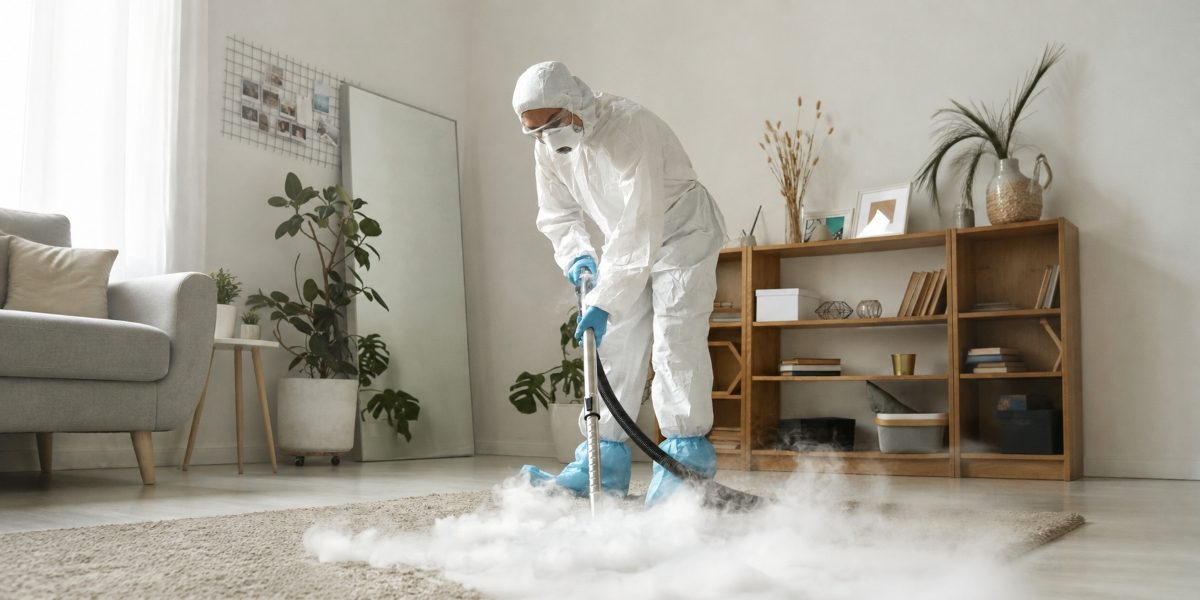
Green and Ecofriendly carpet cleaning interrupts this cycle by extracting embedded particles that vacuuming cannot reach. Hot water extraction, the method recommended by major carpet manufacturers, penetrates deep into the pile to suspend and remove soil before it can abrade fibers further. Research indicates that carpets cleaned every 12 to 18 months can last up to 50% longer than those cleaned less frequently. For a carpet with a 12-year baseline lifespan, this extension translates to 6 additional years of service, effectively halving the replacement frequency.
The True Cost of Replacement
Replacement cost extends beyond the price of new carpet and padding. Property owners must account for removal and disposal of old material, subfloor preparation, furniture moving, and installation labor. For a 1,500 square foot residential property, total replacement costs typically range from $3,000 to $13,500 depending on material selection and project complexity. Commercial properties with larger footprints see proportionally higher figures.
There is also the disruption cost. Replacement requires vacating the space for several days, displacing tenants or interrupting business operations. For rental properties, this means lost rent during the installation period. For commercial spaces, it means halted productivity and potential client inconvenience. These indirect costs are rarely calculated in the initial decision but significantly affect total expenditure.
From a real estate perspective, new carpet does not return full investment at sale. Industry data suggests carpet replacement recovers approximately 25% to 40% of its cost in increased sale price. The primary value is not appraisal lift but the avoidance of buyer concessions. Dated or damaged carpet frequently triggers repair credits or price reductions that exceed the cost of replacement itself.
When Professional Cleaning Is the Better Choice
Professional cleaning delivers maximum value when carpet fibers remain structurally intact but appearance has deteriorated due to surface soiling, staining, or odor accumulation. In these conditions, cleaning restores aesthetic appeal and hygienic condition without the capital outlay of replacement.
The extraction process removes deep soil that dulls color and flattens texture. Stain treatment addresses organic and synthetic discoloration that spot cleaning cannot resolve. Deodorization eliminates pet accidents, cooking odors, and mustiness that accumulate in padding and backing. The result is carpet that looks, smells, and feels significantly renewed.
For property owners with multiple units, the economics are particularly compelling. Cleaning a portfolio of 20 units at $0.30 per square foot versus replacing carpet in those same units at $4 per square foot represents a differential of tens of thousands of dollars. Even if cleaning extends carpet life by only 3 years rather than 6, the savings remain substantial.
Commercial properties benefit similarly. Office buildings, medical facilities, and retail spaces with heavy foot traffic require frequent maintenance. Professional cleaning every 3 to 6 months in high-traffic commercial environments preserves appearance and delays the far more expensive proposition of full replacement across thousands of square feet.
When Replacement Becomes Necessary
Cleaning cannot reverse structural damage. When carpet fibers have worn through to backing, when padding has deteriorated, or when water damage has caused mold or delamination, replacement is the only viable option. Similarly, carpet that has exceeded its functional lifespan, regardless of appearance, may require replacement to meet safety or hygiene standards.
Visible indicators that replacement is necessary include exposed backing in traffic areas, persistent odors after professional cleaning, separation of seams, and widespread staining that has permanently altered dye. If furniture placement conceals damage but traffic areas show significant wear, the carpet has reached end of life regardless of isolated preserved sections.
Property owners should also consider replacement when the existing carpet no longer meets the property’s market positioning. A luxury rental or professional office space may require upgraded materials to compete effectively, making aesthetic replacement a strategic rather than maintenance decision.
The Maintenance-Replacement Balance
The most cost-effective approach combines regular professional cleaning with timely replacement. Cleaning extends carpet life and defers replacement costs. Replacement addresses structural failure and market positioning. The key is accurate assessment of which condition applies.
Property owners should establish cleaning schedules based on traffic intensity. Residential rentals benefit from professional cleaning between tenancies and annually during occupancy. Commercial spaces require more frequent service, typically quarterly for high-traffic areas. This routine maintenance prevents the accelerated wear that forces premature replacement.
When carpet shows wear, professional assessment determines whether cleaning will restore acceptable condition. Reputable providers evaluate fiber integrity, backing condition, and soil depth before recommending service. If cleaning will not produce satisfactory results, they should say so, allowing the owner to allocate resources toward replacement rather than wasting funds on ineffective restoration.
In Summary
For most property owners, professional carpet cleaning represents the more economical choice in the short and medium term. It restores appearance, extends lifespan, and delays the significant capital outlay of replacement. The data supports this approach: regular cleaning can extend carpet life by 50%, reducing replacement frequency and preserving cash flow.
Replacement becomes necessary when structural damage exceeds restoration capacity or when market positioning demands upgraded materials. The decision should be based on condition assessment rather than arbitrary timelines.
San Antonio Carpet Cleaning provides carpet cleaning services for residential and commercial properties throughout San Antonio and surrounding areas. Their technicians assess carpet condition honestly, recommend cleaning when it will deliver value, and advise replacement when restoration is no longer viable.