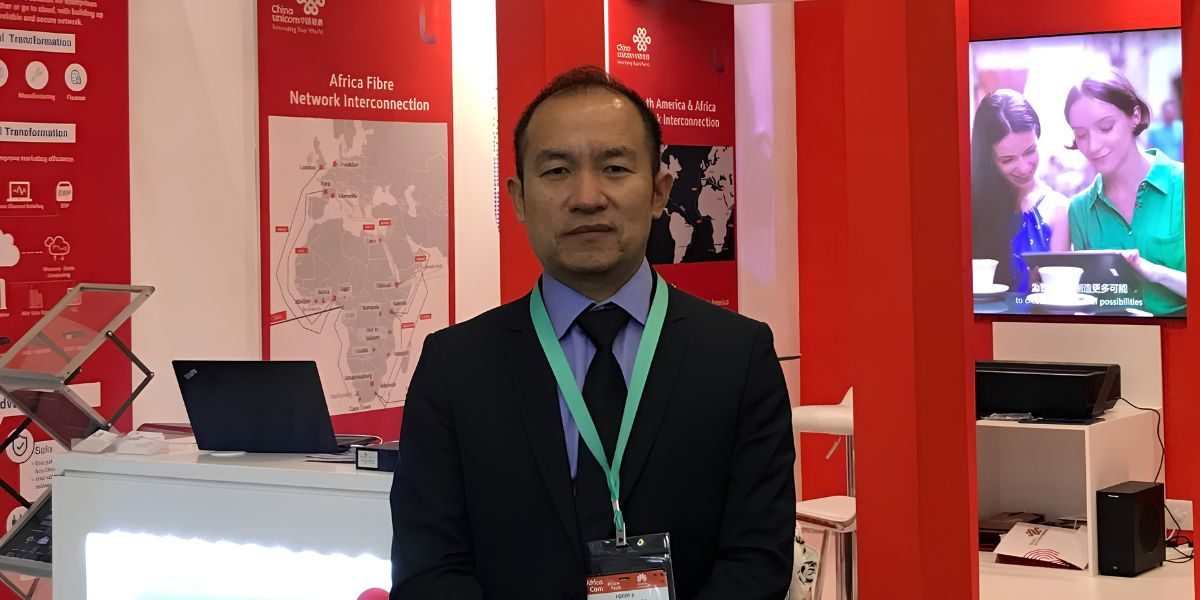

“I am so worried that the current telecom project delivery is getting more and more complex and difficult; how to effectively control the delivery progress?” Jianwei Ji always hears this kind of question and complaint arising from his colleagues who are taking the project delivery management work. As a telecom project delivery professional working in California, USA, Ji has been working in this field for almost two decades, and he has already had his own answer for this tough question. He calls it the horizontal delivery model.
After years of project delivery experience, Ji gradually developed this model. It was formed based on his years of experience, as well as repeated adjustments and updates in practice. Ji now introduces the model to more and more project management people, and a growing number of them are applying it in their own delivery work.
Delivery Mode of Traditional Telecom Projects
The scope of delivery of telecom projects generally includes the infrastructure part (I-Layer), the platform part (P-Layer), and the business service part (S-Layer). The delivery of I-Layer/P-Layer/S-Layer is like pagoda building construction, which needs to be carried out from the bottom up. Business applications are located on the top layer of this pagoda and need to rely on I-Layer/P-Layer as the foundation.
The delivery mode of traditional telecom projects can be called the vertical delivery mode; that is, the work from the infrastructure layer, the platform middleware layer, to the service layer is completed by a delivery team of the construction party, i.e., the lump sum mode. The members of this team need high-level professionals in different fields to complete all the work in the delivery. The requirements for the skills of the personnel are relatively high. The number of personnel occupied is large, and the deployment of personnel is difficult. It is easy to cause high delivery costs, and the delivery time is easily delayed. After delivery, the maintenance cost is high due to insufficient skill transfer after delivery. For a long time, the delivery of telecom projects has basically adopted this delivery model. It is becoming more and more difficult for a closed delivery team to complete projects with quality and quantity, which is one of the root causes of operators’ criticism.
Proposal for a New Horizontal Delivery Theory
In view of the disadvantages of the vertical delivery mode of traditional telecom projects, through continuous thinking and exploration, the following changes are considered: the non-core parts, that is, the infrastructure layer and the platform middleware layer, are stripped off and handed over to a third party by way of manpower outsourcing. Self-owned manpower focuses on completing application and service layer work and project management. In this way, the project delivery team’s own manpower occupation will be reduced, and the work on the infrastructure layer and platform middleware layer will be completed by third-party professional and technical personnel. The self-owned manpower does not need to invest too much energy and technical reserves in non-core parts. The third party is included in the project team by way of manpower outsourcing, and manpower is released after the work is completed. In this delivery mode, the project’s own manpower can only be used to deliver the application, and the rest is done by third-party professionals. The intent of this structure is to give the delivery team tighter control over its own manpower occupation and delivery costs.
Adopting PSI (Probability of Success Indicator) in the Model
In general, it is necessary to adopt PSI (Probability of Success Indicator) to monitor and control the overall delivery. PSI can be understood as a success probability index, that is, the scoring and evaluation of project success during project execution, which can be measured at any time in the project life cycle according to the standard, indicating how likely the project is to succeed. In the project delivery, the core service layer delivery is completed by self-owned manpower, the infrastructure layer and platform layer are outsourced to third-party manpower, and the PSI individual or organization supervises and controls the overall delivery progress of the project.
The role of PSI involves the continuous assessment of risk points and the ongoing adjustment of response strategies. In actual project delivery, the PSI is scored out of a maximum of 100 points based on multiple dimensions, including the clarity of project objectives, the existence of a finalized, explicit, and detailed task list, and the inclusion of contingency measures in the plan. A score of 60 indicates a “pass with room for improvement” status, meaning risks exist but are controllable, requiring prompt corrective action. A score of 80 or above signifies good project progress, requiring sustained improvement or minor optimization of specific details. Scores below 60 necessitate immediate remedial action; if necessary, delivery may be suspended and only resumed once the score reaches or exceeds the 60-point threshold.
Accordingly, the higher PSI score indicates the higher project delivery quality. During the delivery process, delivery strategies should be adjusted based on the PSI value, and personnel should be allocated and released in accordance with the delivery schedule to avoid unnecessary waste of human resources. The entire delivery process should be guided by the principles of the horizontal delivery model.
The Advantage of the Horizontal Delivery Model
In the horizontal delivery model, each team has a clear dependency and cooperation relationship throughout the delivery process. Cost control, manpower saving, and delivery reliability are the considerations that have driven the gradual transition to the horizontal delivery model. On the basis of continuous exploration and summarization of experience, more and more project managers are learning and adopting the horizontal delivery model. The model is built to address the problems that surface most often in vertical delivery, namely budget pressure, schedule slippage, and the maintenance burden that follows an incomplete skill transfer.