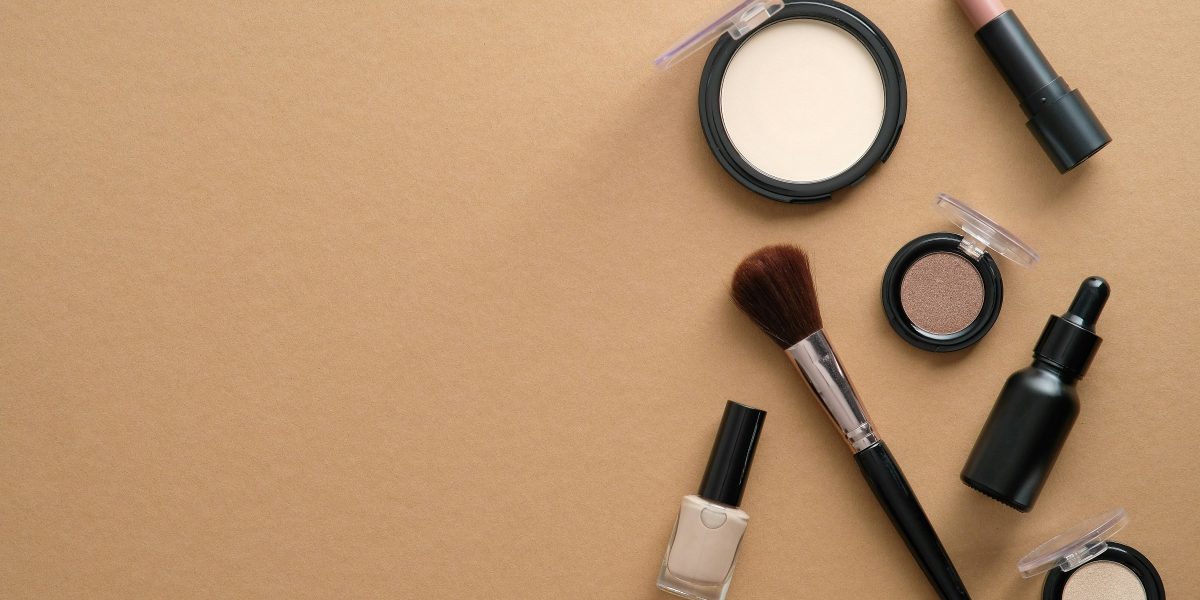

Something strange happened to prestige beauty between 2019 and 2024. The category that once meant heavy foundations, gilded compacts, and department store counters started to look lighter, sheerer, more concerned with skin than coverage. The new wave of lux brand cosmetics is less about hiding a face and more about lending it a glow it can plausibly pretend is its own.
Circana’s 2023 prestige beauty report showed skincare-hybrid products, tinted serums, skin tints, and self-tanning drops posting double-digit growth while traditional full-coverage foundation sales flattened out. NPD’s earlier tracking flagged the same pattern back in 2021. So the category did not really shrink so much as reorganize itself around a different premise about what a face is supposed to look like in public.
What luxury actually means now
For most of the twentieth century, luxury in beauty was signaled through packaging weight, counter theatre, and a certain kind of scent when the cap came off. Estee Lauder built an empire on that grammar, Chanel refined it, and La Prairie priced it into another stratosphere where the jars themselves felt like small architectural objects.
The shift over the last five years has moved away from those signals toward ingredient transparency, clinical formulation, and what the industry now calls skinification, meaning the demand that every product, including color cosmetics, do something for the skin beneath it. A 2022 Mintel report on premium beauty in North America found that 61 percent of prestige shoppers under 40 rated skincare benefits as more important than color payoff when choosing a foundation or tint, up from something closer to 40 percent a decade earlier.
The result is a category that looks less like a makeup aisle and more like a dermatology waiting room with better lighting, where the lipstick contains ceramides, the mascara primer contains niacinamide, and everything else has hyaluronic acid stuffed into it whether it needed any or not.
The rise of the sunless glow
One subcategory has quietly become the tell. Self-tanning, once a drugstore product line associated with orange palms and biscuit smell, has moved firmly into prestige, and the transition happened faster than most people in the industry expected.
Tan-Luxe kicked the door open in 2015 with its Illuminating Self-Tan Drops. St. Tropez, older and more established, repositioned around its Purity Water line. Isle of Paradise, launched in 2018 by Jules Von Hep, added color-correcting drops in green, peach, and violet undertones. Drunk Elephant, better known for skincare, released D-Bronzi in 2019, a bronzing drop that blurred the line between tinting oil and treatment. Bliss a Tan and Miracle Tan built followings in Australia and the UK before crossing into US Sephora shelves.
The common thread is that none of these products ask the customer to look tan the way a tanning bed made a person look tan in 2003. The goal is a shade or two of warmth, applied in droplets, mixed into a serum or moisturizer already in the routine. What most of these brands are actually selling is the tan filter aesthetic, that Instagram-native look of soft warm skin without heavy makeup, translated back into something the mirror can also see.
That aesthetic is what pulled sunless tanning out of the beach-holiday category and into daily prestige skincare. A Kline & Company report from late 2023 put the global self-tanning market at just under 1.4 billion USD, with premium and prestige subsegments growing faster than mass.
Where the actives meet the color
The formulation story matters here because it explains why the category can charge prestige prices in the first place. DHA, the sugar molecule responsible for most sunless tanning, has been in use since the 1960s, so the active itself is not what changed. What is new is the delivery system and everything else in the bottle around it.
Vita Liberata pairs DHA with peptides. Skin by Tanin, a smaller entrant, leans into a botanical stack alongside its bronzing actives. Others, including brands positioning around vegan and cruelty-free credentials, have been reformulating away from synthetic fragrance and denatured alcohol, both of which historically gave self-tanners their reputation for being drying and vaguely unpleasant to be near. For readers curious how a small independent is approaching that reformulation, it is worth taking a moment to explore Lux Unfiltered, which has built its line around nontoxic, vegan self-tan and skin-nourishing formulations rather than traditional bronzing chemistry.
The move toward cleaner tanning formulations tracks with the broader clean beauty conversation, which itself has been criticized, fairly enough, for being loosely defined to the point of meaninglessness. The FDA does not regulate the term clean, and there is no single standard for what qualifies, which means the label ends up doing a lot of work that the ingredient list should probably be doing instead. Even skeptics of the framing tend to concede that the reformulation pressure has, on balance, produced better products with fewer allergens and less of that telltale biscuit smell.
The tint economy
Alongside the tanning drops, another product type has grown into a category anchor: the skin tint. Ilia Super Serum Skin Tint, launched in 2020, is probably the most cited example, with Saie Glowy Super Gel and Kosas Revealer Skin Improving Foundation following a similar template. Luxe tint, as the segment is now often labeled at retail, refers to a sheer buildable base with skincare actives inside, priced somewhere between 38 and 65 dollars.
These products matter to the larger lux brand cosmetics story because they represent a genuine shift in what prestige shoppers will pay for. A 45 dollar tint that gives less coverage than a 45 dollar foundation used to be a hard sell at the counter, and now it is the format outgrowing everything else at Sephora, according to the retailer’s own 2023 category disclosures.
What these tints share with the tanning drops is philosophical as much as chemical. They are additive rather than corrective, they assume the skin underneath is worth showing, and they slot into a routine rather than trying to replace one. That is a different bargain than the one prestige beauty used to offer.
The unfiltered problem
There is a tension inside all of this that is worth naming out loud. The category sells itself on the promise of natural, unfiltered, real skin, while being enabled by an aesthetic culture that has never been more heavily filtered. A tan filter on TikTok can add the same warmth in one tap that a bottle of drops takes three days to build, so the look being sold in the bottle is often just the look already being faked on the phone.
That is not necessarily a criticism, because cosmetics have always negotiated between reality and the desired image, and pretending otherwise would be silly. But it does explain why the unfiltered vocabulary now common across prestige beauty resonates the way it does. It gives shoppers permission to want the aesthetic without wanting to feel complicit in the artifice that produced it, which is a fairly sophisticated piece of marketing to pull off in a category that used to just sell foundation.
Whether the products actually deliver on that promise varies quite a bit. Sun Struck-style tanning drops layered under a good skin tint can produce a result that holds up in daylight, while other combinations produce a look that only really works under a ring light, which is not exactly the promise on the box.
What to watch next
Two things are worth tracking over the next 18 months.
The first is regulatory. The EU has been tightening rules around DHA concentration and application methods, particularly for spray-tan booths, and those rules tend to influence North American formulation eventually even when the FDA does not follow directly. Lower-DHA, higher-active formulations should keep gaining share as a result.
The second is retail. Sephora and Ulta have both been giving prestige self-tanning more shelf space each quarter since 2021, and when a category moves from an endcap to a permanent bay, it stops being a trend and starts being infrastructure. That transition looks close to done.
The reinvention of lux brand cosmetics is not finished, and some of the brands leading it now will not be the ones leading it in 2027, because beauty is brutal about that sort of thing. But the underlying shift, toward lighter coverage, cleaner formulation, and the sunless glow as a daily product rather than a seasonal one, is not a passing mood. It is what prestige beauty looks like now, and what it will probably keep looking like for a while yet.