
By Jay KT
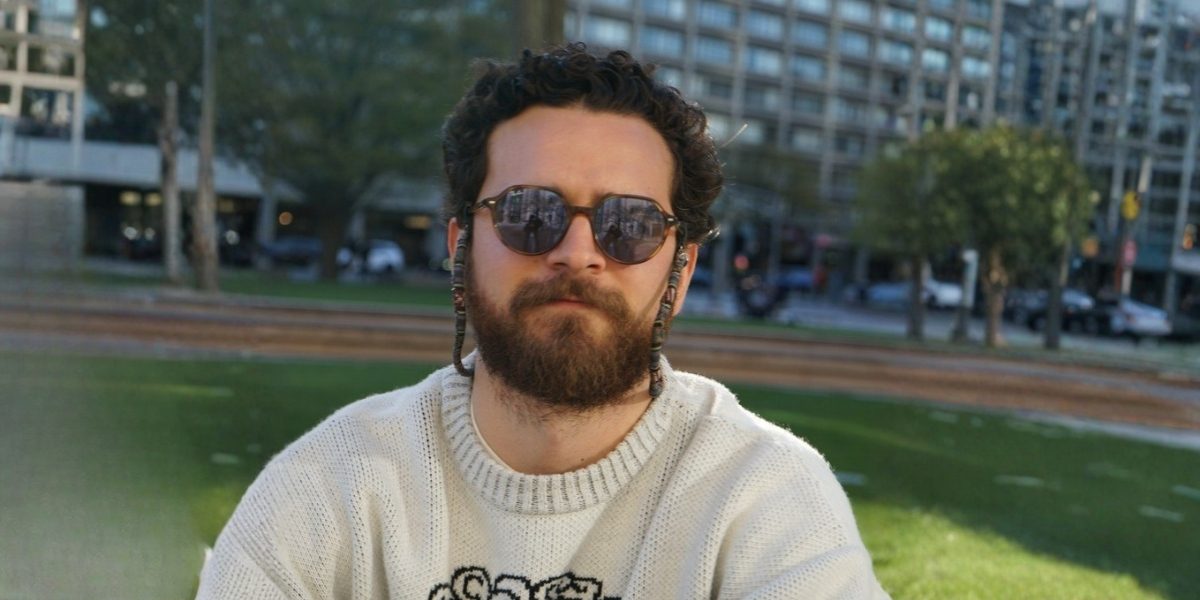
In the world of multimedia storytelling, what you hear is often just as crucial as what you see. For Mexican-born, New York City-based composer and sound designer Santiago Aramburu, audio is not just a technical requirement; it is the emotional architecture of a project.
A graduate of the prestigious Berklee College of Music with dual majors in Contemporary Writing & Production and Electronic Production & Design, Aramburu has built an impressive, multi-disciplinary career. His expertise spans narrative films, television, podcasts, and live performance. Whether he is deep in the post-production process, handling dialogue editing, Foley, and ambience creation, or composing original music, his work is driven by a singular passion: creating immersive audio experiences that elevate the narrative.
His audio post-production credits include the feature film The Paper Bear, the hilarious mockumentary The Premiere, Tail Between Her Legs, and Bloody Ax Wound. Projects he has contributed to have screened at prestigious events across the country, including the Hamptons International Film Festival, Buffalo International Film Festival, George Washington University Film Festival, Poppy Jasper International Film Festival, and the Florida International Film Festival.
We recently sat down with Aramburu to discuss his creative process, the unique challenges of jumping between contrasting film genres, and how he uses his technical expertise to drive meaningful social impact.
Q. You graduated from Berklee College of Music with dual majors in Contemporary Writing & Production and Electronic Production & Design. How did that specific academic combination shape your approach to the industry in New York City?
Santiago Aramburu: That combination really gave me the best of both worlds. Contemporary Writing & Production taught me the fundamentals of musical composition, arrangement, and how to tell a story through traditional instrumentation. Electronic Production & Design, on the other hand, pushed me deeply into the technical side of things: synthesis, sound design, and the software used to manipulate audio. Being based in New York City, the industry demands versatility. Because of my dual background, I don’t just look at a project purely as a composer or purely as an audio engineer. I can see the entire sonic landscape, from the musical score to the subtle environmental Foley, and understand how they need to interact.
Q. You served as the lead sound designer for the feature film The Paper Bear. What is your process for creating an immersive sonic environment for a project like that from the ground up?
Santiago Aramburu: With a film like The Paper Bear, you are essentially building a world from scratch. My process always starts with the story and the emotional core of the characters. Before I even touch a synthesizer or record a Foley footstep, I sit down with the visuals and ask, “What is this space supposed to feel like?” From there, it is about layering. You start with dialogue editing to make sure the human element is pristine. Then, you build the ambience: the room tones, the wind, the environmental textures, which grounds the audience in reality. Finally, I add the specific, detailed Foley work that gives the world its physical weight. It is a meticulous process, but when it all comes together in the final mix, the world suddenly feels alive.
Q. You have worked on a highly diverse slate of films, ranging from Sam Pezzullo’s mockumentary The Premiere to Tail Between Her Legs and Bloody Ax Wound. How do you adapt your audio post-production approach for such contrasting genres?
Santiago Aramburu: Every genre has its own sonic vocabulary. With a mockumentary like The Premiere, the comedy relies heavily on timing and realism. The sound design needs to feel almost invisible, mirroring the raw, unpolished audio of a real documentary to sell the joke. If it sounds too highly produced, you break the illusion. Conversely, with something like Bloody Ax Wound or Tail Between Her Legs, the sound design is an active participant in building tension. You rely heavily on visceral Foley, low-frequency rumbles, and jarring audio dynamics to make the audience feel uneasy. You have to tailor your toolkit to whatever the narrative tone requires.
Q. Beyond your film work, you have collaborated extensively with Ukrainian singer-songwriter Valeriia Vovk. Together, you completed three US fundraising tours and raised nearly $100,000 for humanitarian and military aid. Can you tell us about that experience?
Santiago Aramburu: That project has been one of the most meaningful experiences of my career. I worked as Valeriia’s composer, producer, sound designer, and live audio engineer. Going on the road for three tours requires a massive amount of logistical and technical execution, from setting up the live production to ensuring the sound translates perfectly in every new venue. But beyond the technical aspects, we were driven by a profound social impact. To use music and live performance as a vehicle to raise nearly $100,000 for Ukraine, while simultaneously raising awareness of the ongoing struggle there, showed me the tangible power of art. It was a perfect blend of creative direction and real-world impact.
Q. You also have experience in the podcast and audio documentary space, such as your work on the Peter Kirk audio documentary for New York Road Runners (NYRR). How does storytelling change when you remove the visual element completely?
Santiago Aramburu: When you take away the picture, the audio has to do all the heavy lifting. In an audio documentary, the listener’s brain is rendering the visuals based entirely on the clues you give them. The dialogue editing has to be incredibly tight because pacing is everything. You also have to be much more deliberate with your ambience and sound effects. If someone is running a marathon, you need to hear the specific rhythm of the footsteps on the pavement, the breathing, the crowd swelling in the background. You have to guide the listener’s imagination through sound alone, which makes the mix incredibly intimate.
Q. Looking at your career as a whole, what is the core philosophy that drives your work, and what are you looking forward to exploring next?
Santiago Aramburu: My core philosophy is that sound should never just be heard; it should be felt. Whether I am composing an original piece of music, designing the Foley for a thriller, or running the live audio for a charity concert, my goal is always to enhance the emotional impact of the story being told. Moving forward, I am excited to continue exploring the intersection of music, technology, and cinematic storytelling. The tools we have for spatial audio and immersive sound design are evolving rapidly, and I want to keep pushing the boundaries of how audiences experience sound.
The Lasting Resonance of Sound
Whether he is carefully sculpting the ambient noise of a dramatic feature film, engineering live audio for a cross-country charity tour, or editing the pacing of a gripping audio documentary, Santiago Aramburu approaches his craft with a profound respect for the narrative. His journey from Berklee College of Music to the bustling post-production houses and live stages of New York City highlights the unique value of a multidisciplinary artist.
As media continues to evolve, the demand for immersive, deeply detailed audio experiences will only grow. With a foundation built on technical precision and emotional intuition, Aramburu is uniquely positioned to continue shaping those sonic landscapes for years to come.
To explore his portfolio of original music, view his post-production sound design reels, and follow his upcoming projects, visit his official website at santiburu77.wixsite.com or view his full list of credits on IMDb.