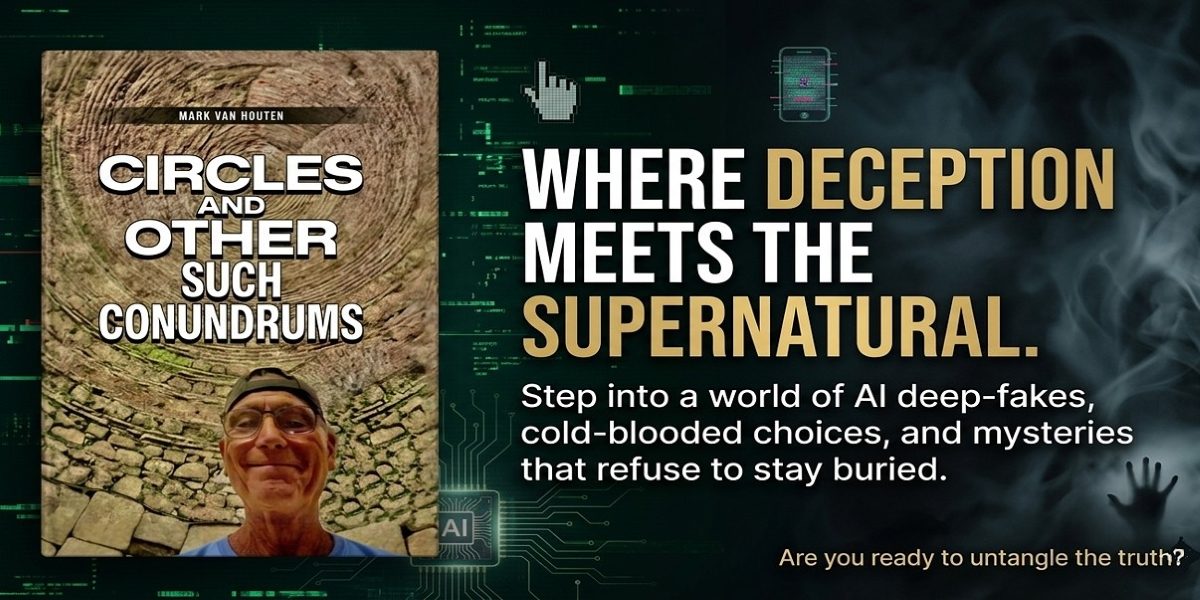

In Circles and Other Such Conundrums, retired neurologist, researcher, composer, and author Mark Van Houten explores the hidden strengths and weaknesses that shape ordinary people under extraordinary pressure.
A Storyteller Shaped by a Life in Medicine
For Mark Van Houten, storytelling did not begin at a writing desk. It began in the quiet, deeply human space between doctor and patient.
Long before he became the author of Circles and Other Such Conundrums, Van Houten spent decades as a community neurologist, listening to people describe not only symptoms, but fear, frustration, identity, hope, loss, and the difficult work of continuing to live when life no longer feels predictable.
In that space, he began to see what many systems often miss: a person is never just a diagnosis.
A patient’s illness, he came to understand, was not merely a medical problem. It was a story. It had a protagonist. It had conflict. It had pressure. It had choices. And, like every meaningful story, it had no guarantee of a simple or comfortable ending. That realization became the foundation for Van Houten’s fiction.
From Clinical Practice to Creative Fiction
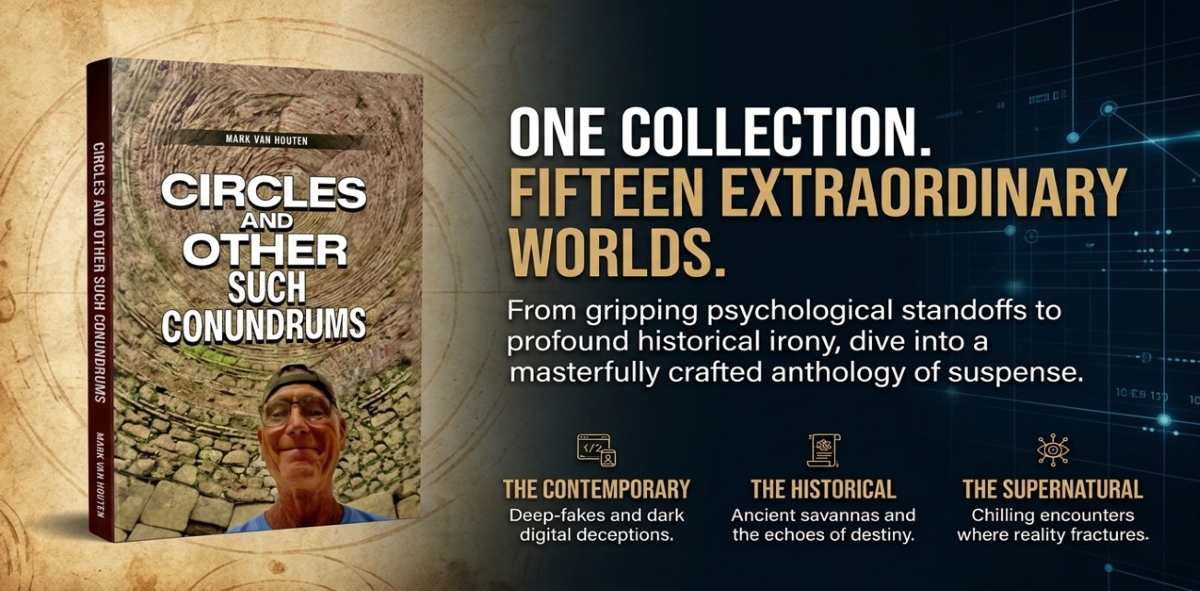
Now retired from medical practice after 35 years as a community physician, Van Houten brings a rare perspective into Circles and Other Such Conundrums, a collection of fourteen short stories that move through psychological suspense, moral dilemma, speculative fiction, fantasy, dark humor, and deeply human drama.
The book resists easy categorization, and that is part of its appeal. Its stories may be fictional, but the emotional machinery inside them feels unmistakably recognizable.
Van Houten’s journey to literature is as layered as the characters he creates. He obtained his medical degree from McGill University Medical School in Montreal and built a career in neurology after earlier work in neuroscience research. He recalls being fascinated by personality and the workings of the mind, an interest that first led him toward research and later toward clinical medicine.
Along the way, his imagination became more than a private gift, it became a professional instrument.
In medicine, imagination helped him think beyond the chart. In fiction, it helps him think beyond the obvious.
Seeing Patients as Protagonists
Van Houten has said that traditional medical training often emphasized extracting symptoms to arrive at a diagnosis, while paying less attention to the way illness reshapes a patient’s dreams, relationships, confidence, and future.
His own approach grew more personal.
He wanted to know how people were coping, what they feared losing, and what strengths they might call upon when circumstances pressed hardest.
That same question drives Circles and Other Such Conundrums: What happens when ordinary people are forced to confront the truth about themselves?
Across the collection, Van Houten places his characters in situations that test their moral instincts, their weaknesses, their vanity, their compassion, and their capacity to adapt. A caregiver becomes trapped between duty and desperation.
A bullied young man discovers a mysterious path toward self-belief. A futuristic courtroom exposes the cold absurdity of rules stripped of humanity. A family inheritance dispute turns into a supernatural reckoning. A society dominated by robotic logic reveals the danger of efficiency without empathy.
A Collection Built on Human Pressure Points
The result is a book that reads less like a simple short story collection and more like a gallery of human pressure points.
Each story asks readers to look closer: at ambition, resentment, loneliness, faith, love, cruelty, survival, and the fragile line between reason and madness.
The title itself, Circles and Other Such Conundrums, is fitting. Circles appear not only as symbols but as patterns of human behavior. People repeat mistakes. Families inherit conflicts.
Societies return to old struggles under new names. Lives move through beginnings and endings that often curve back into one another.
In Van Houten’s fictional world, the circle is not merely a shape. It is a question: Are we evolving, or are we simply returning to the same human mysteries again and again?
A Timely Warning About Technology Without Humanity
That question feels especially timely in an age increasingly shaped by technology and artificial intelligence.
Van Houten does not present himself as a technologist, but his stories show a sharp concern for what happens when human judgment is replaced by rigid systems. In his interview, he suggested that technology may assist with diagnosis or technical tasks, but it cannot replace the personal encounter that allows one human being to understand another’s hopes, fears, and struggles.
That belief gives the book a powerful contemporary edge.
At a time when many people worry about becoming data points, profiles, usernames, or categories, Van Houten writes stories that insist on the messiness of personhood. His characters are not polished heroes.
They are flawed, impulsive, frightened, imaginative, selfish, loving, and unpredictable. They make poor choices. They chase impossible visions. They misread the world. Sometimes they grow. Sometimes they collapse under the weight of themselves.
And that is precisely what makes them compelling.
The Creative Life Beyond Medicine
Van Houten’s creativity also extends beyond the page.
In retirement, he has continued composing music, another expression of the imaginative life that has followed him from science to medicine to fiction. He has described music as a source of richness and expression, much like storytelling.
Both require structure. Both require emotion. Both require timing. And both, in Van Houten’s hands, become ways of exploring the interior lives of people.
The Human Message at the Heart of the Book
For all his intellectual curiosity, Van Houten’s deepest message is surprisingly simple.
Life, he believes, is shaped most meaningfully by relationships. Family, friends, and community are not accessories to a successful life, they are the substance of it.
Married for 50 years, a father and grandfather, he speaks about family with the same seriousness he brings to medicine and art.
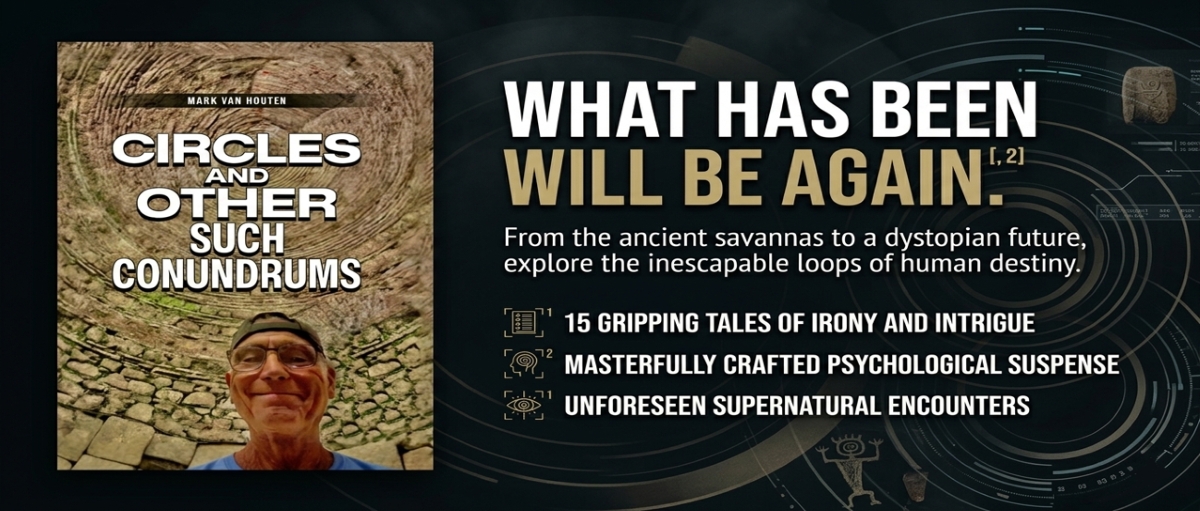
That sense of human connection gives Circles and Other Such Conundrums its heart. The book may feature ghosts, robots, ancient tribes, futuristic societies, psychological spirals, and apocalyptic visions, but beneath all of it is a physician’s lifelong attention to people under stress.
Van Houten knows that the most revealing moments often arrive when control slips away. In those moments, character is exposed.
Why Readers Will Connect with This Book
That is the unique value of this collection.
It entertains, but it also invites reflection. It asks readers to consider their own strengths and weaknesses, the choices they make under pressure, and the stories they are writing with their lives.
The cover copy offers a fitting warning that states, “Do not let the label of “fiction” mislead you. The characters may be imagined, but the dilemmas feel familiar.
Readers may find themselves rooting for them, recoiling from them, laughing at them, or recognizing uncomfortable fragments of themselves within them.
A Second Act with Purpose
In Circles and Other Such Conundrums, Mark Van Houten proves that a second act can be more than reinvention. It can be a revelation.
After a career spent listening to the stories hidden inside medical struggle, he now offers readers a collection that turns human complexity into imaginative, provocative, and memorable fiction.
And in doing so, he reminds us that every life is a story under pressure and every story, no matter how strange, circles back to what it means to be human.