
By: Jay Kt
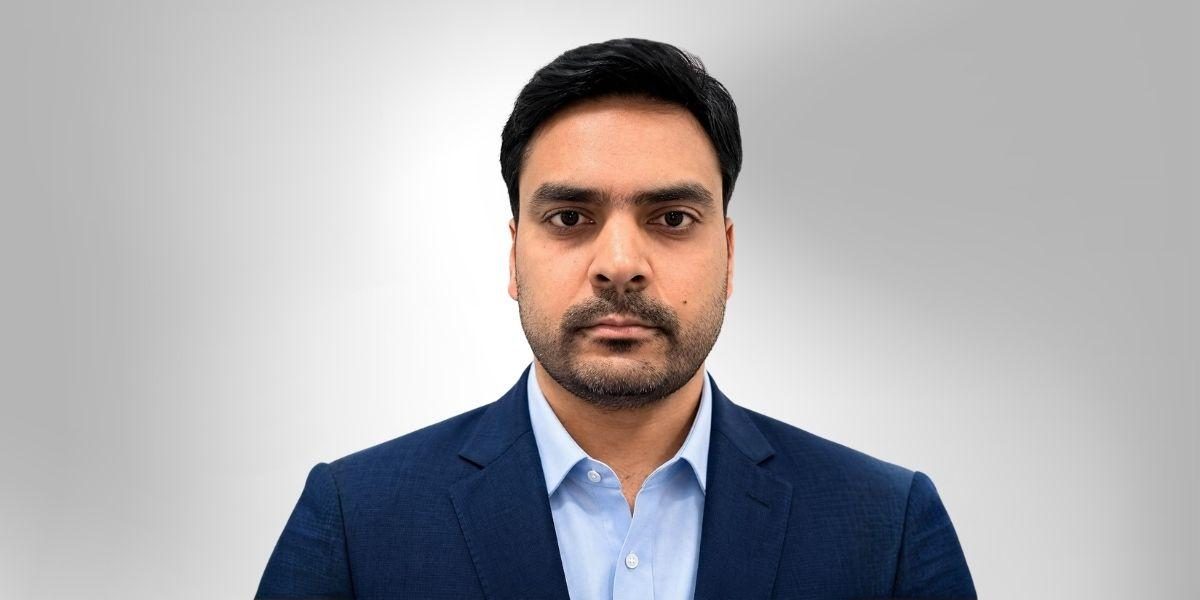
When data breaches can topple billion-dollar companies, and ransomware can shut down hospital systems overnight, the people standing between organizations and digital catastrophe are among the most consequential figures in modern business. Prasanth Alluri is one of them. A Security Architect with over fourteen years of experience spanning software development, cloud infrastructure, DevSecOps, and enterprise security, Alluri has worked across many corners of the cybersecurity field. His rise was not built on a single dramatic breakthrough, but on the steady, deliberate accumulation of knowledge that only comes from genuinely doing the work.
His career trajectory resists easy summary. Alluri has written code, built cloud infrastructure at a global financial institution, deployed endpoint protection across thousands of enterprise workstations, and authored peer-reviewed research. Today, he designs zero-trust security architectures for pharmaceutical companies operating in some of the world’s most rigorous regulatory environments. In an industry often divided between those who theorize and those who execute, he does both, and that combination defines how he approaches the work.
An Uncommon Starting Point
Prasanth Alluri’s path into cybersecurity began not in a security operations center, but in software development. Early in his career, he worked as a senior developer at Tera Software Limited, building ASP.NET web applications and WCF web services. He implemented caching mechanisms, state management logic, and infrastructure modernization through Infrastructure as Code tools like Terraform and CloudFormation. On paper, these were developer responsibilities. In practice, they were lessons in how systems break and how attackers exploit the gaps.
That developer mindset never left him. Understanding how software is constructed from the inside out gave Alluri a perspective that purely security-trained professionals often lack: an intuitive grasp of where vulnerabilities originate, how poorly secured code becomes an attack surface, and why security must be built into systems rather than bolted on afterward.
“Understanding how technology works behind the scenes helps you see security differently,” Alluri has said. “You are not just protecting systems. You are protecting the people and businesses that depend on those systems.”
That philosophy, simple as it sounds, became the throughline of everything that followed.
Scale, Stakes, and the World Bank
If early development work gave Alluri his foundation, his time at the World Bank gave him his perspective on scale.
Between 2014 and 2016, he served as a DevSecOps Engineer, working on the Open Data API infrastructure that processed over one million requests daily. The work was technically demanding, covering highly available EC2 infrastructure, deployment pipelines in Jenkins, and authentication and rate limiting for public-facing APIs. It was also philosophically clarifying. When your systems serve researchers, policymakers, and institutions across dozens of countries, every architectural decision carries weight far beyond its technical specifications.
Alluri led the cloud migration initiative for the World Bank’s Open Data platform, embedding security controls directly into infrastructure provisioning using Terraform and CloudFormation. He also developed an automated security testing framework for API endpoints, ensuring that vulnerabilities were caught at the code level rather than discovered in production. He built security monitoring and analytics dashboards using Tableau to provide real-time threat visualization.
The experience introduced him to the concept that would define much of his later career: security is not a feature. It is an operational requirement, and it must be continuous.
“You start realizing that every technical decision can affect thousands or even millions of people,” he has reflected. “That changes the way you approach your work.”
Seven Years Inside a Pharmaceutical Giant
From the World Bank, Alluri moved into what would become the defining chapter of his professional career: a seven-year tenure as Senior Information Security Engineer at AbbVie Pharmaceuticals, one of the world’s largest biopharmaceutical companies.
If the World Bank taught him scale, AbbVie taught him rigor. Pharmaceutical security operates under compliance frameworks including FDA 21 CFR Part 11, GxP, HIPAA, ISO 27001, and NIST, all of which leave no room for ambiguity. Every control must be documented. Every exception must be justified. Every audit must be survived.
The accomplishments Alluri amassed during this period speak for themselves. He deployed CrowdStrike Falcon EDR across more than 5,000 endpoints, achieving 99.8% coverage while reducing incident response time by 60%. He built Splunk dashboards and correlation searches that turned raw security data into actionable intelligence for threat hunting and compliance tracking. He implemented CyberArk for privileged account management, led enterprise IAM integration following major acquisitions, and managed the remediation of more than 2,000 excessive access permissions annually. That figure reflects the organizational discipline required to enforce least-privilege access at scale across a global enterprise.
Most significantly, Alluri led the security workstream for AbbVie’s enterprise consolidation following acquisitions. The challenge required integrating disparate IAM systems, rationalizing security tooling, and reducing overall complexity by 40%. It is the kind of work that never makes headlines but prevents the security gaps that do.
His approach at AbbVie crystallized a philosophy he has carried ever since: security works best when it becomes part of the operational process rather than a compliance checkbox applied at the end. This insight, simple in theory yet hard to execute, distinguished him as a practitioner who understood business context, not just threat models.
Research That Advances the Discipline
What separates Alluri from practitioners of similar experience is his commitment to contributing to cybersecurity knowledge, not just applying it. His work as a researcher, reflected in publications indexed on Google Scholar and registered through ORCID, places him among the security professionals who both build enterprise programs and advance the field’s academic understanding.
His published research covers territory central to modern enterprise security: multi-cloud security architecture, zero-trust identity frameworks, automated threat detection methodologies, and compliance engineering in regulated industries. They are scholarly examinations of the same challenges he encounters in his day-to-day work, turned into frameworks and findings that other professionals can build upon. His work has accumulated citations that attest to its reach within the information security research community.
The value of this dual identity is real. Research divorced from operational reality often produces solutions that work in controlled environments but fail in enterprise ones, while practitioners who never engage with research risk repeating mistakes the field has already addressed. Alluri occupies the productive middle ground, where his research is informed by real-world implementation and his implementations are shaped by rigorous analysis.
His publication in the Journal of Information Systems Engineering and Management reflects this approach, contributing empirical, peer-reviewed insights to a field that needs more of them.
Architecting Zero Trust for Life Sciences
Since January 2024, Alluri has served as Infrastructure and Security Architect at Celito Tech, a managed service provider specializing in pharmaceutical and life sciences organizations. The role brings together every dimension of his expertise: cloud architecture, IAM strategy, compliance engineering, threat detection, and enterprise security leadership.
In this capacity, he has architected zero-trust security frameworks across multi-cloud environments spanning AWS, Azure, and GCP. He designed enterprise IAM solutions incorporating Privileged Access Management and Multi-Factor Authentication strategies that reduced unauthorized access risk by 85%. In a pharmaceutical context where data integrity is both a regulatory and patient safety requirement, that figure represents genuine organizational resilience.
He has established security programs aligned with NIST CSF, NIST 800-53, and ISO 27001, conducting gap assessments and building remediation roadmaps that turn abstract compliance requirements into concrete engineering work. He engineered high-availability and disaster recovery architectures, ensuring 99.99% uptime SLAs for mission-critical operations. In life sciences, that level of reliability can directly affect research continuity and regulatory timelines.
Zero trust, as Alluri implements it, is not a product or a checkbox. It is an architectural philosophy: verify every user, validate every device, authorize every request, and assume that compromise is always possible. Applied consistently across an organization’s technology stack, it turns security from a perimeter concept into a continuous operational posture.
Thought Leadership on the Horizon
The cybersecurity challenges organizations face in the coming years differ qualitatively from those of the past decade. Artificial intelligence is empowering security teams and enabling more sophisticated attacks at the same time. The attack surface now spans cloud-native applications, containerized workloads, and distributed APIs. Identity has become the new perimeter, making IAM strategy more consequential than firewall rules, and regulatory demands in fields like pharmaceuticals and financial services keep tightening.
Alluri’s perspective on these pressures reflects the depth of his experience. He has argued that the organizations best positioned to handle them are those that embed security thinking into their engineering culture rather than treating it as a specialized function. The shift toward DevSecOps, with security built into development pipelines through automated testing, policy-as-code, and continuous compliance monitoring, is one he has championed throughout his career and applied in settings ranging from international development institutions to multinational pharmaceutical companies.
On artificial intelligence, Alluri sees both the threat and the opportunity clearly. AI-powered detection can identify anomalies at machine speed, far faster than human analysts. The same capabilities can be weaponized by adversaries to craft convincing phishing attacks, find vulnerabilities faster, and evade signature-based detection. The asymmetry favors organizations that have already built adaptive, intelligence-driven security programs, exactly the kind he has spent his career constructing.
His certifications reflect the breadth of this expertise: GIAC Public Cloud Security (GPCS), GIAC Information Security Professional (GISP), GIAC Certified Incident Handler (GCIH), CompTIA Security+, Splunk Certified Power User, and CyberArk Certified Trustee. Taken together, they reflect a disciplined commitment to deep technical proficiency across the domains most critical to enterprise security.
The Leadership Dimension
Behind the technical work is a leadership philosophy worth examining. Alluri has consistently emphasized that security programs succeed or fail based on their relationship with the broader organization. Security that operates in isolation, issuing mandates, creating friction, and defining success purely in terms of what it prevents, loses the organizational trust required to be effective.
His alternative approach is collaborative rather than adversarial. When working with engineering teams, he frames security requirements as design constraints that enable better systems rather than restrictions that impede them. When advising business leaders, he translates technical risk into business impact rather than leading with compliance jargon. He has conducted security architecture reviews and presented security metrics directly to executive leadership, work that requires not just technical depth but the ability to communicate consequences at a strategic level.
“The goal is not to say no,” he has said. “The goal is to find a secure way to say yes.”
This orientation toward problem-solving rather than gatekeeping has made him a trusted advisor to the organizations he serves. Where security teams are sometimes viewed as obstacles to business agility, his ability to position security as an enabler of organizational confidence is both a professional and a cultural contribution.
A Career Still in Progress
Prasanth Alluri’s trajectory from software developer to published researcher to enterprise security architect is not a story about a single insight or a defining moment. It is a story about the compounding returns of genuine expertise, built through varied roles in high-stakes environments and refreshed through academic engagement.
As organizations keep migrating to cloud-native architectures, as AI reshapes both threats and defenses, and as regulatory demands on data security intensify, the need for professionals who can work at the intersection of technical depth and strategic vision will only grow. Alluri has spent fourteen years building precisely that profile.
His work at Celito Tech, his published research, and his engagement with the cybersecurity community reflect a professional who understands that the measure of a security program is not the number of attacks it blocks, but the degree of trust it builds between an organization and the people it serves.
In cybersecurity, as in most complex disciplines, the most durable careers belong not to those who find the shortest path to expertise, but to those who take the long road, learning from every environment and carrying the lessons forward. Prasanth Alluri has taken the long road, and it has placed him where the field needs him most.
Prasanth Alluri is a Security Architect and researcher specializing in cloud security, zero-trust architecture, IAM, and enterprise security for regulated industries. His published research is available through Google Scholar and ORCID.