
By Seth Harrington
Digital product design has expanded dramatically in scope, yet few professionals manage to bridge the gap between intimate, therapeutic user experiences and massive enterprise ecosystems. Xiaoyun Chen, a UX designer based in San Jose, has built a career around moving between both worlds with unusual precision. Recognized by the MUSE Design Awards and the International Design Awards (IDA), Chen has drawn industry attention for projects that combine emotional sensitivity with scalable technological thinking.
Designing for Cognitive Care with Memory Line
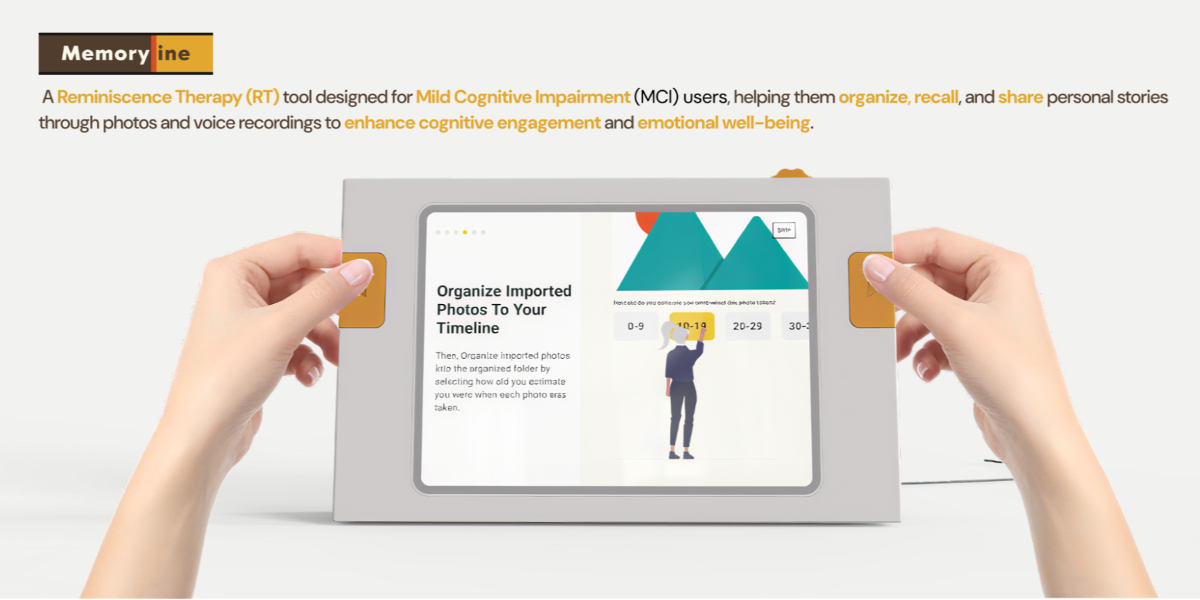
One of Xiaoyun Chen’s most recognized projects is Memory Line, which received the Gold Winner title at the 2025 MUSE Design Awards and a Silver Award at IDA 2025. The project was developed for individuals living with Mild Cognitive Impairment (MCI), a condition that affects memory, attention, and cognitive processing.
Rather than approaching elderly care through a strictly medical lens, Chen and her team explored the emotional dimension of memory retention. Inspired by the principles of Reminiscence Therapy (RT), Memory Line uses a tactile timeline interface that encourages users to revisit important moments from their lives through photographs, voice recordings, and physical interaction.
“We wanted to create a therapeutic assistive device that felt personal instead of clinical,” Chen explains. “For many users, memories are tied closely to emotion, touch, and familiarity. The design needed to support those connections naturally.”
Industry observers praised the project for translating healthcare research into a more approachable consumer experience.
Expanding Innovation Beyond Healthcare
Xiaoyun Chen’s interest in human-centered innovation extends beyond healthcare. Her AI-powered pet care companion, FurSphere, also earned a Silver Winner distinction at MUSE and an Honorable Mention at IDA. The system combines AI health monitoring, behavioral tracking, and smart-device connectivity, helping pet owners better understand the well-being of their animals and respond to behavioral changes.
Bringing UX Design to Enterprise Platforms
While Chen’s award-winning concepts highlight her creative range, her professional work at a leading TV streaming platform demonstrates her ability to operate at enterprise scale. As a UX Product Designer, Chen contributes to the company’s Developer Portal, a critical platform supporting an ecosystem with tens of millions of active accounts.
At the platform’s developer summit, company leadership highlighted features designed by Chen, including the “Phased App Rollouts” and “Channel Rollback” workflows. These systems were developed to improve release stability and reduce risk for developers distributing updates across millions of devices.
The improvements also represented a broader operational shift inside the platform ecosystem. By introducing safer release processes and more flexible rollback mechanisms, the company was able to remove previous publishing limitations and shorten deployment timelines for developers worldwide.
Technology with Purpose
Across both conceptual and enterprise work, Xiaoyun Chen’s portfolio reflects a consistent belief in what she describes as “technology with purpose.” Her projects often address moments of frustration, uncertainty, or vulnerability, whether helping an elderly patient reconnect with memories or helping developers move through complex publishing systems more efficiently.
Chen, who holds a Master’s degree in Human-Computer Interaction from Georgia Tech, believes the role of design is ultimately to simplify complexity.
“Design is about solving problems where they exist,” she says. “Whether it’s a patient struggling to remember a familiar face or a developer struggling to debug an application, the responsibility is the same: use technology to make the experience clearer, calmer, and more accessible.”
As digital ecosystems continue to expand across healthcare, entertainment, and consumer technology, the industry increasingly values designers capable of balancing emotional understanding with large-scale systems thinking. Xiaoyun Chen’s work demonstrates that innovation does not have to come at the expense of humanity, and that the most effective technology experiences are often the ones that feel the most personal.
Disclaimer: This article is for informational purposes only and does not constitute medical advice. References to Mild Cognitive Impairment, Reminiscence Therapy, and assistive design concepts are provided for editorial context. Readers with questions about cognitive health or related conditions should consult a qualified healthcare professional.