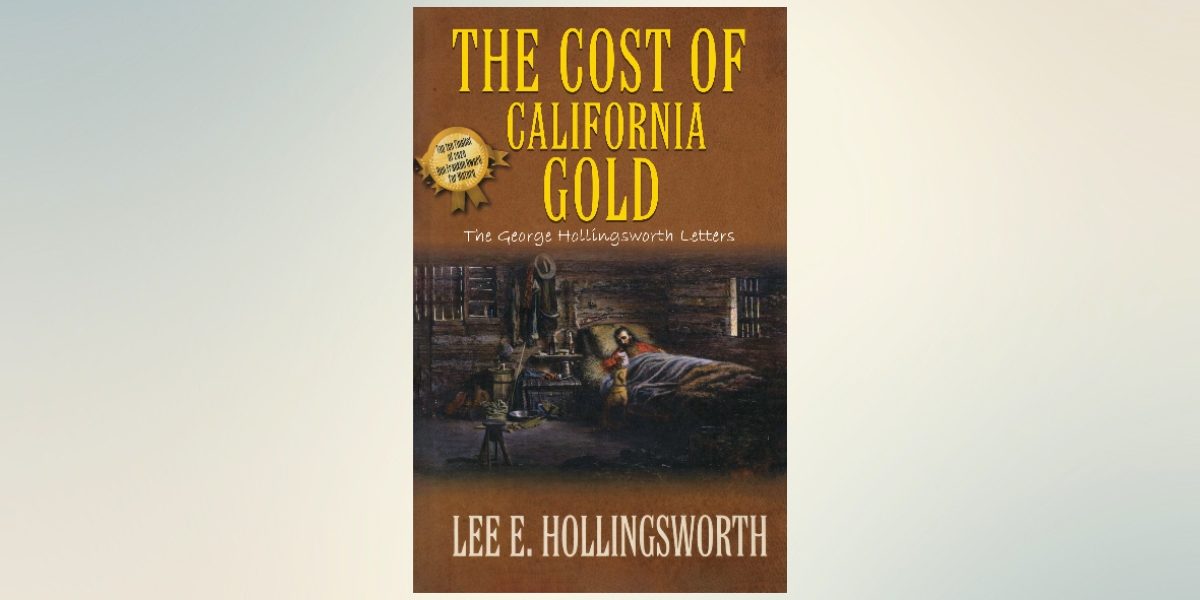

What does it mean to chase a better life and what does it cost to survive the pursuit? Across two vastly different periods in American history, author Lee E. Hollingsworth explores this question with striking emotional clarity. In The Cost of California Gold – The George Hollingsworth Letters and Before the Thunder, he attempts to reconstruct two real lives shaped by ambition, conflict, and endurance. Though separated by nearly a century, both narratives converge on a shared truth: history is not just written in events, but in the deeply human experiences of those who lived through them.
A Nation Built on Risk and Resolve
Hollingsworth’s work stems from thorough historical research, but what sets it apart is its intimacy. Instead of giving sweeping accounts of the California Gold Rush or World War II, the author takes into account individual lives, men who stood at the crossroads of uncertainty and made choices that would define their futures, as well as the legacy of their families.
In The Cost of California Gold, readers travel back to the mid-19th century, when George Hollingsworth leaves Missouri to pursue a career opportunity in California’s gold fields. Through recently discovered letters written between 1850 and 1854, a quite personal narrative comes to light. George’s words give birth to a man driven by hope yet burdened by the harsh realities of frontier life. Leaving behind a wife and four children, he promises that his sacrifice will yield a life of comfort and peace. But what comes next is a sobering story of physical hardship, financial uncertainty, and emotional isolation.
The book not only recounts the journey of man, it captures the broader spirit of an era defined by ambition and risk. The Gold Rush has often been romanticized as a time of fortune and adventure, but Hollingsworth’s portrayal strips away that illusion. Through George’s struggles, readers are reminded that for many, the dream of prosperity remained just a dream.
From Quiet Beginnings to the Thunder of War
While The Cost of California Gold talks about the pursuit of opportunity, Before the Thunder shifts the focus to duty and survival in the face of global conflict. Here, Hollingsworth tells the story of Walter R. Smith, a Bronze Star recipient whose life spans the peaceful rhythms of early 20th-century America and the chaos of World War II.
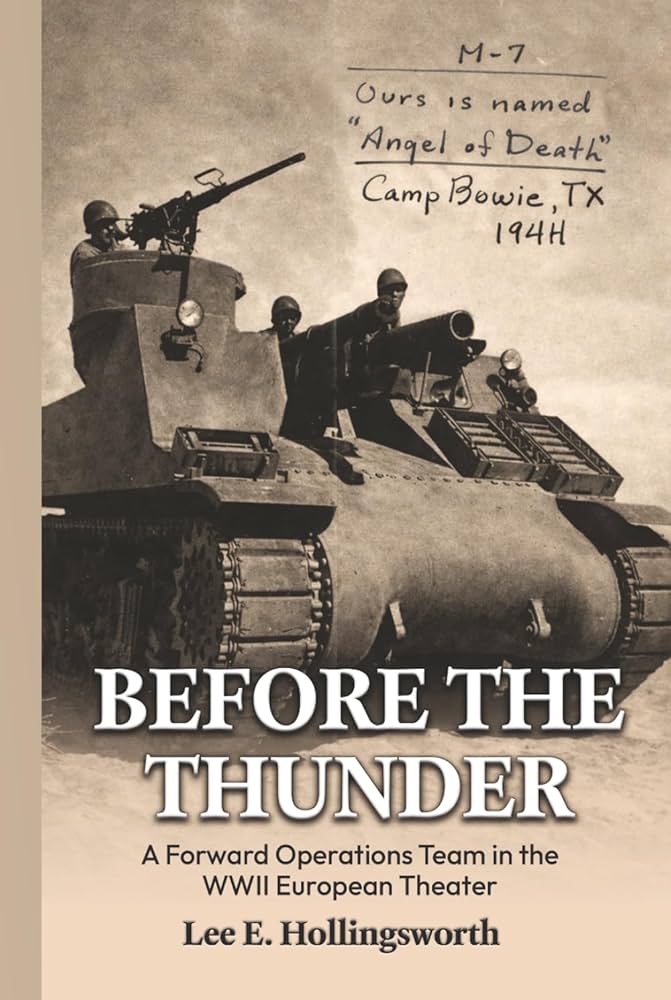
Walter’s early years in East Hampton, New York, were simple and full of community, which is very different from the chaos that came later. The war interrupts his schooling and changes the course of his life, forcing him into military service and eventually sending him to the European Theatre. His firsthand accounts paint a vivid picture of life on the front lines, showing both the immediacy of combat and the mental toll it takes.
Before the Thunder is very introspective, unlike other war stories that focus on strategy or victory. Walter’s experiences, such as seeing the horrors of Dachau, dealing with the realities of chemical warfare, and dealing with the emotional aftermath of combat, show how war can have a lasting effect on the mind. Even after returning home, the echoes of those experiences linger, shaping his identity and worldview.
Two Journeys, One Enduring Theme
The stories of George Hollingsworth and Walter R. Smith look very different at first glance. One is a pioneer looking for gold in the 1850s, and the other is a soldier fighting in the 1940s. But Hollingsworth’s choice to make these stories public shows a deeper connection: both men show the strength it takes to get through situations that are out of their control.
George’s letters show that resilience means not giving up even when things go wrong over and over again. Walter’s story shows up as the ability to deal with trauma and start over. Both journeys involve giving something up: George gives up time with his family to work toward a better future, and Walter gives up his safety and innocence to serve his country.
Both stories also question idealised versions of history, which is more important. The Gold Rush is no longer just a story about getting rich, and World War II is no longer just a story about bravery. Instead, these books give a more nuanced view that takes into account hardship, uncertainty, and the emotional toll of real life.
The Power of Personal History
A defining strength of Hollingsworth’s work lies in its foundation of primary sources and genealogical research. As an author with a lifelong passion for history and family lineage, his approach bridges the gap between personal memory and historical documentation. His background, spanning decades in telecommunications and public service, as well as collaboration on national initiatives, adds a layer of discipline and precision to his storytelling.
But beyond technical expertise, there is a clear sense of purpose in these books: to preserve voices that might otherwise be lost to time. George’s letters and Walter’s recollections are not merely artifacts; they are windows into the emotional realities of their respective eras. By bringing these voices forward, Hollingsworth invites readers to engage with history on a deeply human level.
Reframing the American Narrative
Together, The Cost of California Gold and Before the Thunder offer a compelling reframing of the American narrative. They move beyond the grand ideals of opportunity and victory to explore the personal costs that often accompany them. In doing so, they remind us that progress is rarely straightforward, and that behind every historical milestone are individuals navigating uncertainty, loss, and hope.
These are not stories of extraordinary figures in the traditional sense. George Hollingsworth and Walter R. Smith were, in many ways, ordinary men. Yet it is precisely their ordinariness that makes their stories resonate. They represent countless others whose lives were shaped by the same forces, whose struggles and sacrifices form the foundation of history as we know it.
A Shared Legacy of Endurance

Hollingsworth’s work is unique because it goes into great detail and is very real. This is especially true in a time when history is often boiled down to headlines or simple stories. He weaves together two different but thematically related stories to make a single exploration of what it means to endure and to keep that endurance going.
In the end, these books want readers to think about the people who lived through historical events instead of just the events themselves. The question is still the same, whether in the gold fields of California or the battlefields of Europe: how do people deal with the tension between hope and hardship?
In answering that question, Hollingsworth does more than recount the past, he illuminates the enduring spirit that continues to define it.
To follow the author’s journey, you can visit the author’s website:
http://leehollingsworthauthor.com/