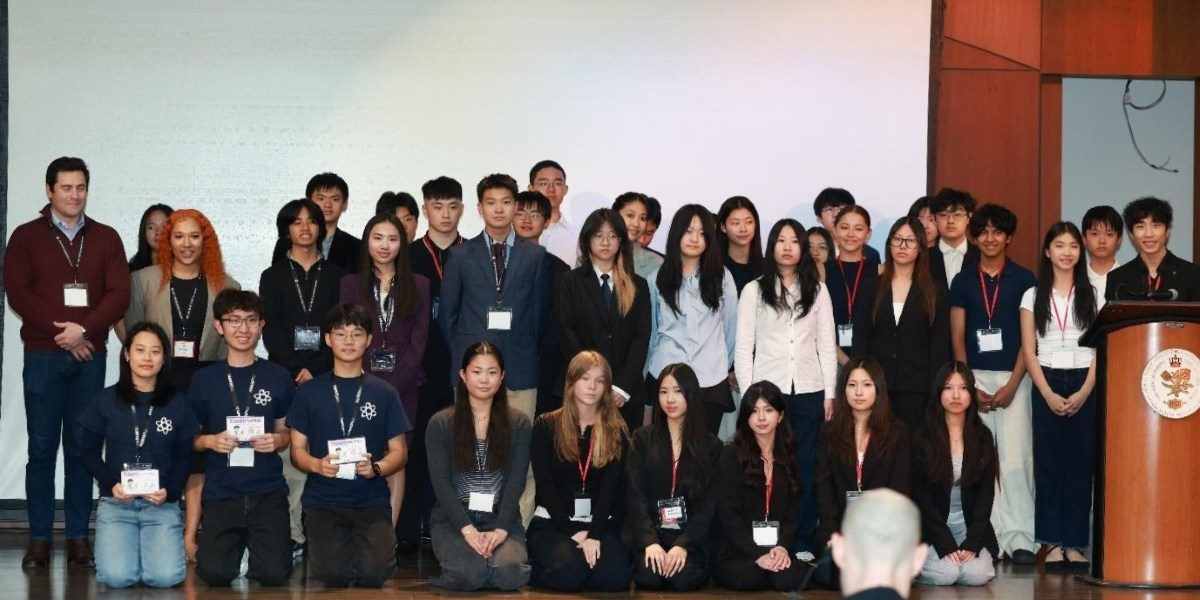

On April 18th, New York time, the 2026 US Teen Leadership Summit, hosted by InGenius Prep USA, successfully concluded in Queens, New York. The event brought together more than 150 participants from across the United States, including outstanding high school club leaders, teen entrepreneurs, and representatives from the education sector and non-profit organizations, for substantive exchanges on teen leadership development, social innovation, and the impact of artificial intelligence on education. Yet the most fundamental question running through the entire summit was not who would win the competition, but something far more essential: how does a young person with an idea actually turn that idea into reality?
As a comprehensive youth development platform built by InGenius Prep USA, this year’s summit integrated competition pitches, achievement exhibitions, and resource networking into a single dynamic event. Following a rigorous national selection process, ten outstanding teen projects advanced to the finals and were showcased and professionally evaluated on site. The selection process itself was the first form of meaningful support. Finalist teams earned a place on a professional stage and entered a complete support system that includes dedicated funding, structured mentorship feedback, and a cross-sector resource network. The competing projects spanned social services, technological innovation, and cultural communication, and behind every project that took the stage was a journey from a vague idea to a clear, actionable plan.
Xueping Geng, Senior Director of InGenius Prep’s New York Office, captured the summit’s core positioning in a single line during an on-site interview: “This is more than a competition; it is a platform for students to showcase their work, gain recognition, and learn to turn ideas into action.” This statement precisely encapsulates InGenius Prep USA’s foundational belief in youth development. Recognition itself is a form of motivation, and the gap between an idea and action requires not just passion, but systematic resources and professional guidance. The dedicated funding support provided by the summit gives teen projects a concrete material foundation for implementation, while the mentorship feedback mechanism helps students examine their work through a professional lens, identifying blind spots, refining direction, and strengthening executability.
This support model was clearly demonstrated across several Top 10 projects. Davis Meng, Top 10 finalist and founder of Shotdoc, presented a sports data analysis system that integrates artificial intelligence with sports data, delivering real-time feedback and critical data support at the precise moment an athlete releases the ball, enabling immediate technical adjustments. Shotdoc goes beyond a technical concept. It is a refined, real-world-applicable product with a genuine use case, showing what sustained support from the summit’s ecosystem can help a young innovator build. The project also reflects the accelerating integration of AI and data technology into sports, education, and other specialized sectors.
Isabella Liu, Founder of Dance to Empower and a fellow Top 10 finalist, illustrates another dimension of the support model. Through the exchange and networking platform built by the summit, Isabella engaged deeply with student leaders from diverse fields, uncovering potential cross-sector collaboration opportunities and gaining greater clarity on her project’s future direction. For young entrepreneurs, how far an idea can travel often depends on the breadth of the resource network it can reach. The summit serves as one of the most important nodes in that network.
Joel Butterly, Co-founder of InGenius Prep, noted that AI technology is accelerating the digital transformation of high school campuses, but that the proliferation of technology does not automatically translate into the development of capability. “We have observed that students are achieving higher grades more easily, but the depth of learning has not necessarily improved in tandem,” he pointed out. For this reason, he argued, the summit’s mentorship feedback and project support mechanisms are particularly important. They help students build genuine problem-awareness and execution ability beyond the tools themselves. Katherine Otilia Zapata, Director of Education at the Office of the Queens Borough President, also attended and delivered remarks, sharing an official perspective on teen education development and community talent cultivation, providing policy-level endorsement and support for the growth of youth-led projects.
The most enduring significance of this summit may not lie in which project won the final judges’ favor, but in the complete pathway it provided every participant for moving from concept to reality. InGenius Prep USA firmly believes that teens do not lack ideas. What they lack is the systematic support to turn those ideas into action. As this support ecosystem continues to mature, more and more young people’s visions will find the conditions they need to take root, grow, and ultimately make their mark on the real world.