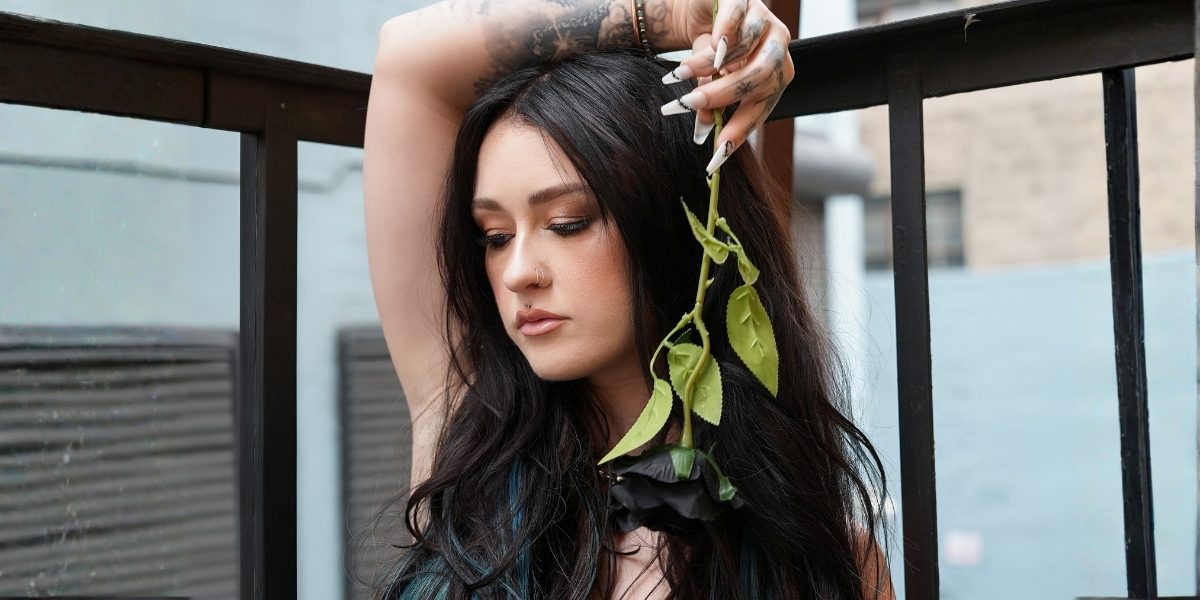

Zinn’s Walking Chaos now has a visual to match it. Following the release of the single, the Salt Lake City artist returns with a music video that focuses on carrying yourself through pressure rather than trying to escape it. The concept stays close to the song’s core while giving it a more defined point of view.
The track itself is rooted in everyday stress and the unpredictability that comes with it. Instead of shifting away from that idea, the video leans further in. Zinn describes it simply. It represents “the ability to walk through chaos with your head held high.” That framing shapes the tone of the video from start to finish. It is less about dramatizing struggle and more about showing composure in the middle of it.
The visual was directed by Mica Javier, who led both the photo and video shoot alongside Jay R. The direction keeps things performance-driven, allowing Zinn’s presence to carry the narrative without overcomplicating the concept. There is a clear focus on movement, styling, and attitude, all working together to reflect the mindset behind the song.
Creative direction also came from Carmit Bachar of The Pussycat Dolls, whose influence adds a performance-focused edge to the video. That background shows in the way the visuals prioritize confidence and control, even as the theme centers around chaos. It never feels scattered. Instead, the energy is intentional.
The styling and glam team play a key role in shaping that identity. Anthony Garza handled wardrobe, building looks that feel aligned with Zinn’s personality rather than disconnected from it. Cynthia Di Meo led makeup, while Illy Loren and her assistant Suzette handled hair, each contributing to a consistent visual tone that supports the message without overpowering it.

Photo Courtesy: Mica Javier
Zinn is direct about how important the team was in bringing the video together. She credits her manager, Nicholas “Nick Dre” André, for helping guide the process and highlights Eddie Serrano (Lil Eddie) for connecting the right people early on. That sense of collaboration is reflected in the final product. Nothing feels out of place or added for its own sake.
The video also builds naturally from how the song itself came together. Walking Chaos was inspired by a real moment. Right before getting into the studio, Zinn had a conversation with her mom, who described her as a “walking ball of chaos.” Instead of brushing it off, she turned that into the foundation of the record. That same honesty carries into the visual. It does not try to reframe the idea. It reinforces it.
Behind the scenes, the track is backed by a team with a strong range of experience. Produced by Russ “Rusty Mack” Mitkowski, whose credits include work with artists such as The Weeknd, Wiz Khalifa, and Snoop Dogg, the song provides a clean, structured foundation for the visuals to build on. Writers and vocal producers Nicholas “Nick Dre” André and Eddie Serrano helped shape the record, with additional creative influence from Eric “DobleU” Barragán, a protégé of Serrano who has worked with artists such as Frankie J, Mica Javier, and Ana Saia.
The release of the video also points to a larger plan. Zinn confirms that more music is already in motion, with three additional songs set to arrive before September. Each will come with its own visual component and original sound, signaling a consistent rollout rather than a one-off release.
What makes the Walking Chaos video work is its focus. It does not try to over-explain the concept or add unnecessary layers. The message stays clear. You can move through difficult moments without losing your sense of self. That idea is reflected in both the performance and the presentation.
The Walking Chaos music video is out now. Watch it on YouTube, stream the single on Spotify, and follow Zinn on Instagram to keep up with her next releases.