How Smart Professionals Are Eliminating Setup Friction in the Hybrid Era

For some of us, that means trying to figure out how our workspaces will look in the age of hybrid working, a state that now appears here to stay (for many, at least). There’s no denying that technology has changed the nature of work, in the form of AI tools and cloud software, to automation and more, but it hasn’t often helped with the physical practicalities of working from multiple sites. Hybrid workers contend with the peculiarities of being both in an office and at home, which both come with their own sources of friction points across the setups that populate their day-to-day, tangled cables, misaligned screens, and the volume levels associated with them. This friction is often invisible but takes away from focus and productivity.

World Safety Day (WSD) 2026 specifically emphasizes a focus on tools and software to support businesses, organizations, and their employees through technology as a holistic avenue alongside physical health, ergonomics, and wellness. Sensible Pros are rethinking how to avoid this setup friction, and one solution is to enter its own niche: streamlined, ergonomic hardware designed specifically for the hybrid work experience.

The Trouble: Tech Is Optimized. Hardware, Not So Much

In the last ten years, technology has brought about a radical transformation of work content. AI-powered tools have automated a plethora of tasks, enhancing not only efficiency but also effectiveness. Remote collaboration has never been easier with cloud software and communication platforms. Yet the physical setting, especially the home office area, remains suboptimized.

For remote (and hybrid) workers, setting up a workspace can be a significant source of friction. There are all the steps: plugging in cables, adjusting screen height, connecting peripherals, and locating the right ports. These little mini-decisions, though minor, drain energy. They use valuable time and opportunities, making it more difficult to focus and reducing performance.

According to recent ergonomic studies, such setup issues can cause physical strain, and as workers increasingly work long hours at their desks, the issue is likely to worsen. Neck pain or back pain, fatigue, and even long-term musculoskeletal diseases are common because of inappropriate posture, screen misalignment, and fatigue caused by constantly fiddling with settings. That setup friction is intensifying as hybrid work becomes the standard for many.

WSD as a Catalyst for Change

On World Safety Day (WSD), businesses must take a moment to reflect on workplace safety, health, and well-being. But in 2026, WSD becomes increasingly pertinent as companies assess the entire employee experience, one that encompasses both digital productivity tools and physical workspace ergonomics. The shift to hybrid work has laid bare a yawning gap: Companies have streamlined workflow software, but few have reimagined the physical space, where small aggravations can pile up over long stretches.

Companies have started to realize that workplace health isn’t just about ergonomic furniture anymore; it’s how employees arrange and interact with their surroundings on a daily basis. Employers should keep in mind that reducing friction in the workplace setup not only improves employee health but also boosts performance by reducing distractions and cognitive fatigue, the factors that hit mental work the hardest.

The Solution: Streamlined Hardware for Hybrid Workers

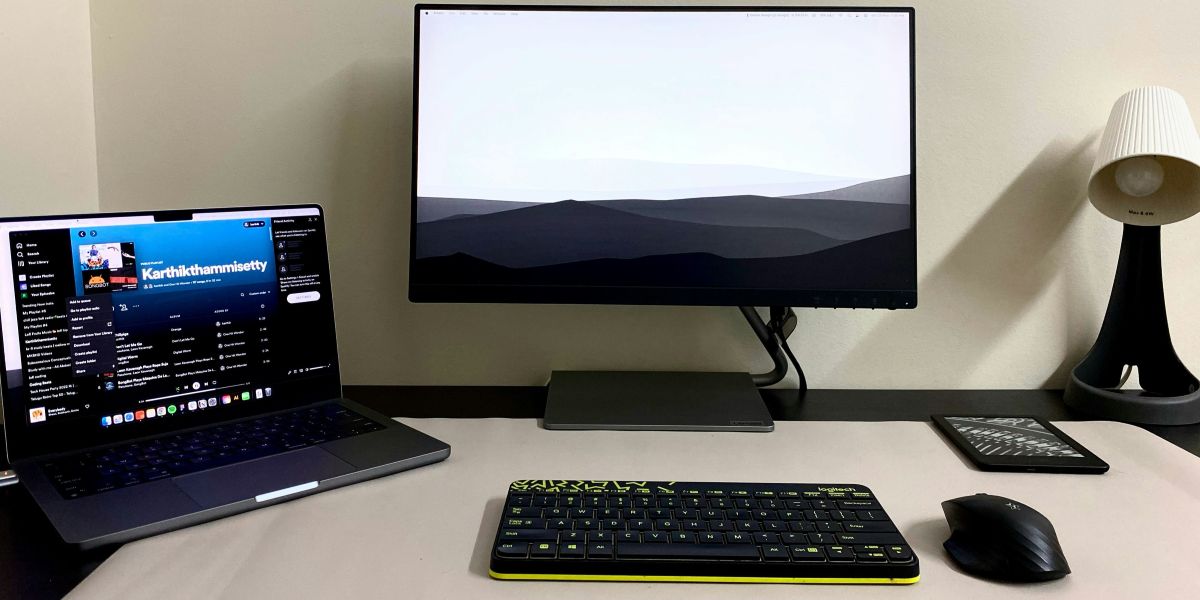
To fill this gap, businesses and professionals are looking for products designed to make the hybrid workspace easier. Fortunately, the home office dock station is a solution that lets you consolidate all types of peripheral connections in one place, right where you need them. These docks keep you from constantly rearranging those cables and let you quickly hook back up to any monitors, keyboards, mice, or other devices you have.

A decent docking station is more ergonomic, too. Most high-end models, such as the USB-C dock stand for creators, are designed to lift laptops to eye level, helping you maintain good posture and reducing neck strain. A better hybrid workspace, both physical and logistical, minimizes friction so people can comfortably work in either space.

The additional benefit of decreasing setup friction becomes a huge advantage for engineers and entrepreneurs alike. Because these specialists are typically required to move from one workstation to another to stay on schedule, they need tools and setups that deliver without unwanted detours or interruptions. They invest in sleek, ergonomic hardware and in building environments that allow them to operate at maximum efficiency, unencumbered by setup.

A Simplification Shift in Workplace Hardware Market Trends

As hybrid working improves, so does the need for hardware solutions specifically designed to balance productivity and wellbeing. These savvy professionals are now looking for ways to reduce constant setup and reconfiguration, saving mental energy by avoiding repetitive physical adjustments. The growing use of docking stations and ergonomic laptop stands suggests a trend towards minimization, enabling workers to focus on the task at hand without spending valuable minutes setting up.

What began as a niche solution for power users and creatives is now going mainstream among professionals across a range of industries. Not just the domain of designers and tech wizards, but a productivity tool that lets those working in a hybrid environment switch devices seamlessly via the USB-C dock stand. These products offer convenience and ergonomics that can help employees reduce strain, work more efficiently, and even be better able to use their time.

What’s Next: How to Embrace Hybrid Work

As hybrid work continues to redefine the future of work, there’s an opportunity for both companies and employees to rethink how workplace health and productivity are perceived. Technology has just never delivered the human side of productivity. With streamlined, ergonomic solutions such as the home office dock station and USB-C dock stand for creators, professionals can remove setup friction and go straight to what truly matters: their work.

The shift to hybrid work requires a more integrated view that considers both digital and physical environments. Reducing friction in setup enables businesses to create workspaces that support productivity and health. Ergonomic technology will be fundamental to the hybrid workspace, making post-pandemic demand even greater.

AI Can Support Service Businesses, but Trust Still Needs a Human Face

Artificial intelligence is changing service businesses in ways that are easy to see. It can answer routine questions, send reminders, manage bookings, and reduce some of the small delays that irritate customers and exhaust staff. This is useful. Much of the time, people do not want a human being involved in simple administrative tasks. They want speed, clarity, and as little friction as possible. The problem begins when this logic is applied too broadly.

Service businesses are now under pressure to treat almost every human interaction as inefficient. If a machine can respond faster, cheaper, and more consistently, the assumption is that it should. But this way of thinking rests on a narrow understanding of what service actually is. It assumes that the value of service lies mainly in completing a task. Often, it does not.

A service business usually sells something less concrete than a product and more difficult to measure than a transaction. It sells the customer’s belief that a need will be handled well. That belief may attach itself to different things in different settings. In a hotel, it may mean that a problem will be resolved without unnecessary stress. In a consulting relationship, it may mean confidence that judgment is being applied, not just information repeated. In wellness, hospitality, education, and many other service settings, the technical act matters, but it is rarely the whole experience. Customers are also judging the tone, the clarity, the responsiveness, and the sense that someone is truly paying attention.

This is one reason the language of “frictionless service” can be misleading. In some situations, friction is simply a waste. No one wants an overly complicated payment system or a five-minute wait to reschedule an appointment. But not every pause, question, or human exchange is a waste. Sometimes these moments are the point.

A customer hesitates before agreeing to something, and a staff member notices. A manager hears uncertainty in a complaint that sounds minor on paper. Someone takes a little longer to explain what will happen next, and the customer relaxes. These are not dramatic moments. They are ordinary. But much of service quality lives in these small adjustments. What looks inefficient from a distance can be exactly what prevents confusion, resentment, or loss of trust.

This is where the strongest claims about AI replacing service work begin to weaken. The most important parts of service work are often not the most technical. They are the parts that depend on judgment, reassurance, and accountability.

Judgment matters because service work is full of situations that do not fit perfectly into rules. A policy may exist, but the immediate question is whether applying it rigidly will solve the problem or make it worse. A customer may need more explanation than the script provides. A guest may not say directly that something feels wrong, but an experienced employee may sense it anyway. These are not grand strategic decisions. They are small acts of interpretation. Yet they shape the customer’s view of the entire business.

Machines can process patterns and produce likely responses. That is not the same as understanding a situation. A model can identify the statistically plausible next step. It cannot fully grasp the social meaning of hesitation, embarrassment, impatience or doubt as they appear in a real interaction. It can imitate the language of care. It cannot reliably exercise care itself.

Reassurance is similarly misunderstood. Businesses often assume that customers mainly want information. Often, they do want information. But in many service settings, information is only part of what is being sought. Customers may also want calm. They may want confidence. They may want the feeling that someone competent is in charge and has taken their concern seriously. A person asking repeated questions is not always confused. Sometimes that person is anxious. A fast answer is not always the right answer if it leaves the underlying uncertainty untouched.

Then there is accountability, which becomes most visible when something goes wrong. That is when customers stop caring about smooth systems and start caring about responsibility. They want to know who is listening, who is allowed to act, and who will remain present until the matter is resolved. In those moments, many automated systems reveal their limits. They can acknowledge a complaint, route a message, or restate a policy. What they cannot genuinely do is assume moral ownership of the outcome. That remains a human function. None of this means AI does not belong in service businesses. It clearly does. It can reduce repetitive work, improve consistency, and give staff more time for the interactions that require attention. The question is not whether service businesses should use these tools. The question is whether they understand where the value of their business actually lies.

If every routine task is automated, that may improve the operation. But if the process also removes the moments in which customers feel guided, reassured, or taken seriously, the business may become more efficient while becoming less trustworthy. That trade-off is not always visible immediately. It appears over time, in weaker loyalty, more fragile relationships, and a service experience that feels thinner than it once did. As artificial intelligence becomes more common, efficiency will be easier for competitors to replicate. That is how technology usually works. Once a tool becomes widely available, it stops being a distinguishing advantage. What remains difficult to copy is human leadership: the capacity to set standards, interpret situations, protect dignity, and take responsibility when reality becomes messy.

Service businesses do not need less technology. They need more discipline about where technology belongs. The future of service will almost certainly include more automation. But as that happens, the human parts of service will become more important, not less. When customers are deciding whether to trust a business, they are still responding to something that software can imitate but not fully replace.

Trust still needs a human face.

Lampros Kolokouras, Entrepreneur, Researcher & Author in Aesthetics, Cosmetic Science & Wellness, Author of The Spa Manager’s Blueprint: How to Build, Grow & Lead a Profitable Wellness Business

Top Master & Industry Judge Vita Leibiuk Sets a New Standard in Lash Artistry

Vita Leibiuk’s journey from Ukraine to Chicago reflects her dedication, vision, and expertise. As a licensed esthetician and experienced lash artist, she has built a brand synonymous with precision, luxury, and customized beauty. Through her work at Vileilashes Beauty Studio, her role as an educator, and her commitment to product excellence, Vita has reshaped how beauty standards are approached in the world of lash artistry.

From Ukraine to the United States, a Journey of Determination

Vita’s path to becoming an established lash artist was not an easy one. Originally from Ukraine, she made the bold decision to move to the United States, driven by a passion for beauty and a strong commitment to building a career in the highly competitive beauty industry. She started her journey as a licensed esthetician in Chicago, a city known for its diversity and high standards in the beauty world. From the ground up, Vita carved out her place through hard work, discipline, and consistency, establishing herself as a skilled and trusted professional in a fiercely competitive market.

Her international background and unique perspective have allowed her to blend Eastern European beauty traditions with modern techniques, offering a service that resonates with both local and international clients. Her determination to succeed in the U.S. has resulted in the creation of a thriving business, Vileilashes Beauty Studio, and a recognized place in the lash artistry community.

Top Master & Industry Judge Vita Leibiuk Sets a New Standard in Lash Artistry

Photo Courtesy: Vita Leibiuk

Custom Lash Styling Built on Precision and Personalization

What sets Vita apart from many other lash artists is her deep understanding of the individual needs of each client. Specializing in fully customized eyelash extensions, Vita creates bespoke lash styles that are tailored to suit each client’s eye shape, natural lash condition, and desired look. Whether it’s wispy, volume, anime, or textured styles, her work focuses on enhancing natural beauty rather than simply adding extensions. Her approach ensures that every set of lashes is designed to be aesthetically pleasing, long-wearing, and comfortable for the wearer.

Her meticulous attention to detail and ability to personalize each service are central to her craft. For Vita, every lash set is a work of art, designed to enhance the client’s natural beauty and leave them with a balanced, refined look. Her focus on precision and quality ensures that clients leave her studio not just with beautiful lashes but with a luxurious experience that makes them feel valued and cared for.

Top Master & Industry Judge Vita Leibiuk Sets a New Standard in Lash Artistry

Photo Courtesy: Vita Leibiuk

Building a High-End Beauty Brand with Vision and Standards

Vita’s vision extends beyond offering lash services. She is in the process of building a high-end beauty brand that integrates services, education, and a professional-grade product line. Through Vileilashes, Vita has created a range of carefully curated products, including eyelash extensions, adhesives, and removers. By collaborating with international manufacturers, she works to ensure that every product under the Vileilashes brand meets the high standards she has set for herself and her business. This focus on quality helps ensure that her clients and fellow beauty professionals receive products that are consistent, reliable, and built to perform.

The creation of her product line reflects Vita’s broader goals of scaling her business and expanding her influence in the beauty industry. It’s not just about providing a service, it’s about creating a brand with lasting value and an identity rooted in quality, aesthetics, and professional excellence. Vita’s vision for the future of Vileilashes includes expanding her product offerings, scaling her studio, and continuing to deliver beauty services that align with modern standards.

Education, Building Confidence in Future Lash Artists

Vita is not only a practicing artist but also a dedicated educator. Through her exclusive one-on-one training programs, she ensures that each student receives personalized attention and a comprehensive understanding of lash artistry. Her teaching goes beyond technique. She focuses on supporting her students, building their confidence, and fostering independence. Each of her students leaves with the knowledge and skills needed to pursue a career in the beauty industry, prepared to offer clients the same standard of service that she provides.

Her hands-on approach to teaching ensures that her students are not just skilled technicians but also confident professionals who understand the importance of building trust with clients and maintaining high standards. Vita’s educational philosophy emphasizes the long-term development of her students, ensuring they leave with the tools needed to pursue their own path in a competitive field.

Contributing to the Lash Artistry Community

Beyond her work as an artist and educator, Vita is active in the lash artistry community as a competition judge. In this role, she evaluates technique, artistry, and styling, applying the high standards that have defined her career. Her participation in industry events allows her to stay current with trends and innovations in the lash industry while connecting with professionals from around the world.

As a judge, Vita evaluates work in the lash industry, helping to recognize artistry, skill, and precision. Her involvement allows her to contribute to the industry’s growth while maintaining the integrity of her craft.

A Brand with Vision and Long-Term Value

Vita Leibiuk is not just building a beauty service; she is creating a brand with lasting standards and vision. Through her work at Vileilashes, she is contributing to lash artistry by emphasizing quality, precision, and client satisfaction. Her focus on education, product development, and industry engagement positions her as a thoughtful voice in the field. Vita’s vision for the future includes expanding her brand, supporting other beauty professionals, and continuing to deliver quality work in modern lash artistry.

“I’m not just building a service, I’m building a brand with standards, vision, and long-term value,” Vita says. This dedication to quality is the foundation of her work and the driving force behind her growing presence in the beauty industry.

Vita Leibiuk’s journey is a reminder that success in the beauty world depends on more than just talent. It also depends on vision, commitment, and a consistent focus on quality. With her foundation in lash artistry, her passion for education, and her strategic approach to brand development, Vita continues to build a meaningful role in the beauty industry, one lash at a time.

Forget Page One. The New Battleground Is Whether AI Mentions You at All

By: Andi Stark

For two decades, brand visibility has been measured by a familiar metric: search rank. Securing a place on the first page of Google, and preferably near the top, signaled credibility and drove traffic. But as generative AI systems like ChatGPT, Claude, Gemini, Bing Copilot, and Perplexity become entry points for information, the significance of ranking systems is shifting. Increasingly, people are getting answers directly, without ever clicking a link.

Research published by Search Engine Land in 2024 found that when Google’s AI Overviews appear, click-through rates fall by more than half. Pew Research has reported similar patterns across consumer search behavior: summaries satisfy the question; the open web remains unvisited. In this environment, visibility is less about where a brand ranks and more about whether the brand is named inside the AI-generated answer.

This new dynamic has created what some analysts describe as the “AI mention economy.” If an AI system does not reference a brand, it effectively vanishes from the conversation, even if its website is highly ranked in traditional search.

The Rise of AI Answers Over Links

AI systems often synthesize their output from multiple sources. Preliminary studies suggest that large language models typically draw from six to seven core references when producing a general informational response. These sources are selected algorithmically, based on perceived authority, clarity, repeated citation, and the reliability of the originating documents.

For organizations used to controlling messaging through web optimization, this presents a challenge. The underlying logic is neither transparent nor directly influenced by conventional SEO tactics. A company may publish dozens of authoritative pieces of content yet remain absent when users ask an AI system about its sector.

This absence has consequences. In a market where AI is expected to mediate product discovery, service comparison, and professional decision-making, not being mentioned removes a brand from consideration entirely. Marketing budgets built on capturing attention after a search is made may never see the search in the first place.

Emerging Tools and the Push for Measurement

As a result, marketers are beginning to explore metrics that quantify presence inside AI answers. One emerging measure is the AI Share-of-Voice, which tracks the percentage of AI-generated responses in which a brand is named, relative to competitors. Unlike traditional search analytics, this form of tracking examines narrative influence rather than traffic redirection.

NetRanks, a company specializing in tracking this metric across ChatGPT, Claude, Google’s AI outputs, and Perplexity, is among the firms observing how rapidly the balance is shifting. Its founder and CEO, Reha Sönmez, describes the transition in practical terms: “If AI replaces the click, then being referenced becomes the gateway to being considered,” he said in an interview. The implication is straightforward: without mention, there is no evaluation stage.

While the company develops tools to analyze these patterns, the phenomenon itself extends beyond any single platform. Large brands, startups, nonprofit institutions, and public figures are increasingly aware that AI-generated narratives are shaping public understanding faster than traditional media cycles.

An Industry Still Defining Its Vocabulary

The terminology surrounding this change is still unsettled. Some professionals describe the emerging discipline as Generative Engine Optimization (GEO) – an update to SEO designed for systems that produce answers instead of lists of links. Others call it AI Visibility Strategy, Chat Engine Optimization, or AI Mention Ranking. There is no shared, widely adopted standard, which adds to the confusion for marketing teams and communications leaders seeking clarity.

This ambiguity is a concern shared by NetRanks leadership. Oversimplification could mislead organizations into treating AI visibility like a tactical bolt-on rather than a structural shift. “There are many companies claiming to do the same thing,” said Reha Sönmez, Founder and CEO. “The challenge is helping people understand the difference between reading AI outputs and actually understanding how narratives form inside them.”

The lack of shared terminology has slowed adoption, but industry analysts suggest that a standard is likely to emerge within the next 12 to 24 months, driven by measurement frameworks and reporting practices shared between large agencies, enterprise marketing teams, and research firms.

A New Strategic Question

The arrival of generative AI answers does not eliminate the need for traditional search infrastructure. Many searches still lead users directly to websites, and Google’s link-based index remains deeply integrated in professional and commercial activities. But as conversational AI becomes a first point of inquiry, especially among younger demographics and knowledge workers, the central strategic question changes.

It is no longer simply: How do we rank?

It is increasingly: Are we mentioned at all?

And for organizations navigating this shift, that question may determine who remains visible and who quietly disappears.

Zinn Drops Music Video for Walking Chaos

Zinn’s Walking Chaos now has a visual to match it. Following the release of the single, the Salt Lake City artist returns with a music video that focuses on carrying yourself through pressure rather than trying to escape it. The concept stays close to the song’s core while giving it a more defined point of view.

The track itself is rooted in everyday stress and the unpredictability that comes with it. Instead of shifting away from that idea, the video leans further in. Zinn describes it simply. It represents “the ability to walk through chaos with your head held high.” That framing shapes the tone of the video from start to finish. It is less about dramatizing struggle and more about showing composure in the middle of it.

The visual was directed by Mica Javier, who led both the photo and video shoot alongside Jay R. The direction keeps things performance-driven, allowing Zinn’s presence to carry the narrative without overcomplicating the concept. There is a clear focus on movement, styling, and attitude, all working together to reflect the mindset behind the song.

Creative direction also came from Carmit Bachar of The Pussycat Dolls, whose influence adds a performance-focused edge to the video. That background shows in the way the visuals prioritize confidence and control, even as the theme centers around chaos. It never feels scattered. Instead, the energy is intentional.

The styling and glam team play a key role in shaping that identity. Anthony Garza handled wardrobe, building looks that feel aligned with Zinn’s personality rather than disconnected from it. Cynthia Di Meo led makeup, while Illy Loren and her assistant Suzette handled hair, each contributing to a consistent visual tone that supports the message without overpowering it.

Zinn Drops Music Video for Walking Chaos

Photo Courtesy: Mica Javier

Zinn is direct about how important the team was in bringing the video together. She credits her manager, Nicholas “Nick Dre” André, for helping guide the process and highlights Eddie Serrano (Lil Eddie) for connecting the right people early on. That sense of collaboration is reflected in the final product. Nothing feels out of place or added for its own sake.

The video also builds naturally from how the song itself came together. Walking Chaos was inspired by a real moment. Right before getting into the studio, Zinn had a conversation with her mom, who described her as a “walking ball of chaos.” Instead of brushing it off, she turned that into the foundation of the record. That same honesty carries into the visual. It does not try to reframe the idea. It reinforces it.

Behind the scenes, the track is backed by a team with a strong range of experience. Produced by Russ “Rusty Mack” Mitkowski, whose credits include work with artists such as The Weeknd, Wiz Khalifa, and Snoop Dogg, the song provides a clean, structured foundation for the visuals to build on. Writers and vocal producers Nicholas “Nick Dre” André and Eddie Serrano helped shape the record, with additional creative influence from Eric “DobleU” Barragán, a protégé of Serrano who has worked with artists such as Frankie J, Mica Javier, and Ana Saia.

The release of the video also points to a larger plan. Zinn confirms that more music is already in motion, with three additional songs set to arrive before September. Each will come with its own visual component and original sound, signaling a consistent rollout rather than a one-off release.

What makes the Walking Chaos video work is its focus. It does not try to over-explain the concept or add unnecessary layers. The message stays clear. You can move through difficult moments without losing your sense of self. That idea is reflected in both the performance and the presentation.

The Walking Chaos music video is out now. Watch it on YouTube, stream the single on Spotify, and follow Zinn on Instagram to keep up with her next releases.