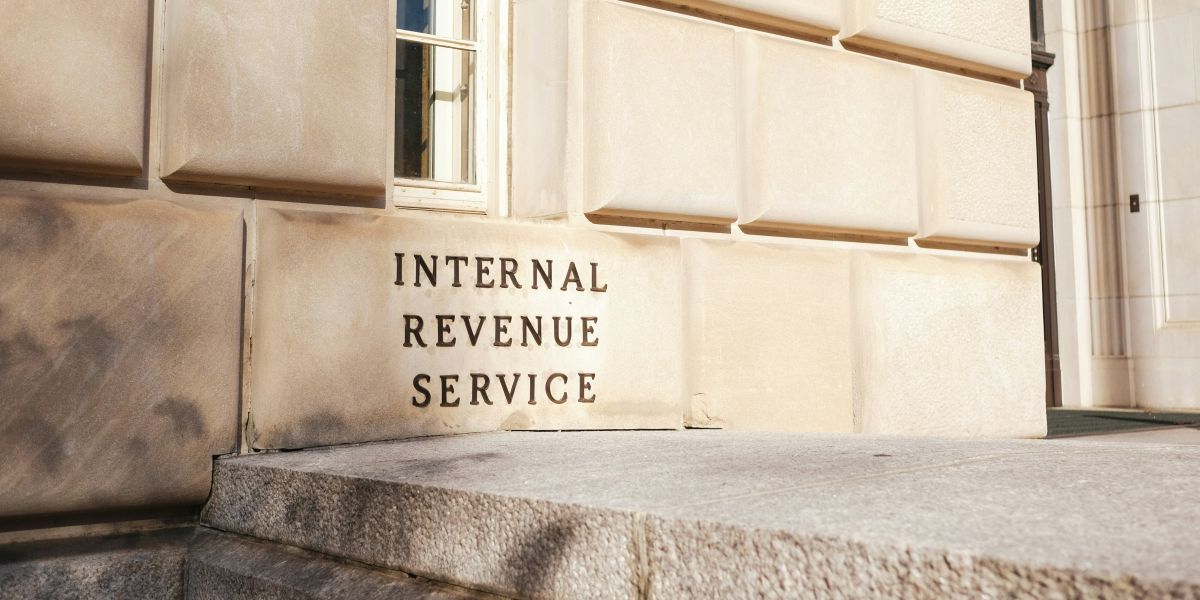

On Tax Day 2026, small business owners across New York received news that changes how they plan, hire, and grow: the 20% Small Business Tax Deduction is now permanent. The National Federation of Independent Business (NFIB) released a state-specific report on April 15, 2026, laying out exactly what this means for the Empire State — and the numbers are significant enough to reshape the conversation around New York’s economic trajectory.
What the Deduction Actually Does
The 20% Small Business Deduction — formally known as the Section 199A Qualified Business Income (QBI) deduction — was originally introduced under the 2017 Tax Cuts and Jobs Act as a temporary provision. It allowed pass-through business entities, including sole proprietors, S-corporations, partnerships, and LLCs, to deduct up to 20% of their qualified business income before paying taxes at the individual rate.
The logic behind it was straightforward: more than 90% of small businesses are pass-through entities, meaning their income flows through personal tax returns rather than through a corporate structure. Without the deduction, those business owners faced a higher effective tax rate than large corporations — a structural disadvantage that the provision was designed to partially offset.
The Working Families Tax Cuts Act, signed into law in July 2025, made the deduction permanent and, starting with the 2026 tax year, increased the rate to 23% of qualified business income. That shift from temporary to permanent removes years of uncertainty that had been quietly dampening investment and hiring decisions at small firms across the country — and particularly in high-cost states like New York.
The New York Numbers
The NFIB report projects that New York will gain 71,000 new jobs annually over the next 10 years as a result of the permanent deduction, alongside an annual GDP increase of $6.1 billion for the first decade and $12.6 billion per year beyond 2035.
Those figures land in a state that has long struggled to keep pace with national benchmarks on small business growth. Between 2001 and 2023, the number of small businesses in New York grew by 9.5% — compared to 14.2% nationally. From 2022 to 2023 alone, New York’s small business count grew just 0.7%, versus 1.05% nationwide. The COVID-19 pandemic accelerated the gap, with New York seeing a net loss of small businesses across 2020 and 2021 while the rest of the country recovered more quickly.
Against that backdrop, a policy change that injects measurable certainty into the tax environment for small business owners carries more weight than the projections alone suggest.
NFIB New York State Director Ashley Ranslow noted that small businesses are under significant financial pressure and that the deduction enables owners to reinvest in their businesses.
Who Benefits in New York

Photo Credit: Unsplash.com
Small businesses currently account for 98.9% of all businesses operating in New York State, with over 422,000 establishments employing 3.7 million people — close to 45% of the state’s total workforce — and generating nearly $1 trillion in annual economic activity.
The deduction applies broadly: any small business operating as a sole proprietorship, partnership, S-corporation, or LLC with pass-through income qualifies, subject to income thresholds and industry-specific rules. According to IRS data cited in a Washington Times op-ed by NFIB President Brad Close, more than 25.7 million tax returns claimed the deduction in 2022 — the most recent year for which IRS data was available — and more than half of those filers earned under $100,000 annually. The deduction is not a provision that benefits only high-earning entrepreneurs. It reaches into the daily economics of neighborhood businesses, freelancers, and tradespeople who form the fabric of New York’s five boroughs and communities statewide.
The Reinvestment Opportunity
According to the U.S. Small Business Administration, the permanent extension of the 20% Small Business Deduction is delivering approximately $4,600 in average tax relief to 8 million entrepreneurs across the country. For a small business owner operating on tight margins — paying New York City commercial rents, managing rising labor costs, and navigating the state’s regulatory environment — that’s capital that can go toward hiring, equipment, or debt reduction.
Survey research from the Small Business & Entrepreneurship Council found that 61% of small business owners reported positive cash-flow effects in 2025 from the mid-year tax relief bill, with permanency of the 20% deduction and lower personal rates cited as the most beneficial factors. Looking forward, 73% anticipate the tax provisions will positively impact their businesses.
The permanence of the deduction comes at a moment when New York’s business environment is under particular scrutiny. The state and city are simultaneously advancing new employer compliance requirements — including a consumer credit history restriction law that took effect April 18, 2026, and expanded pay transparency reporting requirements — while Mayor Mamdani’s administration pursues affordability-focused fiscal policies including the state’s first pied-à-terre tax.
For small business owners navigating that landscape, a fixed and predictable federal tax structure offers something rare: clarity. Whether that clarity translates into the 71,000 annual jobs projected by NFIB will depend on broader economic conditions — but for New York’s 2.4 million small businesses, the conversation is no longer about whether the deduction survives. It does. The question now is how they use it.