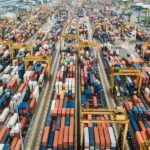

New data-driven technologies are helping trucking companies improve safety, compliance, and operational efficiency across modern freight networks.
Transportation technology entrepreneur Sardorjon Urinov, founder and CEO of US Road ELD, has been working on applying artificial intelligence and data-driven systems to improve safety, regulatory compliance, and operational efficiency in commercial fleet management. His work focuses on developing intelligent fleet management technologies that help modern trucking companies make more data-driven operational decisions.
Urinov’s work sits at the intersection of transportation systems, regulatory technology, and data analytics. With experience in logistics operations, economics, and supply chain management, he has focused on developing technology-driven solutions designed to improve safety and efficiency across modern freight transportation networks.
The trucking industry plays a critical role in modern economies and global supply chains. In the United States alone, trucks move more than 70 percent of the nation’s freight, making trucking one of the most important components of the country’s economic infrastructure, according to the American Trucking Associations (ATA). As demand for freight transportation continues to grow, companies are increasingly turning to technology to improve safety, efficiency, and regulatory compliance.
One of the most important developments in recent years has been the adoption of artificial intelligence and intelligent transportation systems in fleet operations. These technologies allow trucking companies to monitor vehicles more effectively, improve driver safety, and prevent costly mechanical failures before they occur.
Through his work in transportation analytics and logistics operations, Urinov has been exploring how AI-driven fleet intelligence platforms can transform the way trucking companies manage vehicles, drivers, and compliance requirements.
Urinov is the founder of US Road ELD, a technology platform that helps trucking companies improve compliance monitoring, driver safety, and vehicle diagnostics through an integrated fleet intelligence system. The platform integrates electronic logging devices (ELDs), GPS tracking, automated hours-of-service monitoring, AI-powered dash camera analytics, and real-time vehicle diagnostics to support more informed operational decision-making for fleet operators.
Before focusing on transportation technology in the United States, Urinov gained operational experience in regional agricultural logistics and supply distribution in Central Asia, where he supervised warehouse coordination, delivery scheduling, and vendor negotiations for agricultural equipment, seeds, and farming inputs distributed across regional markets. The role exposed him to the logistical challenges of large-scale distribution networks and contributed to his interest in improving transportation systems through data-driven technologies.
Urinov also participated in the National Science Foundation (NSF) I-Corps innovation program, where his team received a scholarship to develop and test a technology-driven business model through customer discovery and market validation research. The National Science Foundation is a U.S. government agency that supports scientific research and innovation, and the I-Corps program helps researchers and entrepreneurs translate technological innovations into scalable commercial solutions.
Traditional fleet management systems often rely on manual monitoring and reactive maintenance. However, modern fleet intelligence platforms combine ELD technology, GPS tracking, vehicle diagnostics, and artificial intelligence to provide real-time operational insights.
Artificial intelligence can analyze large volumes of operational data and identify patterns that may indicate safety risks or mechanical issues. For example, AI systems can detect signs of driver fatigue, monitor braking and acceleration patterns, and alert fleet managers to potential maintenance problems before they lead to equipment failure.
These technologies are particularly important in improving road safety. According to data from the Federal Motor Carrier Safety Administration (FMCSA), thousands of crashes involving large commercial trucks occur each year in the United States, highlighting the importance of technologies that improve driver monitoring, predictive maintenance, and operational safety.
“Modern fleet intelligence platforms allow companies to move from reactive management to proactive decision-making,” Urinov explains. “By integrating artificial intelligence, vehicle diagnostics, and real-time monitoring, fleet operators can improve safety, reduce downtime, and operate more efficiently.”
Analysts in the transportation technology sector note that emerging fleet intelligence technologies, such as AI-driven monitoring and predictive maintenance, are becoming increasingly important for improving safety standards and operational efficiency in commercial transportation.
Because freight transportation is a critical component of national supply chains and economic infrastructure, technologies that improve safety, compliance, and operational efficiency can have far-reaching benefits for businesses, consumers, and transportation systems across the United States. Improvements in fleet intelligence technologies can therefore contribute not only to safer transportation systems but also to more resilient and efficient supply chains across the United States.
As digital technologies become more integrated into transportation systems, experts believe that data-driven fleet intelligence and predictive maintenance tools will play an increasingly important role in improving freight reliability and strengthening the resilience of modern supply chains.
As logistics networks continue to expand and supply chains become more complex, the integration of artificial intelligence, predictive maintenance, and intelligent transportation systems is expected to play an increasingly important role in strengthening the reliability and resilience of freight transportation in the years ahead.
About the Expert
Sardorjon Urinov is a transportation technology entrepreneur and the founder of US Road ELD. His work focuses on applying artificial intelligence, data analytics, and intelligent transportation systems to improve safety, regulatory compliance, and operational efficiency in commercial fleet management and freight logistics.