

By: Daniel G. Ecker, Esq.
Apartment living is a reality for millions of New Yorkers, from families and seniors to young professionals. Tenants reasonably expect that shared spaces in their buildings will be maintained to keep them safe. When that expectation is not met and someone is injured in a slip-and-fall, the consequences can be serious, both physically and financially. From a personal injury perspective, these incidents are rarely just accidents. They are often the result of preventable hazards and failures in property management.
Under New York premises liability law, landlords and property owners have a legal responsibility to keep apartment complexes reasonably safe. This duty generally applies to all common areas, including hallways, stairwells, lobbies, sidewalks, parking lots, and other shared spaces. Reasonable care means taking proactive steps to identify hazards, fix them in a timely manner, and warn tenants about temporary dangers. Cleaning spills, repairing damaged flooring, fixing broken handrails, addressing poor lighting, and removing snow and ice are not optional tasks. They are core obligations tied to tenant safety.
A New York apartment complex may be held legally liable for a slip-and-fall injury when a property owner or manager fails to maintain a reasonably safe environment and that failure directly causes harm. Liability often arises when the landlord knew or should have known about a dangerous condition and did nothing to correct it. It can also apply when tenants were not warned about hazards such as wet floors, loose carpeting, or missing handrails. In other cases, liability stems from violations of building codes or safety regulations designed to prevent injuries.
Slip-and-trip and fall accidents in apartment complexes occur in many ways, but certain causes recur. Wet or slippery floors are among the most common hazards, whether from spills, leaks, or rain tracked in. During winter months, snow and ice on sidewalks, stairways, and parking areas significantly increase the risk of falls. Poor lighting in hallways, stairwells, or garages can prevent tenants from seeing hazards in time to avoid them. Damaged or uneven surfaces, such as cracked sidewalks, broken steps, or worn flooring, frequently cause trips. Missing or broken handrails on stairs and ramps remove a critical layer of support. Cluttered walkways, including boxes, trash, or maintenance equipment left in common areas, also pose serious risks.
When a slip/trip and fall injury occurs, what happens next matters. The first priority is always health. Seeking medical attention immediately is essential, even if injuries seem minor at first. Prompt medical care not only protects physical well-being but also creates documentation that can be critical later. Reporting the accident to the landlord or property manager as soon as possible, ideally in writing, helps establish when and where the incident occurred. Gathering evidence is equally important. Photos of the hazard, the surrounding area, and visible injuries can provide powerful proof. Witness names and phone numbers, maintenance records, and medical bills should be preserved. Consulting an experienced personal injury attorney allows injured tenants to understand their rights and avoid missteps while insurance companies begin their investigations.
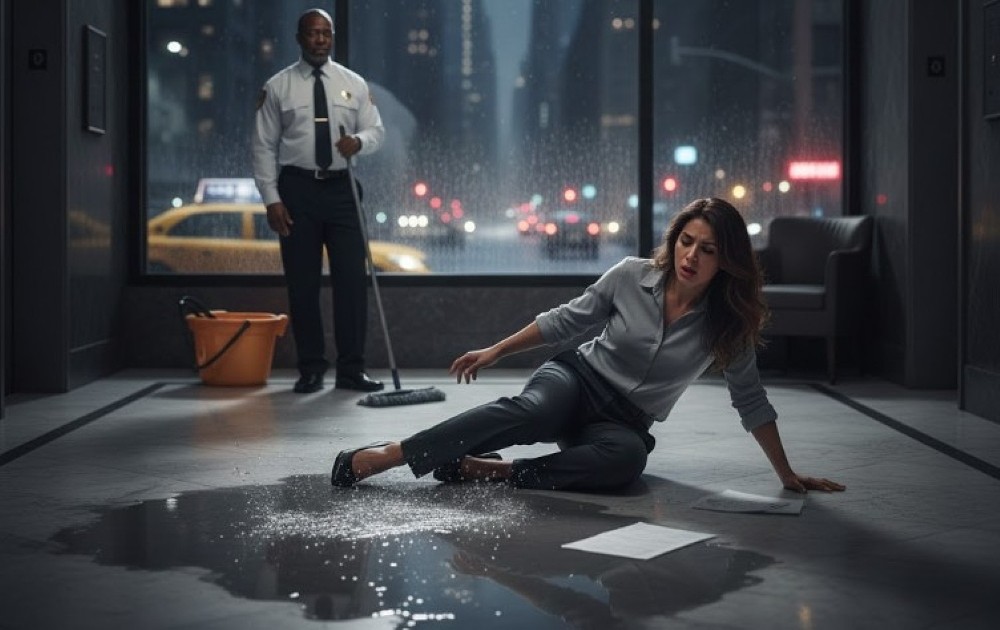
Photo Courtesy: Lever & Ecker
To succeed in a slip/trip and fall claim, an injured person must prove negligence. This involves establishing four key elements. First is the duty of care. Landlords are legally obligated to keep common areas reasonably safe for tenants and visitors. Second is breach of duty. The injured party must show that the landlord failed to meet that obligation, for example, by ignoring a known hazard or failing to perform routine maintenance. Third is causation. There must be a direct link between the unsafe condition and the injury. Evidence such as photographs, videos, or witness statements often plays a central role here. Fourth is damages. The injured person must demonstrate actual harm, which may include physical injuries, medical expenses, lost income, and ongoing treatment needs.
Insurance companies frequently challenge slip-and-fall claims by arguing that the injured person was careless or that the hazard was obvious. These tactics are designed to reduce or deny compensation. Having legal representation helps level the playing field. A personal injury attorney can gather evidence, communicate with insurers, and push back against attempts to shift blame unfairly.
Compensation in apartment slip-and-fall cases may cover both economic and non-economic damages. Economic damages include medical bills, rehabilitation costs, lost wages, future lost earnings, and other out-of-pocket expenses. Non-economic damages address pain and suffering, emotional distress, disfigurement, and loss of enjoyment of life. In rare situations involving gross negligence or reckless disregard for safety, courts may also consider punitive damages.
Time is another critical factor. In most cases, New York law provides three years from the date of the accident to file a personal injury lawsuit. Claims involving government-owned properties or wrongful death can have much shorter deadlines. Delaying action can jeopardize a case before it even begins.
Slip/trip and fall injuries can disrupt lives in an instant, but they are often preventable. When landlords fail to uphold their responsibility to maintain safe properties, injured tenants have legal rights. For those hurt in a New York apartment complex, understanding those rights and acting promptly can make a meaningful difference in recovery and financial stability.
If a landlord’s negligence caused serious harm, legal guidance matters. Firms like Lever & Ecker focus on helping injured individuals pursue accountability and deserved compensation, allowing them to concentrate on healing while experienced advocates handle the legal process.

Photo Courtesy: Lever & Ecker / Daniel G. Ecker
Daniel G. Ecker, a founding member of Lever & Ecker and an experienced personal injury lawyer, represents our clients with passion and great skill. For Daniel, the inspiration to practice law came from family. Growing up with a father and uncle who dedicated their lives to helping others, he developed a deep respect for the legal profession and its power to create meaningful change. Starting his career on the defense side, Daniel gained invaluable insight into how insurance companies operate—knowledge he now uses to fight for plaintiffs with skill and determination. Dan’s top-notch work has been recognized by the legal community, as he has been selected to the New York Metro Super Lawyers List for 2019-2026, representing recognition as among the top five percent of plaintiff’s personal injury lawyers in the New York metro area. Dan was also the 2022 Chair of the Trial Lawyers Section of the New York State Bar Association. Dan received his Juris Doctor from Fordham University School of Law in 1996 and his undergraduate degree from Cornell University in 1993. He is admitted to practice before the courts of the State of New York, the United States District Court for the Southern and Eastern Districts of New York, the United States Court of Appeals for the Second Circuit, and the United States Supreme Court. He may be reached at https://www.leverecker.com.
Disclaimer: This article is provided for general informational purposes only and does not constitute legal advice. Laws and legal procedures may vary depending on the specific facts of each situation. Readers should consult a qualified attorney for guidance regarding their individual legal matters.