
By: Jason Gerber
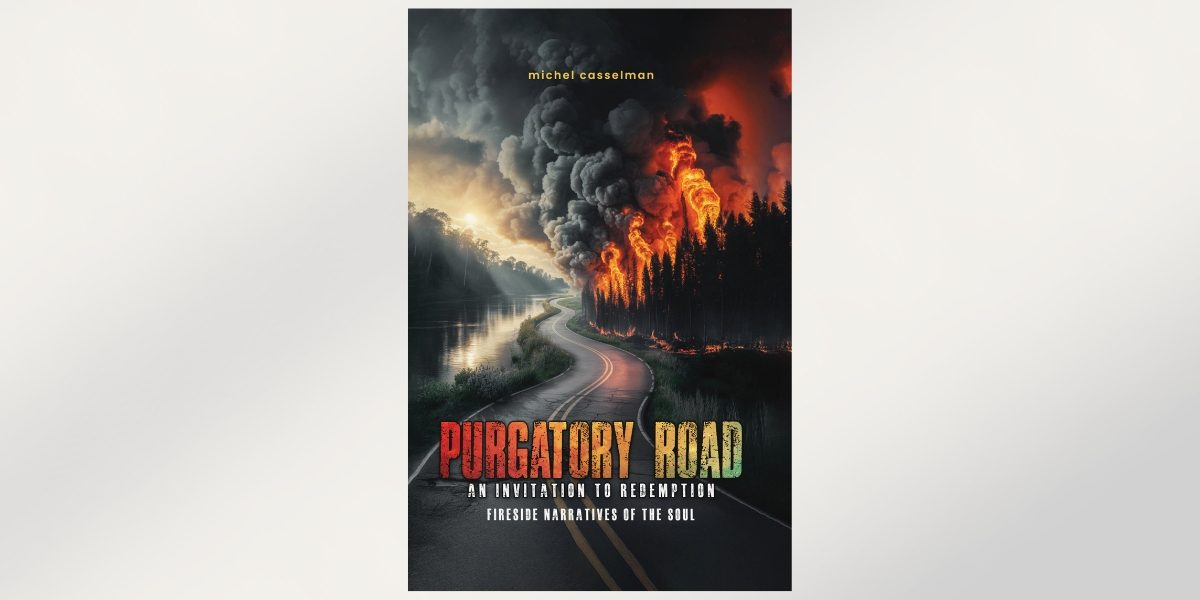
In an era dominated by speed, noise, and compressed meaning, Michel Casselman’s Purgatory Road: An Invitation to Redemption arrives as a deliberate slowing of time. This is not a book that rushes its reader. It asks instead that we linger—at the crossroads of memory, loss, desire, and spiritual reckoning.
Casselman’s collection unfolds like a long walk through interior landscapes: some familiar, some unsettling, all rendered with lyrical patience. These poems do not shout. They listen. And in doing so, they echo an older literary tradition—one that values contemplation over certainty and questions over conclusions.

Photo Courtesy: Michel Casselman
Throughout Purgatory Road, the poet positions himself as both witness and wanderer. Themes of exile, inheritance, masculinity, love, and grief recur, not as fixed arguments but as evolving meditations. In pieces such as “Birthday Wish” and “The Art of Substitution,” Casselman confronts the complicated legacies of fathers and sons, bloodlines and chosen bonds. Identity here is not inherited cleanly; it is assembled, questioned, and lived into.
What distinguishes this collection is its spiritual undercurrent—quiet, persistent, and unforced. Casselman does not preach redemption; he circles it. Drawing subtle inspiration from myth, nature, and religious symbolism, his poems suggest that salvation, if it exists, is found not in arrival but in honest movement. The road itself becomes sacred.
Stylistically, the poems are rich but restrained. Casselman’s language favors musical cadence over ornament, allowing imagery to breathe. Whether describing a widower’s silence, a lover’s absence, or the slow turning of seasons, his lines feel earned—rooted in lived experience rather than abstraction.
Purgatory Road will resonate deeply with readers who appreciate poetry that engages both the emotional and philosophical dimensions of life. It speaks especially to those navigating midlife reflection, personal loss, or the enduring question of what it means to live meaningfully in an unfinished world.
This is a collection that does not resolve the human condition—but it honors it. Casselman reminds us that purgatory is not merely a place of waiting; it is a space of becoming. And on this road, every step, however uncertain, matters.