
If you love reading but struggle to carve out hours for a novel, you’re not alone. Most of us read in the margins now, between meetings, on commutes, while the kettle boils. Short stories aren’t a compromise for those margins; they’re a form designed to thrive in them.
Done well, a short story offers a complete arc, a concentrated mood, and an afterglow that lingers, without demanding your whole weekend.
Completion beats intention
We don’t lack the intention to read; sometimes we lack the willpower to finish. Short stories solve that. One sitting, one beginning–middle–end, one clean sense of “done.” That feeling of completion matters. It’s motivating, especially if you’ve fallen out of the habit.
Reading one story today and another tomorrow rebuilds momentum far more effectively than chipping away at Chapter 3 for a week and feeling stalled.
The depth-to-time ratio
Short fiction isn’t “less.” It’s tighter.
Every image, line of dialogue, and beat has to earn its place. Many strong stories hinge on a simple craft spine:
- A clock (time pressure)
- A corner (a decision with no easy way out)
- A cost (what changes if the character acts)
With little room for filler, plot and theme arrive together. The result is high-impact reading, you get movement and meaning in minutes.
Flexible by design
Short stories fit the way we actually live. Ten minutes in a waiting room? Start and finish. Twenty minutes before bed? Read without worrying you’ll forget where you left off.
They’re device-agnostic, phone, e-reader, paper, and attention-friendly, with no heavy re-entry tax after a long day. The format meets you where you are, rather than asking you to rearrange your life.
Built to be reread
A good story invites a second pass. On the first read, you ride the current. On the second, you notice the load-bearing details: an object that keeps appearing, a shift in sound, a line that suddenly carries double weight.
Rereading a 12-page story is realistic. Rereading a 400-page novel often isn’t. Short fiction rewards attention economically.
Great for groups
Book clubs want lively conversation without a three-hour commitment. Short stories make that possible. A focused discussion can happen in under an hour: one object that matters, one moment of decision, one line that resonates.
The format is inclusive. Miss a week,ek, and you can still rejoin without “catching up.”
Where Paraphernalia fits in
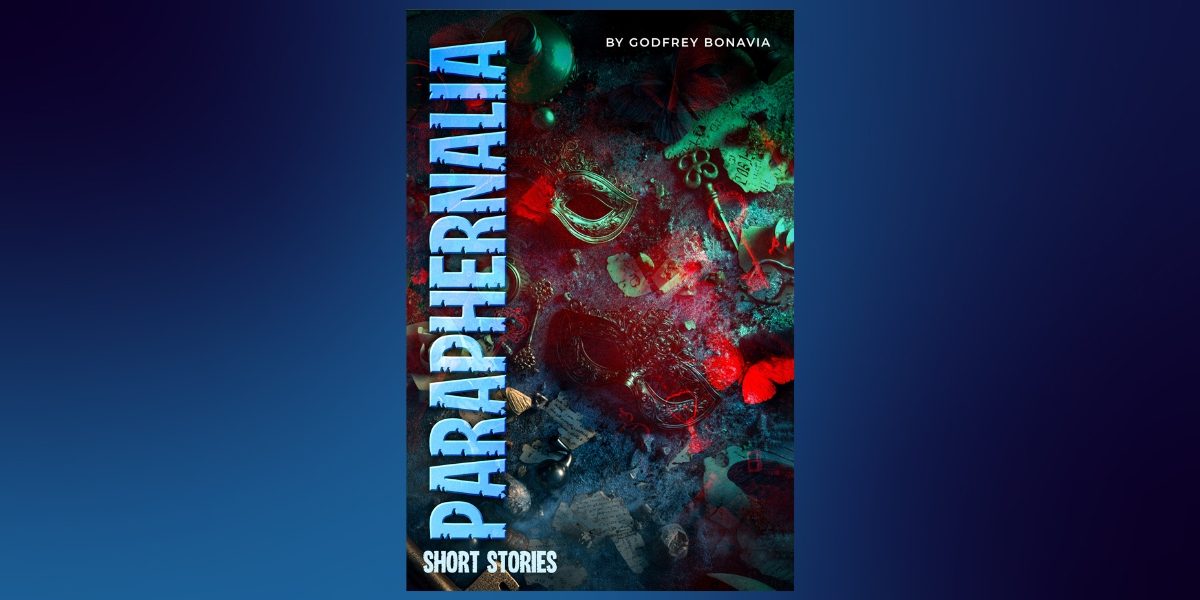
Paraphernalia is short fiction for the lives we actually live, quick to start, hard to forget.
Across these stories, small, ordinary objects, a mirror, a bell, a bus ticket, a leaf, become hinges that swing whole lives open. Perth-based author Godfrey Bonavia writes with clarity and precision; place hums through every scene, from island edges to city streets, while the emotional stakes feel universal.
Each story lands cleanly and echoes after. They’re the kind you finish in a sitting and find yourself thinking about all week.
Paraphernalia is now available on Amazon. Read one on a commute, another before bed, and watch how the pieces quietly click together long after you’ve turned the page.