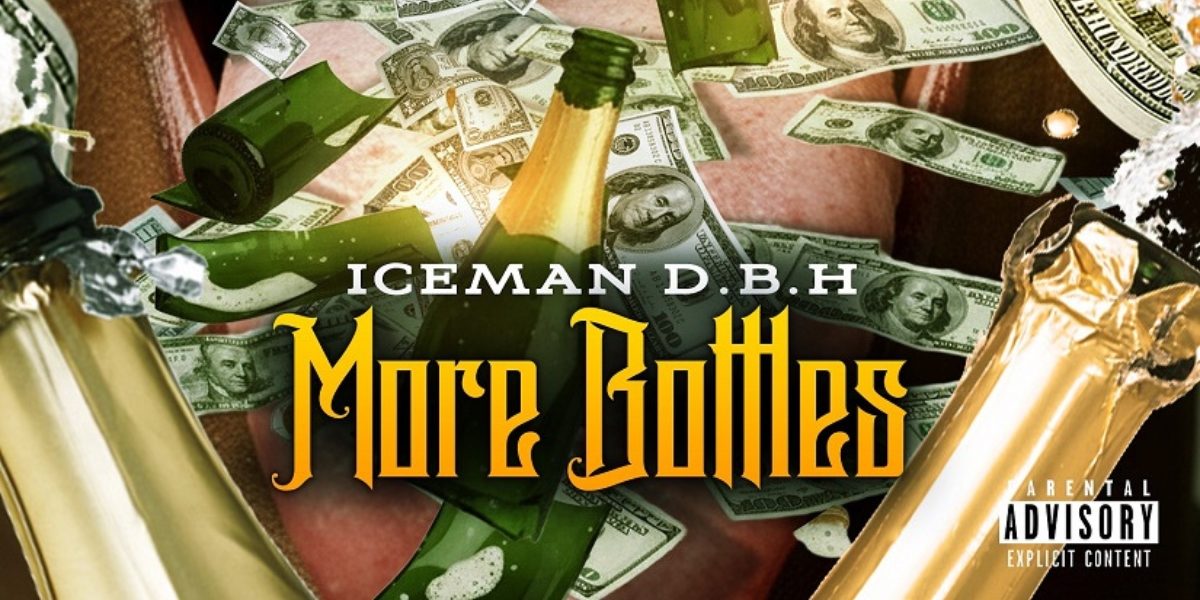

Elijah Levi Williams, professionally known as Iceman D.B.H. (Da Big Homie), is a passionate lover of music and an established hip hop artist from Brooklyn, New York. He began making music creatively at the age of 13 and went professional in 2014. For him, music is seen as a tool to inspire and uplift people, while also entertaining them, and for that reason, he continues to evolve at a notable pace.
With such a refined definition of music, Iceman D.B.H. continues to create inspired and thoughtfully crafted music from his heart. A talented rapper, his rap is largely influenced by rap legends like Biggie, Wu-Tang, Eminem, Lloyd Banks, and Jay-Z. His ability to blend storytelling with hard-hitting beats has earned him a growing fan base that appreciates the authenticity in his lyrics.
Iceman D.B.H. is diligent and pays great attention to his craft at all times. His style has been compared favorably to that of the legendary rapper “Big L.” Since his involvement in the music industry, he has had some remarkable breakthroughs.
He has been ranked #36 on iTunes and has been featured on B.E.T. and WordStar hip-hop. The artist has been featured on numerous rap music platforms worldwide, with his music being recognized for its quality and raw energy.
Iceman D.B.H., known for his hard-hitting bars and punchlines, is gradually making his mark in the music industry. The artist is also recognized for his distinctive rap style and his love for music. His unwavering dedication to perfecting his craft has made him one of the most anticipated voices in the underground rap scene.
Throughout his music career, he’s worked on several projects with other well-regarded artists. His collaborations reflect his versatility, as he continues to push the boundaries of hip hop.
He dropped an album not too long ago titled “Return Of Da Hustler 2” and he just released his new single titled “More Bottles.” His latest release follows the success of his previous hit single “Henny No Chaser.”
New York Hip Hop
Hip-hop, also referred to as rap music or simply rap, is a popular music genre that originated in the early 1970s, coinciding with the rise of a related subculture within the African-American and Latino communities of New York City. This musical style is typically distinguished by the integration of various techniques, with rapping being prevalent enough to serve as a defining feature. Additional significant elements of the genre include the disc jockey (DJ), turntablism, scratching, beatboxing, and instrumental tracks. Cultural exchange has always played a crucial role in the hip-hop genre, as it both draws from its social context and offers commentary on it.
The hip-hop genre and culture originated from block parties held in ethnic minority neighborhoods of New York City, especially in the Bronx. DJs began to extend the instrumental breaks of popular records upon realizing the excitement it generated among the crowds. These breaks sparked a new wave of creativity, leading to the birth of a revolutionary musical form. These extended breaks helped create opportunities for breakdancers and rappers. The breakbeats facilitated the development of the hip-hop style. Many of the records utilized were disco, reflecting its popularity during that era. Disco provided a rhythmic foundation, allowing for greater experimentation in music. This disco-influenced music was initially termed disco-rap and subsequently referred to as “old-school hip-hop.”
During the mid-1980s, hip-hop began to evolve as electro music began to influence the genre’s new school. The timeframe from the mid-1980s to the mid-1990s is often referred to as hip-hop’s “golden age,” a time when the genre received extensive critical recognition, groundbreaking innovation, and achieved significant commercial sales and cultural influence.