
By: Ryan Thompson
December 22, 2025
Wanfang Long has long had a clear ambition: to design buildings that bring meaning and potential positive impact to people’s lives. That early inspiration has since evolved into a career characterized by a commitment to design excellence, technological innovation, and community engagement.
Wanfang earned her Bachelor of Architecture with a minor in Interior Architecture from the University of Oregon, where she began building a strong foundation in design thinking and professional practice. She later pursued a Master of Science in Advanced Architectural Design at the University of Pennsylvania, where she deepened her expertise in cutting-edge digital technologies, computational design, and advanced digital fabrication methods.
Her professional journey began early. While still an undergraduate student, Wanfang interned at two architectural firms in Eugene, Oregon. At GMA Architects, she contributed to medical and office projects, developing innovative façade design iterations. At Pivot Architecture, she supported feasibility studies and space planning for the University of Oregon testing center, analyzed advanced design strategies for the Springfield Track hydraulic facilities, and produced multiple acoustic wall design schemes for a pediatric clinic in Eugene.
Following her Bachelor of Architecture education, Wanfang practiced architecture in Los Angeles County, gaining comprehensive experience across all phases of architectural delivery, from planning and schematic design through design development and construction documentation. During this time, she worked on over 20 residential and clinical projects, including a 155,000-square-foot recreational facility designed to promote an enjoyable spatial experience.
Driven by a desire to continue advancing her technical and digital design capabilities, Wanfang returned to academia at the University of Pennsylvania. During her graduate studies, she and her teammate successfully completed an innovative minimum surface façade prototype challenge, utilizing robotic arms for large-scale 3D printing. This achievement demonstrated her exceptional ability to merge research, technology, and architectural innovation.
After completing her graduate degree, Wanfang continued her professional practice in Pennsylvania, contributing to more than 20 projects, including the adaptive reuse of a 12,000-square-foot dormitory at Bryn Athyn College. She is currently an architectural designer at Design Develop, an AIA Design Award–winning firm, where she engages with a diverse range of project types, including commercial, cultural, civic, educational, clinical, and hospitality architecture.
At Design Develop, Wanfang has played a key role, serving as lead designer on multiple high-profile projects such as the UO Café, Basecamp Community Center, high-end apartment developments, prestigious private school theaters, and advanced therapy clinics. Her work has helped foster client relationships, generate significant industry attention, and reinforce the firm’s reputation for socially responsive design.
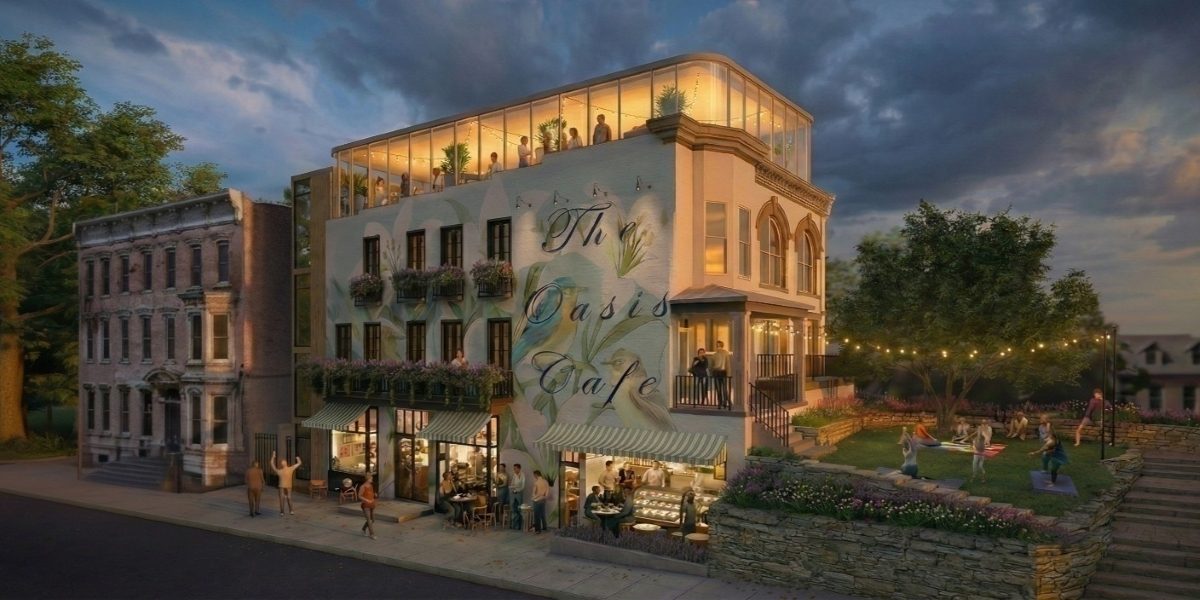
Among her most impactful contributions are two recent nonprofit projects that demonstrate architecture’s potential to transform communities. For the UO Café, located in a historically under-resourced neighborhood affected by urban blight, homelessness, and drug activity, Wanfang led schematic design, visualization, and community presentations. The project introduces a community-focused café with cooking classrooms, a makerspace, and a greenhouse, creating an inclusive public environment that fosters social connection, economic revitalization, increased job opportunities, and access to fresh, organic food. The café’s success has received widespread community support, boosted the organization’s fundraising efforts, and marked a notable milestone for the client.
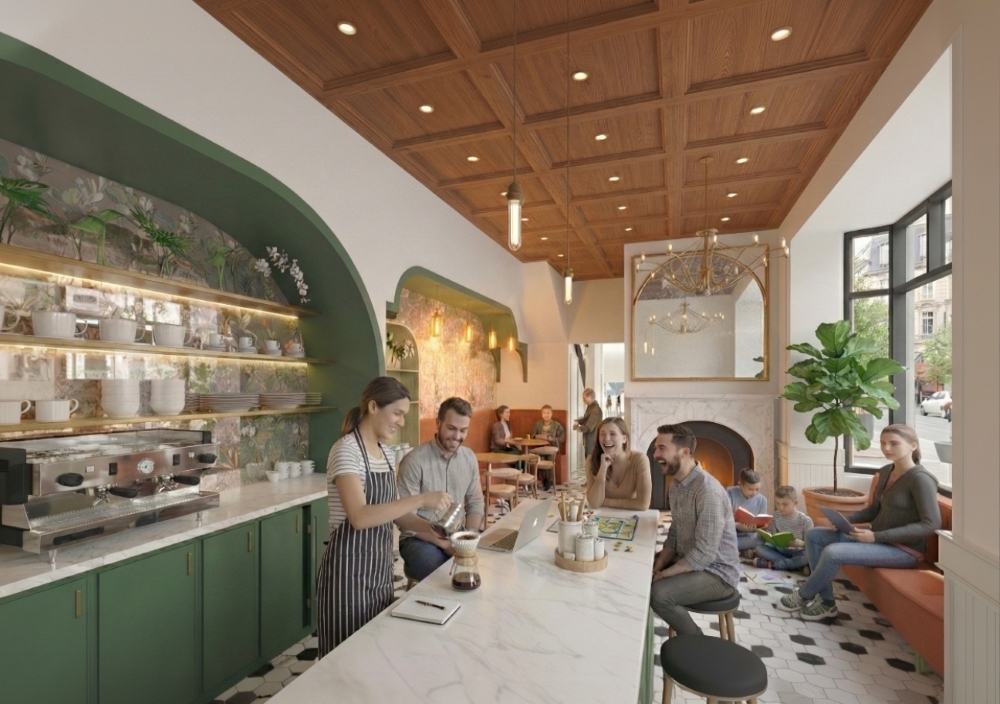
Photo Courtesy: Wanfang Long, Design Develop LLC
Recently, the design of the project won the Rome Silver Design Awards, receiving international recognition for its excellence and innovation in architecture and interior design. The competition highlights achievements in the architectural and interior design sectors, with a special focus on the built environment. The awards were judged by a panel of experts, including Tiago Russo, CEO & Founder of Leading Craft Design, a renowned studio specializing in high-end experiential and immersive design. Russo’s work spans luxury industries such as spirits, cosmetics, automotive, and watch markets, with notable collaborations with global brands like The Macallan, Dewar’s, The Dalmore, Bacardi, Louis Vuitton, Patek Philippe, and McLaren.
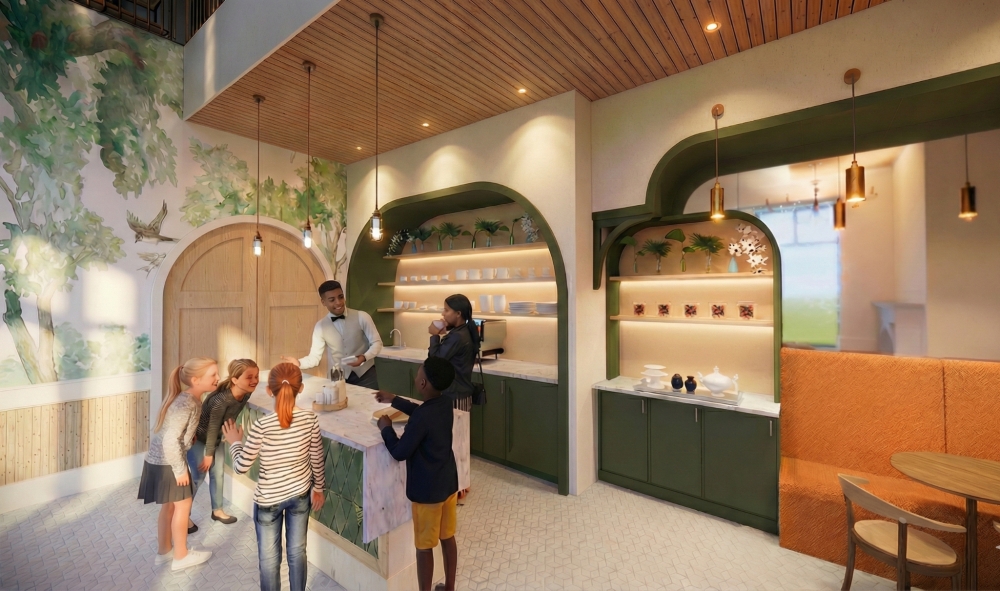
Photo Courtesy: Wanfang Long, Design Develop LLC
Recognized as Revelation Designer of the Year (2014) and known for luxury packaging and product design excellence, the award highlights work that advances both design innovation and social engagement.
The Basecamp project incorporates an innovative rainscreen façade system that aligns with the mission of sustainability. The basecamp also advances environmental education by reconnecting youth and adults, particularly Black, Indigenous, and People of Color communities, with land, food systems, and ecological knowledge. The project supports sustainable funding models, agritourism initiatives, and culturally meaningful educational experiences that build long-term organizational capacity while empowering future generations with skills, confidence, and leadership.
For Wanfang, architecture is more than design, it is a tool for equity, sustainability, and human connection. Contributing to spaces that uplift individuals and transform communities lies at the core of her practice and reflects her enduring purpose as an architectural designer.