Groov Explores How a Two-Minute Scan Could Simplify the Fitting Room Experience

By: Kate Sarmiento
Ten years ago, plenty of everyday errands meant leaving the house and waiting your turn. Now most of them take under a minute from a couch, and people gave up the old way without a fight. Depositing a check used to mean a trip to the bank. Ordering dinner used to mean a phone call and a wrong address getting repeated twice. A doctor’s appointment used to mean a waiting room, old magazines, and an afternoon gone. The interesting part isn’t that this happened. The interesting part is how little resistance consumers put up once they realized friction wasn’t actually required in the first place. Groov, which makes custom insoles from a two-minute iPhone scan instead of a podiatrist’s casting appointment, showed up in the middle of that same shift, betting that comfort didn’t actually require a trip anywhere either.
We Got Spoiled, and We’re Not Sorry About It
Mobile banking is the clearest example, mostly because banks fought this one for years before giving in. Just over half of bank customers, 54 percent, now say a mobile app is their primary way of managing an account, more than online banking and branch visits combined (Source: American Bankers Association, 2025). That’s not a slow trend line creeping upward. That’s a full changing of the guard, and it happened because someone finally asked why depositing a check required standing in a lobby when a camera phone could do the job in ten seconds.
Healthcare moved the same direction, just slower and with more paperwork involved along the way. Physician telehealth use jumped from roughly a quarter of practices in 2018 to nearly four in five during the shift to virtual care, and it has settled at a level still far above anything that existed before (Source: American Medical Association, 2025). Patients did not suddenly start loving video calls with their doctor for the novelty of it. They started using telehealth because a shorter path to the same outcome is, on its own merits, simply a better path.
None of this happened because consumers demanded it loudly or organized a campaign. It happened because once one company removed a step, every competitor asking customers to keep taking that step looked a little worse by comparison. Convenience doesn’t announce itself. It just quietly makes everything else feel slower than it needs to be, and then people stop tolerating the slower version.
The Industries Still Making You Show Up in Person
Here’s where it gets less flattering for a lot of businesses. Plenty of industries are still operating on the assumption that customers will tolerate a clunky, multi-step, in-person process simply because that’s how it’s always worked. Some of them are right, for now. Most of them are running on borrowed time.
The instinct to protect an old process usually comes from a reasonable place. Somebody built that process to solve a real problem, and there’s a fear that removing the friction means removing the value along with it. A bank branch exists because people needed somewhere to trust with their money. A doctor’s office exists because some diagnoses genuinely require a physical exam. A podiatrist’s casting appointment exists because feet are complicated and getting the measurements wrong used to mean discomfort nobody could explain.
The mistake is assuming the friction and the value are the same thing. They rarely are. The value of a bank was never the walk to the branch. It was trust and accuracy, and a phone can deliver both. The value of a doctor’s visit was never the waiting room. It was expertise, and a screen can deliver that too, for a large share of what people actually need. Businesses that can’t tell the difference between the process and the purpose behind it end up defending steps nobody asked for, and customers notice. They always notice eventually, usually right around the time a competitor removes the step for them.
Even Your Shoes Got the Memo
Footwear sat comfortably in the “some friction required” category for a long time, and honestly, it had a decent excuse. Feet are unique, shoes are mass-produced, and matching the two accurately used to require someone physically measuring and adjusting, often more than once. Foot pain has been a quiet, widespread problem as a result. Roughly three in four American adults have dealt with some kind of foot issue, and over half say it has limited their regular activity at some point (Source: American Podiatric Medical Association, 2018). That’s not a niche complaint. That’s most people, living with a problem they’ve mostly stopped mentioning because they assumed it was just how shoes worked.
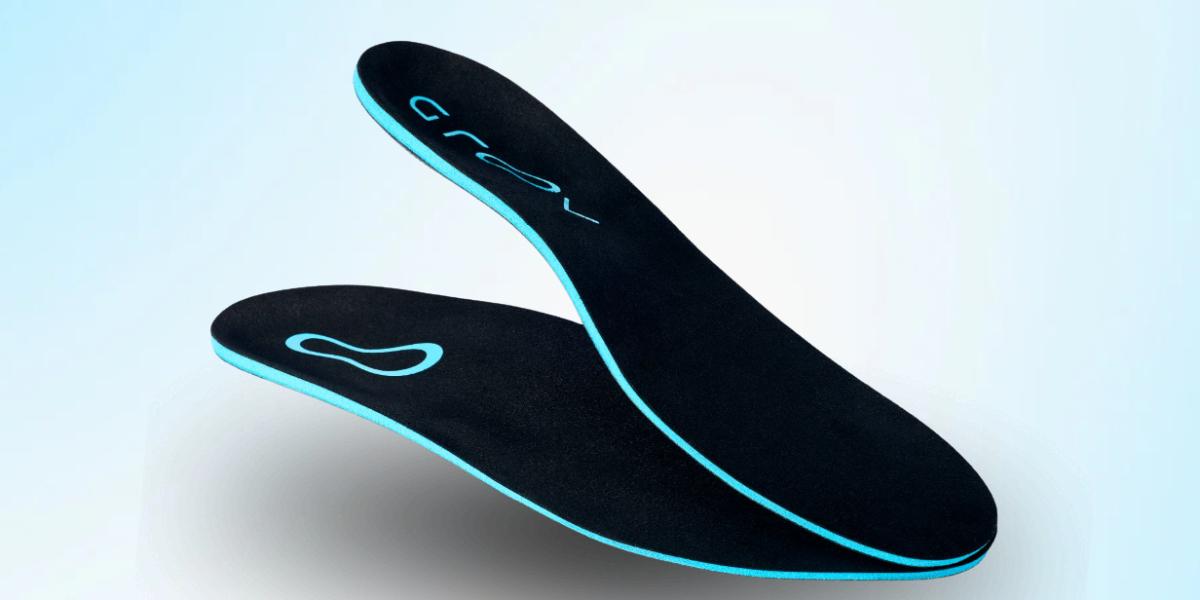
Groov approached that assumption the same way mobile banking approached the branch visit. Rather than lowering the bar for a good fit, the company set out to meet that bar without the appointment. A two-minute scan from an iPhone, no app required, gathers detailed measurements of the foot, and the resulting insole is built around an individual foot rather than an average one. The premise is that convenience and accuracy don’t have to pull in opposite directions.
Personalization has a research record in clinical settings. Researchers reviewing the evidence on custom-made foot orthoses, which are devices molded or milled from an impression of the foot, have found they can ease pain for specific, well-studied conditions such as high-arched feet, though results vary by condition and the research base is still developing (Source: Cochrane Database of Systematic Reviews, 2022). The review covers that category of orthoses and does not evaluate Groov or any other specific brand. What a fast scan changes is access, since the traditional route required time, money, and a specialist most people never bothered to see.
Friction Was Never the Point
The businesses winning right now aren’t the ones that stripped every step out of their process for the sake of speed. They’re the ones that figured out which steps were actually protecting value and which ones were just habit dressed up as necessity. That’s a harder question than it sounds like, and most companies never bothered asking it.
Groov asked it about shoes, which is a smaller category than banking or healthcare but no less personal to the people dealing with it every day. A fit that used to require an appointment now starts with a two-minute scan from a couch. That’s the whole idea behind convenience done right. It doesn’t cut corners. It just refuses to accept that a corner was ever necessary in the first place.
Customers complete the ShapeSense scan on their own iPhone after checkout, so the fitting step that once meant an appointment now happens at home.