
NYC 2-K Program Expands to 12,000 Seats in Fall 2027, Reaching Every Bronx District and All of Staten Island

New York City’s free 2-K program will grow from 2,000 to more than 12,000 seats in fall 2027, adding 10,000 spots for two-year-olds across 17 new school districts. The expansion, announced October 19 by the Mayor’s Office and the Governor’s Office, brings free child care to every Bronx district and all of Staten Island.

Key Takeaways

  • The next phase of 2-K reaches 22 of the city’s 32 geographic school districts, up from five in the program’s first year.
  • Families submitted more than 5,700 applications for the first 2,000 seats, which opened in fall 2026.
  • New districts include Manhattan’s Districts 4 and 5, six Brooklyn districts and three Queens districts, alongside all of the Bronx and Staten Island.
  • New York State has committed $1.2 billion to the effort, with funding identified for the program’s first two years.
  • Current and prospective child care providers will receive a survey and a Request for Information within a week of the announcement.
  • The fall 2027 application timeline for families has not yet been released.

2-K Expansion Adds 17 School Districts Across All Five Boroughs

The 2-K program launched this fall in five districts: District 6 in Manhattan, District 10 in the Bronx, Districts 18 and 23 in Brooklyn and District 27 in Queens. The fall 2027 phase keeps those districts, adds capacity in each of them and extends seats to 17 more.

In Manhattan, District 4 covers East Harlem and Randall’s Island, while District 5 covers Central Harlem, Manhattanville, Morningside Heights and Hamilton Heights. Brooklyn gains six districts stretching from Bedford-Stuyvesant and Bushwick to East New York, Bay Ridge and Coney Island. In Queens, Districts 24, 28 and 29 bring seats to Corona, Elmhurst, Ridgewood, Forest Hills, Jamaica, Queens Village and Rosedale.

Staten Island Moves From Left Out To Fully Covered

The 2-K map for fall 2027 corrects the most visible gap in the first rollout. Staten Island received no seats in 2026, and city officials committed at the time to adding the borough the following year. The new phase covers all of Staten Island and every Bronx school district, the only two boroughs with complete coverage in the next round.

Demand From The First Round Shaped The Next Phase Of 2-K

More than 5,700 applications arrived for 2,000 seats in the 2-K program’s first year, nearly three families for every available spot. That ratio gave the city a clear signal about unmet need, and the expansion is sized to match it.

The Citizens’ Committee for Children of New York noted that before 2-K, fewer than one in four of the city’s two-year-olds were served in publicly funded care. Emmy Liss, who leads the Mayor’s Office of Child Care and Early Childhood Education, said feedback from parents and providers during the first 2,000 seats will inform how the next phase is built.

Free Child Care In NYC Is Becoming A Workforce Issue

The business case for 2-K runs through the household budget. State Senator Julia Salazar put the average annual cost of child care for a two-year-old at $26,000. For families paying that bill, a free seat changes whether a parent can stay in a job, take on more hours or remain in the city at all.

NYC 2-K Program Expands to 12,000 Seats in Fall 2027, Reaching Every Bronx District and All of Staten Island (2)

Photo Credit: Unsplash.com

City Comptroller Mark Levine tied the expansion directly to employers, saying it is critical to support the workforce because it will draw and keep jobs and business in the city. Bronx Borough President Vanessa L. Gibson said full-day care allows parents to maintain stable employment and advance their careers.

The 2-K expansion also sits alongside other child care efforts in New York City. The city is working to move more than 10,000 children off the child care voucher waitlist, and the administration has framed both programs as steps toward universal child care for children from six weeks to five years old.

Child Care Providers Face A Tight Runway Before Fall 2027

Adding 10,000 seats depends on providers ready to deliver them. 2-K is offered through center-based child care programs and licensed family child care programs, and full-day, full-year care remains the default operating model.

Within a week of the announcement, the city plans to release a survey for providers that already contract with New York City Public Schools, along with a Request for Information for new providers interested in offering 2-K. The city also overhauled early childhood contracting and procurement in August and plans to hire more than 200 new staff members at New York City Public Schools to manage the work.

Schools Chancellor Kamar Samuels framed the program as an education investment as much as a child care one, saying it gives the city’s youngest learners a strong foundation.

State Funding Covers The First Two Years Of 2-K

New York State has committed $1.2 billion to early child care in New York City, and the state has said it will fund 2-K’s first two years. What happens after that window is the open question for the sector. The Day Care Council of New York said that with funding identified for only two years, community-based providers need a long-term commitment so they can plan and grow.

For parents, the immediate next step is the application calendar. City officials said the fall 2027 timeline for families will be announced in the coming weeks.


FAQs

What Is The NYC 2-K Program?

2-K is New York City’s free child care and early education program for two-year-olds. It launched in fall 2026 with 2,000 seats in five school districts and runs through center-based and licensed family child care programs.

Is 2-K Happening In NYC?

Yes. 2-K is operating now in five school districts, and it will expand to more than 12,000 seats across 22 districts in all five boroughs starting in fall 2027.

How Do Families Apply For 2-K In NYC?

The application timeline for fall 2027 seats has not been released yet. City officials said details will be announced in the coming weeks, and families can find current child care options at nyc.gov/childcare.

When Does The 2-K Expansion Start?

The 10,000 additional seats begin in fall 2027. The first 2,000 seats opened in fall 2026.

Which School Districts Will Get 2-K Seats In 2027?

Every district in the Bronx and on Staten Island, plus Manhattan Districts 4 and 5, Brooklyn Districts 16, 17, 19, 20, 21 and 32, and Queens Districts 24, 28 and 29. The five original districts will also add capacity.

DPB’s “God Mode” Brings Together Christian Hip-Hop, Gaming Culture, and Spiritual Themes

By Nathaniel Cross

There is something inherently fascinating about a Christian rapper taking the phrase “God Mode”, a video game cheat code that essentially makes your character invincible, and transforming it into a full-blown declaration of spiritual empowerment. It’s a concept that sounds simultaneously brilliant, ridiculous, inspirational, and potentially disastrous.

And somehow, DPB manages to make it work.

Mostly.

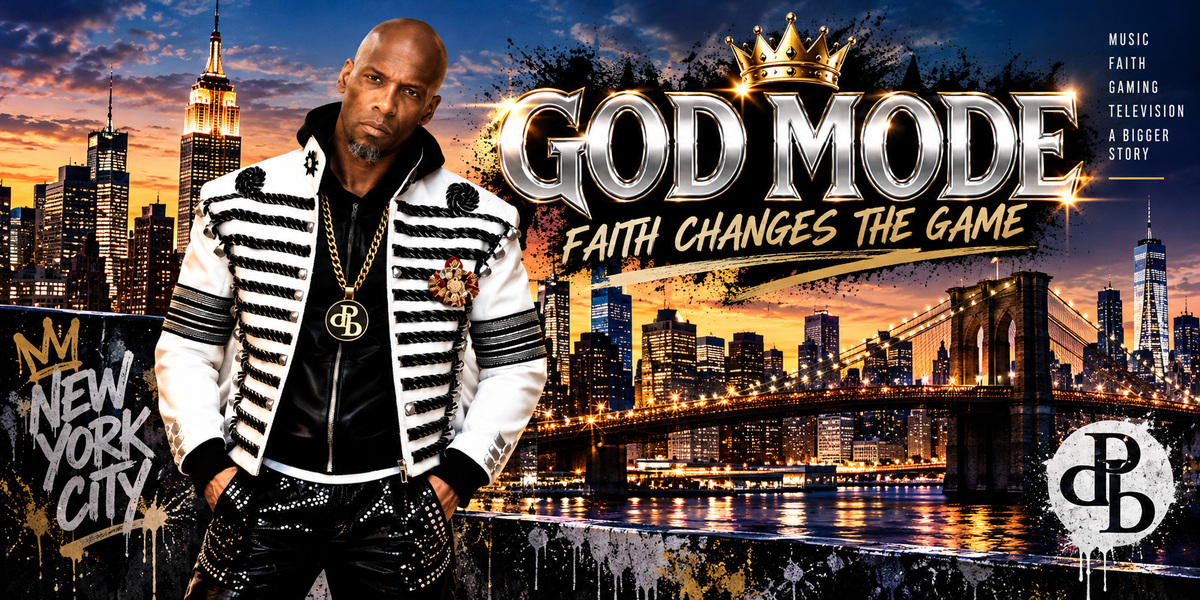
“God Mode,” featured on the veteran Christian hip-hop artist’s 2026 album Undefeated, is an exercise in absolute conviction. Originally released in 2022 and receiving renewed attention through DPB’s latest album campaign, the track is loud in its messaging, unapologetic in its religious imagery, and almost aggressively uninterested in subtlety.

Which, depending on your tolerance for motivational Christian rap, could be either its greatest strength or its most exhausting quality.

Let’s talk about the concept first, because it’s easily the most interesting thing happening here.

In gaming, God Mode means you’re essentially unstoppable. Your health bar doesn’t matter. Enemies can’t touch you. You’re operating outside the ordinary limitations of the game’s universe.

DPB takes that concept and applies it to Christian theology, suggesting that believers already possess extraordinary spiritual authority through their relationship with Jesus Christ.

And then he drops the line that essentially defines the entire record:

“Jesus Christ is the God Code.”

Now, look.

That is an absolutely outrageous lyric.

It’s the kind of phrase that could easily appear on a youth-group T-shirt next to a pixelated cross and a badly Photoshopped game controller.

But here’s the thing: within the context of the song, it actually works.

The phrase is memorable, conceptually consistent, and immediately communicates what DPB is trying to accomplish. It’s a little corny, sure, but corniness isn’t automatically a musical failure. Sometimes an artist commits so completely to an idea that its inherent absurdity becomes part of the appeal.

And DPB commits.

Completely.

The song operates at the intersection of hip-hop braggadocio and evangelical worship. Where a conventional rapper might boast about money, status, physical dominance, or lyrical superiority, DPB redirects that confidence toward spiritual authority.

He’s not claiming that he personally possesses unlimited power.

He’s claiming that his faith connects him to something greater.

That distinction gives “God Mode” an interesting philosophical foundation, even when the songwriting occasionally becomes repetitive.

And yes, we need to talk about that repetition.

Because there is a lot of it.

DPB leans heavily into the central hook and its surrounding declarations, emphasizing healing, deliverance, freedom, and revival. The repeated phrases create an almost congregational atmosphere, as though the track is designed to function equally well at a hip-hop concert and a particularly enthusiastic church service.

There’s a legitimate musical tradition behind that approach.

Gospel music has always relied on repetition to build emotional intensity. Hip-hop similarly uses recurring hooks and rhythmic phrases to establish momentum and audience participation.

DPB clearly understands both traditions.

The problem is that repetition needs development to remain compelling. When a track continues reinforcing the same idea without introducing enough lyrical contrast, the listener can begin feeling as though the song is circling its destination rather than advancing toward it.

“God Mode” occasionally runs into that problem.

The production supports the song’s anthem-like intentions, giving DPB a rhythmic foundation for his forceful delivery. Its hip-hop framework and emphatic vocal approach favor direct impact over intricate musical experimentation.

That approach makes sense for the message, but it also limits the track’s unpredictability.

There are moments when a more adventurous arrangement, sharper lyrical imagery, or a few unexpected rhythmic shifts might have elevated the material considerably.

Because DPB has an interesting story to tell.

This is an artist with more than three decades of experience, a background in the Christian rap group D.O.C. (Disciples of Christ), and a career that has survived multiple generations of musical trends.

His longevity gives him credibility.

His conviction gives him personality.

But neither automatically guarantees compelling songwriting.

What makes “God Mode” worth hearing is the tension between those qualities. DPB’s sincerity is unmistakable, and even when his lyrics become overly declarative, there’s something refreshing about hearing an artist who isn’t desperately attempting to disguise his identity for broader commercial appeal.

He’s Christian.

He’s a rapper.

He’s proud of both.

Deal with it.

Interestingly, the song’s central metaphor may eventually extend beyond music. DPB has explored the possibility of developing “God Mode” into a video game and potentially a television project.

And while neither concept should be treated as a confirmed release, the idea makes a surprising amount of sense.

The track already establishes a recognizable universe built around spiritual empowerment, overcoming adversity, and discovering hidden abilities.

In fact, a video game might provide an opportunity to explore those ideas with more nuance than the song itself manages.

Imagine a game where spiritual strength isn’t measured by destroying enemies but by making difficult moral decisions, helping others, and resisting destructive impulses.

That could be genuinely interesting.

And it might give DPB’s central concept the narrative complexity that the record occasionally lacks.

Ultimately, “God Mode” is a song whose ambition is more compelling than its execution is consistently refined.

Its hook is memorable. Its message is clear. Its delivery is passionate. Its fusion of gaming terminology and Christian theology is surprisingly effective.

But the repetitive structure and relatively straightforward musical approach prevent it from reaching the level of artistic sophistication that its concept might support.

Still, there’s something undeniably appealing about DPB’s refusal to compromise.

In a musical landscape overflowing with carefully calculated authenticity, he sounds like someone who actually believes every word coming out of his mouth.

And that counts for something.

“God Mode” isn’t a masterpiece. It isn’t particularly subtle, and it certainly isn’t reinventing hip-hop.

But it is distinctive, energetic, and powered by a genuinely interesting idea.

Sometimes that’s enough to earn another listen.