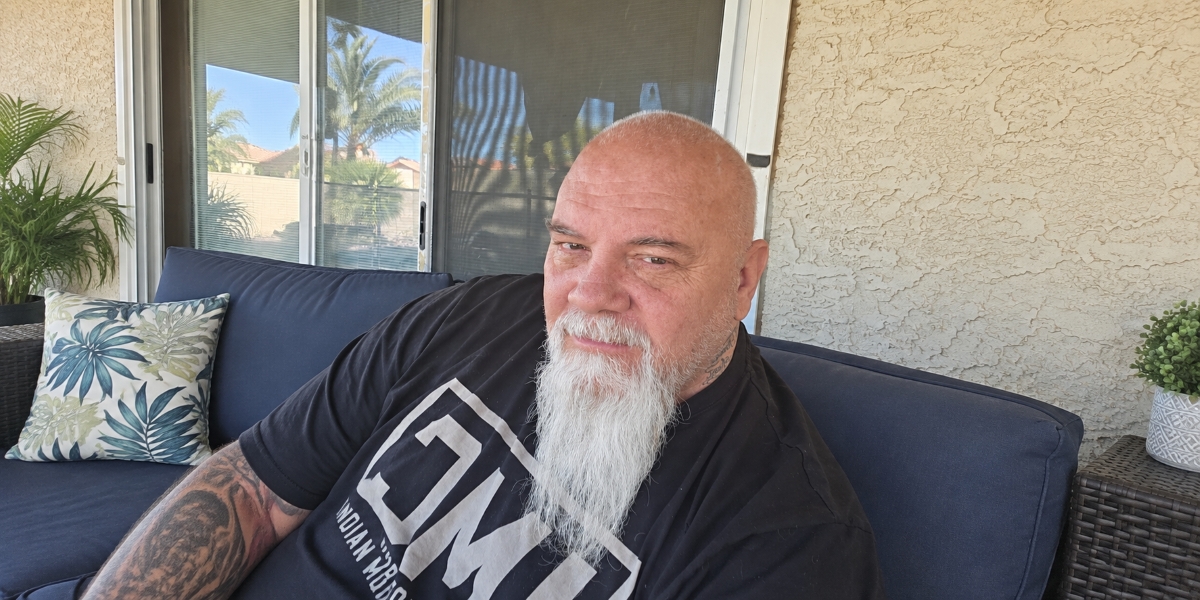
Walking This Line: Roger E. Felker on Service, Integrity, and the Human Cost of Law Enforcement

For more than two decades, Roger E. Felker worked in environments where decisions could have immediate and lasting consequences. His career moved through military policing, civilian law enforcement, criminal investigations, supervision, instruction, and specialized federal training. Along the way, he encountered violence, tragedy, humor, difficult choices, unexplained events, and the ordinary moments that rarely make it into public descriptions of police work.

His memoir, Walking This Line: Windows to the Soul, brings those experiences together in an account that is as much about the person behind the uniform as it is about law enforcement itself. Felker describes the book as his version of a modern memoir, originally written for his children so they could better understand who he was, what he experienced, and why his work sometimes kept him away from important family moments.

A Career Built Around Service

Felker’s professional journey began in 1991 when he joined the U.S. Army as a military police officer. His career later included service with the Yavapai County Sheriff’s Office, the Avondale Police Department, and the Hualapai Tribe, where he worked as a criminal investigations supervisor. His training eventually included the Federal Law Enforcement Training Center in Georgia, where he earned federal criminal investigator certification.

The breadth of that experience gives Walking This Line its distinctive perspective. The book moves through military service, patrol work, investigations, training, leadership, family experiences, and the personal consequences of a profession that can demand constant readiness.

Some stories are intense. Others are unexpectedly humorous. Felker explained in his interview that humor became an important survival mechanism among military personnel and first responders. For people regularly exposed to stress, danger, and tragedy, humor can help them stay human in circumstances that might otherwise become overwhelming.

Beyond the Badge

One of the memoir’s most compelling aspects is its willingness to show the author’s evolution.

The younger Felker often approached policing through action, confrontation, and physical courage. Over time, his understanding of effective law enforcement changed. Through his work with gangs and criminal investigations, he came to value relationships and communication more. Building trust within a community, he explains, can be more useful than simply trying to establish authority.

That perspective also appears in the book’s treatment of everyday policing. One story involves a traffic stop in which Felker chooses not to issue a citation after considering the driver’s circumstances. The experience becomes an important lesson about looking at the larger situation rather than treating every violation as an opportunity for punishment.

For Felker, good policing eventually became less about proving who was toughest and more about understanding people.

Honesty, Accountability, and Integrity

Felker does not present himself as a flawless hero. Instead, the memoir includes mistakes, difficult relationships, injuries, personal struggles, and decisions that remain complicated. In his interview, he explained that he deliberately chose not to remove uncomfortable material because he wanted his children to receive an honest account of his life. He believes readers respond to the reality of imperfect people making difficult choices.

That honesty matters especially when the book addresses professional integrity. Felker speaks directly about the concept of the “blue wall” and argues that integrity must remain central to law enforcement. In his view, agencies strengthen public trust when they acknowledge misconduct rather than conceal it.

The memoir therefore extends beyond personal recollection. It raises questions about accountability, responsibility, leadership, and the relationship between public institutions and the communities they serve.

The Human Cost of the Work

The emotional weight of the memoir becomes especially clear in Felker’s reflections on trauma and mental health.

His career ended in 2018 following a serious neck injury. The resulting medical and financial pressures drove profound changes in his personal life and ultimately ended his law enforcement career. The book describes that period not as a simple retirement, but as the closing of an important chapter after years of service to his country and communities.

Felker remains convinced that the career was worthwhile. In the interview, he said he would choose the same life again, while emphasizing that law enforcement and other first-responder professions need to take mental health more seriously. He supports regular opportunities for officers and other first responders to discuss difficult incidents and receive professional support without fearing that seeking help will damage their careers.

A Memoir About the Line Everyone Walks
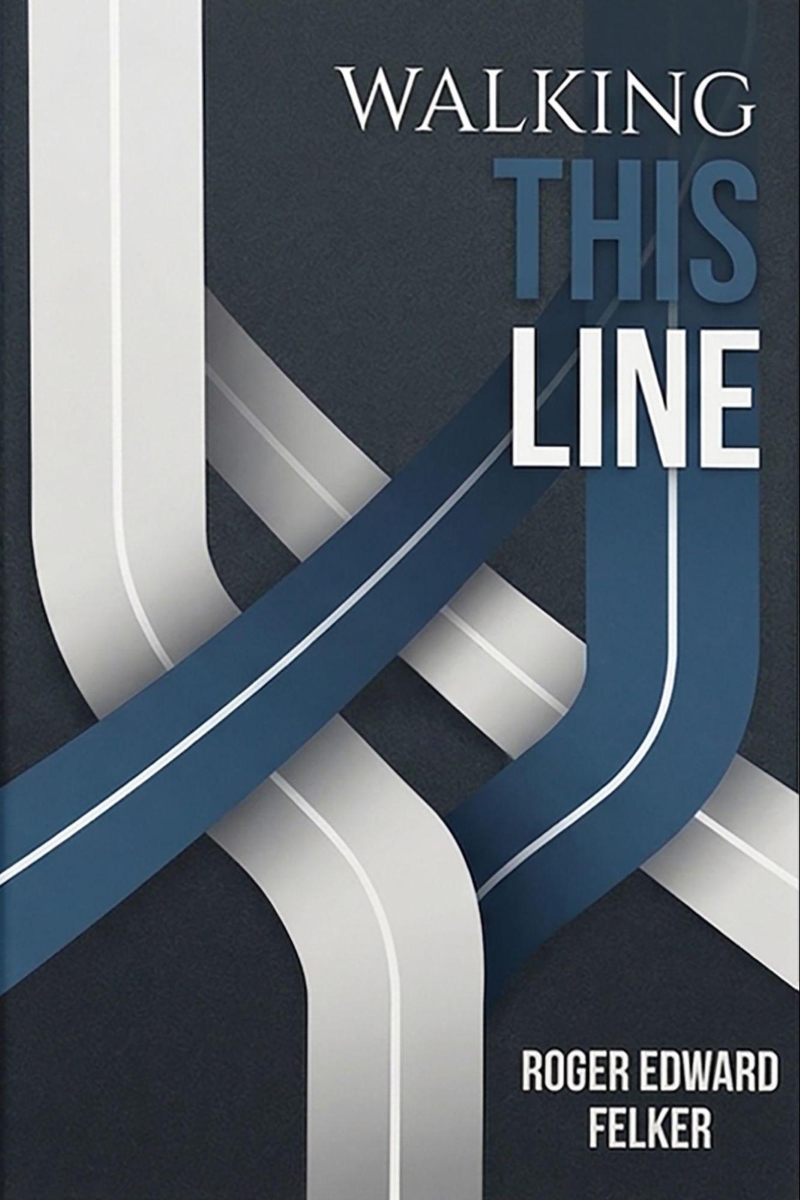
Photo Courtesy: Roger Edward Felker

The title Walking This Line reflects the broader idea at the center of Felker’s story. He describes that line as the balance between work and home, right and wrong, community needs and family needs, and the responsibilities that come with serving others.

That balance is ultimately what gives the memoir relevance beyond law enforcement.

Felker’s experiences include military service, investigations, danger, humor, family, loss, unexplained encounters, professional conflict, and personal resilience. Yet his message isn’t limited to police officers or veterans. He hopes readers will recognize something of themselves in the stories and understand that people may have very different experiences while sharing many of the same emotions.

Today, Felker is retired from law enforcement and spends much of his time writing, creating art, and living away from the profession. His author biography describes more than two decades of law enforcement experience, specialized training, investigative work, instruction, and service as a U.S. Army combat veteran.

Walking This Line: Windows to the Soul is therefore more than a collection of police stories. It is Roger E. Felker’s attempt to preserve a complicated life honestly, explain the choices that shaped it, and leave his readers with a simple idea: despite differences in experience, people remain connected by the human experiences they share.

Where Readers Can Find the Memoir and the Interview

Felker discussed the experiences, challenges, and defining moments behind Walking This Line: Windows to the Soul in a televised segment covering his career in law enforcement and his decision to write about it.

Watch the Fox 10 Phoenix Interview: https://tinyurl.com/2cdnyes6

Get Your Copy:


Explore the Official Website:

The Discipline of Faith: Inside Dr. Willis Wainwright’s Hard-Won Wisdom

By: Dr. Willis Wainwright

Some authors write to be understood. Dr. Willis Wainwright, the retired U.S. Navy chief warrant officer and pastor behind the forthcoming memoir Beyond the Trees, writes to be useful. In a recent conversation with New York Weekly, he was candid about a life built less on one dramatic turning point than on a long accumulation of small, disciplined choices, the kind, he says, that only make sense looking backward.

A Household Already at War with Excuses

Dr. Wainwright grew up in Marion, Louisiana, a town he estimates at fewer than 5,000 people, one of eight surviving siblings. It was a household with little room for excuses, a philosophy his father repeated so often it became family doctrine: own up to what you’ve done, and stop explaining why you didn’t. “He would always tell you, pull back the skin on yourself and identify who you are,” Dr. Wainwright said. “Once you identify who you are and be honest with yourself, the excuses will go away.” The lesson didn’t land right away; as a boy, he was fluent in justifications. It took years to understand his father wasn’t trying to shame him, but to hand him a tool: nothing could hold him back in life except himself.

His mother’s influence revealed itself more slowly. Sitting watch in front of a boiler during his Navy career, he found himself reflecting on her morning routine: five a.m. wake-ups, chores assigned and tracked, a household run on a strict schedule around farm work and school. “That was no different from the military,” he said. “She was already doing regimented things that the military does to get you organized.” He calls her, in the book, a matriarch standing her own watch, discipline delivered without raised voices, but just as absolute.

An Accident Before the Uniform

During his Delayed Entry Program (DEP), Dr. Wainwright faced a medical crisis serious enough that doctors raised the possibility of amputating his leg. He was young enough that the word itself didn’t initially register; when it was explained plainly, his first reaction was about his future, not his leg: “Lord, I haven’t even started my Navy career. Why is this happening to me?”

What steadied him, he says, was his grandmother’s advice to simply have faith, paired with a scripture about faith the size of a mustard seed being enough to move mountains. As his medical reports improved, that belief hardened into something unshakable. “There was nothing else nobody could ever tell me for the rest of my life that there wasn’t a God out there,” he said, a premise that shaped everything that followed.

Working Twice as Hard, Quietly

One unguarded thread in the conversation concerned a learning disability Dr. Wainwright lived with largely in private. Rather than disclose it, he compensated, leaning on a strong memory for assembling information, while giving himself far more time than his peers to absorb material. “It took me longer to read over it, to get a grasp of it,” he said. “I did extra research, and I just went over it day, night, day, night.”

That effort, he believes, is part of what pulled him toward engineering, and it followed him through three decades in the Navy and later through a bachelor’s degree, two master’s degrees, and a PhD. He built a rigid personal system: hours of review, everything written down, rehearsed until it stuck. “To this day, I still write everything down,” he said. “You would never know unless I tell you.”

Patience Under Pressure

Asked about a defining moment of leadership, Dr. Wainwright pointed to an operation in East Timor, when his team landed by helicopter into a chaotic scene obscured by dust and rushing crowds. As team leader, he had to decide whether to stand down or open fire, with visibility and information both in short supply. “It could have went wrong that day,” he said. He credits patience waiting for the dust to literally and figuratively clear over instinctive reaction as the harder skill. “Sometimes you can respond or react to some things, and it was not necessary,” he said. “And then you had to deal with what came out of it.”

Starting Over Without a Rulebook

Retirement after 32 years in uniform presented a different test. The Navy had supplied structure for his entire adult life: schedules, manuals, clear reporting lines. Civilian life offered none of it. “It was like starting over in life, rebuilding yourself,” he said, describing the adjustment as harder emotionally than he’d expected.

That same tension shaped his family life. The habits of responsibility that defined his career didn’t translate cleanly into fatherhood or marriage, and he describes the adjustment to civilian life, divorce included, as relearning how to lead without a chain of command. While raising two daughters, he worked hard to father better than he himself was fathered.

Faith Tested, Not Spared

Dr. Wainwright draws a firm line between faith and immunity from hardship. He describes losses, bankruptcy, and setbacks not as contradictions of his belief but as tests of it. “When God shuts doors, he just opens bigger doors for you,” he said. “I didn’t give up the faith. I’m still pushing through.”

That framework extends to his view of legacy. Rather than money or property, he says the inheritance that matters most is spiritual scripture passed to his children and grandchildren the way a farmer plants a crop, without digging it up daily to check on its progress. “It’s just like planting the seed,” he said. “Once you plant the seed in them, it’s up to them.”

One Line, One Purpose

Asked to distill the entire book into a single sentence, Dr. Wainwright didn’t hesitate: “Keep everything faith-based, and God would answer all your prayers.” It’s a fitting thesis for a memoir less interested in triumph for its own sake than in offering a working blueprint, built on decades of quietly compensating, adjusting, and recommitting rather than any single miraculous turn.

Beyond the Trees, with its companion guide, releases this month across major retailers including Amazon, Barnes & Noble, and Walmart, alongside the author’s own website.

Piano Prodigy Belle Chi Performs 4 Concertos in 3 Weeks: “That’s Just What I Do”

By: Ariel Johnson

NEW YORK, For most pianists, preparing a single concerto with orchestra is a major undertaking. Belle Chi’s July schedule demanded four.

From July 7 through July 29, the teen pianist and Young Steinway Artist performed Chopin’s Piano Concerto No. 1 in E minor, Chopin’s Piano Concerto No. 2 in F minor, Mendelssohn’s Piano Concerto No. 1 in G minor, and Ravel’s Piano Concerto in G major, four major works spanning different eras, styles, and musical languages.

Four concertos. Three weeks. Four distinct artistic challenges.

Each piece required its own technical approach, interpretive perspective, and relationship with the orchestra. Chi’s compressed schedule left little room to settle into one musical world before entering another. Instead, she moved rapidly from Chopin’s poetic lyricism to Mendelssohn’s brilliance and momentum, then to Ravel’s vivid colors, rhythmic complexity, and jazz-inflected character.

A Broadening Artistic Voice

Chi first drew international attention at age nine, when she became the youngest recipient of the Star of Yamaha distinction. Since then, her career has continued to develop through competitions, concert appearances, orchestral collaborations, and recording projects.

Her July repertoire offered a striking portrait of that growth.

Chopin’s two concertos demand more than technical fluency. Their long melodic lines, intricate ornamentation, rhythmic flexibility, and intimate expressiveness require a pianist to balance delicacy with control. The music must feel spontaneous while remaining structurally assured.

Mendelssohn’s First Piano Concerto presents a sharply contrasting challenge. Its rapid transitions, brilliant passagework, and relentless forward motion call for precision, agility, and seemingly limitless energy.

Ravel’s Piano Concerto in G major opens an entirely different sound world. Its transparent orchestration, French elegance, rhythmic sophistication, and jazz influence require the pianist to change color and character almost instantaneously.

Taken together, the four works revealed a performer capable of moving across contrasting musical landscapes without losing her individual voice.

Audiences Left Deeply Moved

Photo Courtesy: Studio Andantino

The performances also made a strong impression on listeners, particularly Chi’s interpretation of the second movement of Chopin’s Second Piano Concerto.

One audience member described the experience this way:

“I was completely overwhelmed by the second movement of Chopin’s Second Piano Concerto. Belle’s playing had an extraordinary combination of delicacy, freedom, and intensity. Every phrase seemed to breathe, and her control of the pedal and the smallest details of the sound created an almost hypnotic atmosphere. By the end, I felt that I had heard the piece in an entirely new way.”

The response points to an aspect of Chi’s artistry that extends beyond technical accomplishment. Her performances seek to make even the most demanding repertoire feel immediate, personal, and emotionally alive.

Beyond the Prodigy Label

Chi’s career began under the familiar label of “prodigy.” But as she enters a new stage of her development, the more compelling question is not what she has already achieved, but where her ambitions will lead next.

Her recent work suggests an artist increasingly defined not only by exceptional technique, but also by the breadth of her musical interests. Concert performances, international collaborations, and recording projects are becoming part of a larger artistic trajectory.

Despite the extraordinary demands of her July schedule, Chi appears to regard the pace with characteristic composure.

Asked about performing four major concertos in three weeks, she offered a remarkably understated reply:

“Four concertos in three weeks? Honestly, that’s just what I do.”

Photo Courtesy: Studio Andantino

The comment is playful, but it also captures the confidence behind a schedule that would challenge even an experienced concert pianist.

For Chi, the three-week stretch was not a culmination. It was another step in an artistic journey that continues to expand.

Four concertos. Three weeks. And for Belle Chi, it was simply the next chapter.

Official Website: https://www.bellechimusic.com/

Instagram: https://www.instagram.com/bellechi.piano?stkn=MTJ5NmFiZjU4cHdqMQ%3D%3D&utm_source=qr

Who Gets Hired In Marketing Could Become A More Open Question

Hiring a marketing partner often starts with a surprisingly small pool of information. A company may know an agency through its reputation, encounter a marketer through LinkedIn or receive a recommendation from someone in its network. From there, the selection process typically moves toward portfolios, pitches and references.

Marketing Crunch is launching with a concept that could add another step to that process. The platform will review PR firms and individual marketers, creating a dedicated place where companies can research marketing professionals before deciding who to work with.

By positioning itself as the “Rotten Tomatoes of tech marketing,” Marketing Crunch is taking a familiar consumer behavior and applying it to a professional industry.

Discovery Is Only The Beginning

The internet has made it relatively easy to discover marketing firms. Search engines, social platforms and professional networks can produce hundreds of potential options within minutes.

The harder problem is determining what to do with that list.

A company may find an agency with an impressive website and recognizable clients, but that does not necessarily tell the entire story. Marketing is a service business, and the quality of the working relationship can matter just as much as the services being offered.

Reviews can potentially fill part of that information gap by adding perspectives that are separate from a firm’s own marketing materials.

A Marketplace For Reputation

Marketing Crunch is effectively creating another layer in the marketplace for marketing services. Instead of simply asking which firms exist, companies can potentially use the platform to investigate how those firms and individual professionals are perceived.

That distinction could change how marketers think about their online presence. A website, social profile and portfolio are controlled largely by the marketer. A review platform introduces information that exists outside that controlled environment.

For established firms, that could make reputation management more important. For newer marketers, it could create another opportunity to establish credibility and differentiate themselves from a crowded field.

The Individual Becomes A Brand

The inclusion of individual marketers is particularly relevant in an era when professional identities are increasingly portable. A marketer can build a following, develop expertise and establish relationships without remaining tied to one agency for an entire career.

That creates a market in which personal reputation can be almost as important as corporate branding.

Marketing Crunch’s model reflects that shift by treating individuals and firms as separate subjects. A company searching for help may ultimately care less about the size of an organization than about the specific people who will actually be responsible for the work.

A platform that allows both to be reviewed could make that distinction more visible.

What Happens When Marketers Get Reviewed?

There is a natural tension in the concept. Marketing professionals spend their careers helping companies influence how they are perceived, but a review platform puts the professionals themselves under scrutiny.

That does not necessarily change the fundamentals of the industry. Companies will still examine experience, capabilities, relationships and previous work when selecting a partner. But reviews could become another factor in the research process.

For Marketing Crunch, the opportunity is to turn an informal part of marketing, the conversations people already have about which firms and professionals they trust, into something more organized.

The platform is starting with a simple proposition, but the broader idea is larger: make the marketing industry easier to research by giving reputation a place of its own.

Governor Hochul Awards $67.5 Million in Playground Grants to 89 Communities Across New York State

Governor Kathy Hochul on September 22 announced $67.5 million in capital grants for 89 playground projects statewide, distributing the full allocation of the NY PLAYS program to municipalities and nonprofit organizations across all 10 regions of New York. The grants, issued through the New York Places for Learning, Activity, and Youth Socialization initiative, will fund 36 new playgrounds, 23 major expansions, and 30 renovations designed for children of all abilities.

Key Takeaways

  • The 89 NY PLAYS grant recipients will share $67.5 million in state capital funding, with individual awards ranging from $100,000 to $2.5 million per project.
  • More than $36 million of the total is directed toward playground projects in underserved communities across the state.
  • Combined with required local matching funds, the state investment will generate more than $145 million in total playground construction and renovation activity.
  • New York City secured $15 million for projects in Queens, the Bronx, and Brooklyn, while the Mid-Hudson region received the second-largest regional share at $15.5 million.
  • NY PLAYS is part of Governor Hochul’s Unplug and Play initiative, which now exceeds $350 million across three capital programs targeting playgrounds, swimming facilities, and community centers.

$145 Million in Total Investment Spread Across All 10 Regions

The $67.5 million in state grants will leverage an additional $77.5 million in local matching contributions, pushing total investment past $145 million. Every grant recipient was required to demonstrate a 20 percent match toward total project costs as a condition of the award, a provision the Governor’s Office described as a way to ensure local commitment and financial readiness before construction begins.

The Dormitory Authority of the State of New York, which administers the program in partnership with the New York State Office of Parks, Recreation and Historic Preservation, evaluated applications based on project readiness, community need, public benefit, and overall impact. Applications were accepted from May 4 through June 15, 2026, following a competitive review process that began in January when Governor Hochul first opened the funding opportunity.

DASNY President and CEO Robert J. Rodriguez said the authority is proud to administer NY PLAYS and support communities through a program that gives children and families more opportunities to get outside, stay active, and connect with one another.

New York City and Mid-Hudson Lead Regional Allocations

New York City and the Mid-Hudson region each received $15 million, the two largest regional shares in the distribution. In New York City, the Department of Parks and Recreation secured three $2.5 million grants for a new playground at Gwen Ifill Park in Queens, an expansion of Lozada Playground in the Bronx, and upgrades to the Kaiser Park playground in Brooklyn.

The Mid-Hudson allocation includes a $2.5 million award to Orange County for a new playground at Camp LaGuardia County Park, $2.1 million to the Central UTA of Monsey, and $2 million to the City of Newburgh for a destination playground at Delano-Hitch Park. The Finger Lakes region followed with $8.2 million, led by a $1.2 million grant to the City of Rochester for the Jackson Recreation Center playground renovation.

Long Island received $6.1 million, anchored by a $2.4 million award to the Town of Riverhead for a new adaptive children’s playground and $1.61 million to the Village of Hempstead for renovations at Kenny Memorial Park. Western New York secured $5.5 million, with $2 million going to the City of Buffalo to create a fully accessible play space at Kingsley Park.

Unplug and Play Initiative Now Exceeds $350 Million in Statewide Commitments

NY PLAYS is the third major capital program under Governor Hochul’s Unplug and Play initiative, which the Governor’s Office launched to encourage children and families to reduce screen time and engage in outdoor recreation. The initiative now includes the Statewide Investment in More Swimming, which has awarded nearly $260 million to 79 swimming facility projects, and the Building Recreational Infrastructure for Communities, Kids and Seniors program, which distributed $100 million to 30 community center projects in its first round and recently opened a second round with $75 million in additional funding.

The combined spending represents a sustained push from Albany to direct capital dollars toward recreational infrastructure, an approach that aligns with broader state capital commitments aimed at stabilizing municipal budgets and expanding community services. The FY27 state budget allocates an additional $20 million for NY PLAYS and another $20 million for NY SWIMS, signaling that the pipeline of playground and swimming facility projects will continue to grow beyond the current round.

State Parks Commissioner Kathy Moser said the NY PLAYS grants will help communities create more opportunities for children and families to enjoy the proven benefits of outdoor recreation, encouraging young people to head outside, meet new friends, and make physical activity part of their daily routines.

Underserved Communities Receive Majority of Funding

More than $36 million of the total $67.5 million allocation is directed to playground projects in underserved communities, exceeding the program’s original floor of $35 million for equity-focused spending. The provision was built into the NY PLAYS request for applications from the outset, with scoring criteria that weighted community need and equitable access alongside project readiness and design quality.

State Senator José M. Serrano, who chairs the Senate Committee on Cultural Affairs, Tourism, Parks and Recreation, called the initiative an important investment in safe, high-quality outdoor recreational spaces. Serrano noted that access to these spaces supports health, community connection, and overall well-being, and credited Governor Hochul and colleagues in state government for maintaining and expanding the program.

The complete list of NY PLAYS grant recipients and individual award amounts is available through DASNY at dasny.org/PLAYS. Construction timelines will vary by project, with recipients now entering the grant disbursement agreement phase before breaking ground.

FAQs

What Is the NY PLAYS Initiative?

NY PLAYS stands for New York Places for Learning, Activity, and Youth Socialization. The program is a $67.5 million competitive capital grant initiative that funds the construction, expansion, and renovation of public playgrounds across New York State. The Dormitory Authority of the State of New York administers the program in partnership with the New York State Office of Parks, Recreation and Historic Preservation.

Who Was Eligible to Apply for NY PLAYS Grants?

Municipalities and nonprofit organizations in New York State were eligible to apply. For-profit entities were not eligible. All grant recipients were required to demonstrate a 20 percent match toward total project costs, provide evidence of site control, and submit detailed project budgets with supporting documentation. Nonprofit applicants also needed prequalification through the Statewide Financial System.

How Much Funding Did Underserved Communities Receive?

More than $36 million of the $67.5 million total was awarded to playground projects in underserved communities, exceeding the program’s original commitment to reserve at least $35 million for equity-focused projects. The scoring criteria used during the competitive review process weighted community need and equitable access to outdoor recreation.

What Other Programs Are Part of the Unplug and Play Initiative?

Governor Hochul’s Unplug and Play initiative includes three capital programs: NY PLAYS for playgrounds, the Statewide Investment in More Swimming (NY SWIMS) for swimming facilities, and Building Recreational Infrastructure for Communities, Kids and Seniors (NY BRICKS) for community centers. NY SWIMS has awarded nearly $260 million to 79 projects, and NY BRICKS distributed $100 million to 30 projects in its first round with a second round of $75 million now open.

Jan Raeder: What 30 Years on the Mat Taught Her About Wellbeing

By: Matthew Kayser

Long before Jan Raeder built a framework or wrote a book, she spent more than 10,000 rounds sparring on a mat. Thirty five years of it, most spent running two martial arts locations herself.

“Don’t duck. Don’t flinch,” she says. It’s the line that anchors one of her signature keynotes, and it didn’t come from a psychology textbook. It came from the dojo floor.

Corporate wellness audiences battling burnout hear that same line now, usually right before Raeder asks them where in their own week they have been ducking instead of standing their ground. It lands harder coming from someone who has actually taken the hit.

Raeder is the SelfCare Sensei, a wellbeing educator, keynote speaker, and author behind the M.O.R.E. framework, her plain-language translation of positive psychology research. Before any of that, she was a National AAU Karate gold medalist and senior instructor at US Budokai Karate, building a business on the mat for decades before she ever wrote a page about wellbeing.

She retired from competitive martial arts in 2018. What she carried out the door wasn’t a trophy case. It was a way of handling pressure that later became the backbone of everything she teaches.

On the mat, the moment a fighter takes a hit personally is the moment they lose their center, she says. Off the mat, the principle holds just as well, whether the pressure is a sparring partner, a difficult boss, or a bad morning.

“How’s that working out for you?” is one of her most repeated lines, aimed at anyone still fighting a battle that stopped serving them a long time ago. It’s blunt on purpose. Raeder built her reputation on being direct, not comforting.

That same refusal to look away shows up in one of her clearest stories. Raeder defended her master’s thesis over Skype, in front of three professors. Two of them left only their photos on screen, cameras off, for the entire defense.

“If you don’t want to be here, why are you here?” she remembers thinking. “This was a lot of work to do what I did.”

Half attention was never good enough for her, on a screen or on a mat. That standard is now built into the engagement pillar of M.O.R.E., her framework drawn from Martin Seligman’s positive psychology research. Engagement, in her definition, means showing up fully, the same discipline she once drilled in sparring, just applied to everyday life.

Running two dojo locations also shaped how she prices her own work today. Raeder describes the old model as community college prices for an Ivy League education, high value without unnecessary cost, and she says that same standard now shapes her book, her keynote fees, and every program she builds for corporate wellness clients.

She earned that thesis the hard way. In 2013, while running two dojo locations, raising a family and working another job, Raeder went back to school. Her first semester alone carried 19 credits. She finished both a bachelor’s and a master’s degree in four years.

“You do the work you have in front of you,” she says. It’s the same instruction she gives every audience now, whether they are new to a mat or new to a boardroom.

That discipline followed her out of the dojo. After she retired from competition, Raeder began teaching a college course built on wellbeing theory, then turned it into Strive for M.O.R.E., a 139-page book available on Amazon built to work for a high school senior and a PhD without talking down to either.

That instruction is also why Raeder refuses to aim her message at one type of person. In the dojo, she watched four-year-olds figure out which hand goes where and eighty-four-year-olds light up over the exact same small breakthrough.

“You can’t put it into words,” she says. “It’s an energy you feel from the person. All I’m doing is giving them the information. They’re the ones doing the work.”

From four to 84 has become her shorthand for a simple belief. Wellbeing is not a demographic. It’s a daily practice open to anyone willing to do it, whether they’re stepping onto a mat for the first time or stepping into a boardroom already worn down.

Discipline beats motivation every time, she says. Motivation fades. Discipline holds up under pressure long after the feeling that started it is gone, like a technique drilled ten thousand times holding up under a real hit.

That is the resilience piece most burnout advice leaves out. Raeder tells every audience the same thing before they leave the room. The mat never cared about excuses, and neither does a Tuesday morning with a full inbox and a hard conversation still waiting.

The uniform came off in 2018. The discipline didn’t, and neither did the standard behind it: show up fully for whatever is in front of you, then do it again tomorrow. That’s the only black belt anyone actually needs.

To learn more about the M.O.R.E. framework or book Jan Raeder to speak, visit selfcaresensei.com or connect with her on LinkedIn.