Mayor Mamdani Releases 10 Year Street Safety Overhaul With More Than 100 Policy Commitments

New York City Mayor Zohran Kwame Mamdani is releasing a 54-page policy blueprint on Tuesday that outlines more than 100 commitments aimed at eliminating traffic deaths and severe injuries across all five boroughs over the next decade. The plan, titled “Vision Zero Reimagined: A New Action Plan for Road Safety,” introduces proposals ranging from new pedestrian-only districts to speed governors on the vehicles of repeat offenders, and it represents the administration’s first comprehensive update to the city’s road safety strategy since 2021.

Key Takeaways

  • The plan contains more than 100 commitments organized under eight overarching goals, with 19 city agencies participating in implementation.
  • Proposals include 15 mph speed limits near hundreds of additional schools, safety redesigns at 1,000 intersections per year, and the creation of pedestrian-only and pedestrian-priority districts.
  • The city will implement the state’s Stop Super Speeders legislation, which allows New York City to mandate speed governors in the vehicles of the most dangerous repeat offenders.
  • Officials are evaluating higher tolls for larger passenger vehicles, citing data showing oversized cars and SUVs are disproportionately involved in fatal crashes.
  • New York City recorded 205 traffic fatalities in 2025, the fewest since record-keeping began in 1910, with pedestrian deaths down approximately 40% since 2014.

The Plan Builds on a Decade of Vision Zero Progress

Vision Zero was first introduced in 2014 under former Mayor Bill de Blasio, modeled after a Swedish road safety framework that treats every traffic death as a failure of street design rather than an unavoidable accident. In the years since, the program has driven annual traffic fatalities down from 299 in 2013 to 205 in 2025, a 31% reduction. Pedestrian deaths specifically fell from 184 in 2013 to 111 last year.

The Mamdani administration’s update arrives at a moment when those numbers are continuing to trend downward. NYC Department of Transportation data released earlier this year showed pedestrian fatalities in the first half of 2026 dropped 13% compared to the same period in 2025, placing the city on pace for one of its safest years on record. DOT Commissioner Mike Flynn has pointed to safer street designs, expanded speed camera coverage, and targeted enforcement as driving forces behind the decline.

Still, the new plan acknowledges that the original Vision Zero playbook needs to evolve. The city’s transportation landscape has shifted considerably since 2014, with a growing mix of e-bikes, mopeds, electric scooters, and other micromobility devices sharing road space alongside cars, trucks, buses, and pedestrians. The 54-page document positions “Vision Zero Reimagined” as a response to that complexity, pledging to address gaps the original program was not designed to handle.

Pedestrian Districts and School Zone Speed Limits Headline the Proposals

Among the plan’s most notable proposals is the creation of pedestrian-only and pedestrian-priority zones in dense, transit-rich neighborhoods across the city. The concept traces back to Mamdani’s campaign platform, where car-free districts were a signature policy promise. City officials confirmed during a Monday press briefing that specific locations have not yet been identified, but emphasized that neighborhoods with high foot traffic and strong transit access are the likely candidates.

The plan also commits to expanding 15 mph slow zones near hundreds of additional schools, building on a pledge Mamdani made earlier this month to drop speed limits at 800 school locations by the end of 2026. Intersection safety is another central focus, with the administration reaffirming its goal of installing hardened daylighting treatments or equivalent safety infrastructure at a minimum of 1,000 intersections each year. Nearly 200 Vision Zero Priority Corridors that have not yet received safety redesigns are slated for completion within the next three years.

On the technology side, the plan calls for expanded safety features on thousands of city-owned vehicles, including audible truck alerts and enhanced automatic braking systems. The city’s Department of Citywide Administrative Services has already piloted intelligent speed assist technology on municipal fleet vehicles, and officials reported that the technology has virtually eliminated speeding among fleet drivers. All new city vehicle orders now include the system as standard, with exceptions only for emergency response vehicles.

Enforcement Gaps and Unanswered Details Remain

The plan does not arrive without scrutiny. Transportation advocates and analysts have noted that while the document is ambitious in scope, several of its most prominent proposals remain at the “explore” or “evaluate” stage rather than carrying firm timelines or budgets. The pedestrian-only districts, for instance, lack identified neighborhoods or projected launch dates. A proposed “mobility wallet” program that would subsidize transit options for low-income New Yorkers, including subway, bus, Citi Bike, and NYC Ferry, is similarly framed as a concept under study rather than a funded initiative.

The Stop Super Speeders program, which would require the installation of speed-limiting devices in the cars of the most reckless drivers, also faces a delayed rollout. City officials estimated during Monday’s briefing that the program is likely more than a year away from implementation, even though the enabling state legislation has already been signed into law.

Perhaps the most significant tension point involves NYPD enforcement. Vision Zero has historically relied on three pillars: engineering, education, and enforcement. But enforcement activity has declined sharply since the pandemic. In 2019, NYPD officers issued 642,000 moving violations across seven Vision Zero categories. By 2025, that number had dropped to 379,000, a 41% reduction. Failure-to-yield summonses fell by roughly half over the same period. No NYPD representative participated in Monday’s pre-release briefing, and city officials declined to address questions about how the department’s reduced enforcement activity squares with the plan’s goals. New York City’s broader efforts to align road safety policy with infrastructure modernization at the state level add context to why the enforcement gap matters as much as the engineering ambitions.

A Broader Transportation Agenda Takes Shape

Annie Levers, director of the Mayor’s Office of Operations, framed “Vision Zero Reimagined” as one piece of a larger transportation strategy that includes the city’s forthcoming Streets Plan and its recently announced Bus Action Plan. The Streets Plan, which DOT is required by law to release before the end of 2026, will outline a five-year roadmap for protected bike lanes, bus infrastructure, and pedestrian space across the city. The Bus Action Plan, released in July, introduced priority corridors, bus rapid transit expansion, and all-door boarding.

Taken together, the three documents represent the Mamdani administration’s attempt to present a unified vision for how New York City streets should function over the next decade. Whether the ambitious language in “Vision Zero Reimagined” translates into measurable outcomes will depend on the specifics that follow, including how the city funds the proposals, how aggressively it pursues the enforcement side of the equation, and whether the pedestrian-only district concept moves from policy aspiration to physical reality on city blocks.

FAQs

What Is Vision Zero Reimagined?

Vision Zero Reimagined is a 54-page policy plan released by Mayor Zohran Mamdani’s administration containing more than 100 commitments aimed at eliminating traffic deaths and severe injuries in New York City over the next 10 years. The plan is organized under eight overarching goals and involves 19 city agencies.

How Have Traffic Deaths Changed in New York City Since Vision Zero Launched?

Annual traffic fatalities in New York City dropped from 299 in 2013, the year before Vision Zero was introduced, to 205 in 2025, representing a 31% decline. Pedestrian deaths fell from 184 to 111 over the same period. The first half of 2026 showed a further 13% decline in pedestrian fatalities compared to the same period in 2025.

What Are Pedestrian Only Districts in the Vision Zero Plan?

The plan proposes the creation of zones in dense, transit-accessible neighborhoods where vehicle traffic would be restricted or eliminated entirely in favor of pedestrian access. Specific locations and timelines have not yet been announced, though city officials described them as areas with high foot traffic and strong public transit connectivity.

Will Speed Limits Change Near New York City Schools?

The plan expands the city’s school zone speed reduction initiative, proposing 15 mph speed limits near hundreds of additional schools. Mayor Mamdani pledged earlier in September 2026 to implement 15 mph slow zones at 800 school locations by the end of the year.

What Is the Stop Super Speeders Program?

Stop Super Speeders is a state law that grants New York City the authority to order the installation of speed-limiting devices, known as speed governors, in the vehicles of repeat dangerous drivers. City officials estimated during a September 2026 briefing that the program is more than a year away from launch.

What Home-Based Hospital Care Looks Like for New Yorkers

By: Jamie Barrutia, Head of Marketing, myLaurel

Anyone who has spent hours waiting in a Brooklyn emergency room, or needed a hospital bed that never opened up, likely knows the problem: New York’s hospitals are busy, and getting busier. But a shift already underway is changing what getting care looks like for patients across the city. That shift starts with the idea that hospital-level care doesn’t have to happen inside a hospital’s four walls.

What This Means For Patients

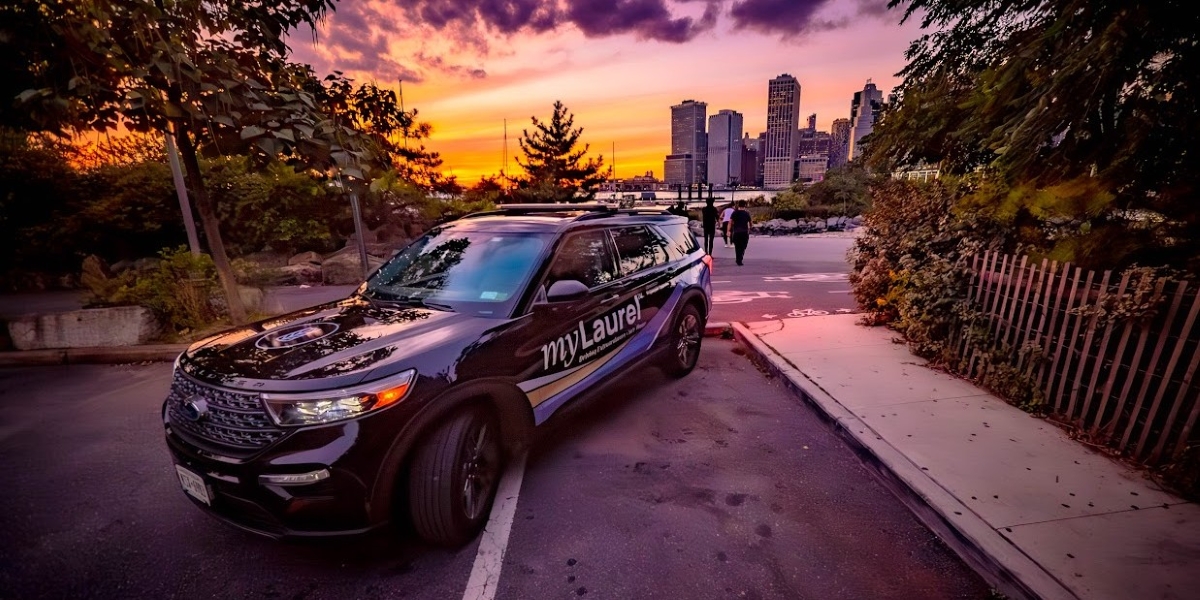
Many New York hospitals have launched, or are launching, programs that allow eligible patients to receive the same quality of care at home as they would receive in the hospital. Brooklyn’s largest healthcare system and one of the nation’s largest independent teaching hospitals serves one of the most diverse patient populations in the country and has partnered with myLaurel, an organization that delivers acute and transitional care in the patient’s home. This type of partnership means patients who would have stayed in the hospital for days can now recover safely at home, under the care of a full clinical team both in person and virtually.

In many cases, patients can leave the hospital earlier, continue their recovery at home, and avoid repeated hospital visits. For New Yorkers who are cared for at home, it means sleeping in their own bed, eating their own food, and following their own schedule all while receiving high-quality care in the comfort of home.

What It Looks Like

Being discharged home with myLaurel feels a lot like simply going home, because that is exactly what patients are doing. What changes is where their care is delivered.

Once a patient leaves the hospital, myLaurel clinicians bring the medications, equipment, and diagnostic tools needed to continue care directly to the home, backed by a virtual team of physicians and nurses providing clinical oversight around the clock. If new or worsening symptoms arise, that same team can respond in the home, 365 days a year, to evaluate and treat the patient and help avoid a return trip to the hospital.

The myLaurel team also educates patients and caregivers on what to expect and how to manage recovery at home, and coordinates the wider transition back to ongoing care, arranging primary care and specialist follow-up, home health referrals, transportation, and delivery of medical equipment along the way. Care follows the patient home, instead of the other way around.

What The Numbers Show

myLaurel supports Brooklyn-area patients in two distinct ways. For patients who are medically ready to leave the hospital sooner, dedicated length-of-stay (LOS) coordination enables earlier, safer discharges, freeing up hospital capacity and saving 2.29 bed days per patient. And for patients at risk of returning after a hospital stay, close, at-home follow-up has helped drive a 43% reduction in readmissions among general medicine patients in the program’s first year with one hospital, translating to more than 1,000 unnecessary readmissions avoided.

“Our programs in New York serve patients who represent a higher-acuity population than the average general medicine patient, as reflected by their higher case mix index (CMI), indicating they were at greater risk for readmission at baseline,” noted Jamie Babcock, ANP-C, myLaurel’s Chief Clinical Officer. “We’ve seen great success in reducing readmissions among general medicine patients, helping more patients recover safely at home and avoiding return hospitalizations.”

The program has been particularly successful for Brooklyn’s frail, elderly, and medically complex patients by providing advanced medical care at home through a multidisciplinary team.

“What makes this program so impactful is that we are not simply moving care from the hospital into the home; we are delivering a highly coordinated, clinically integrated model designed around the needs of medically complex patients,” said Babcock. “Through timely clinical intervention, close follow-up, and strong collaboration between the health system, health plans, and myLaurel teams, we have helped patients recover safely at home. These results demonstrate what is possible when clinical innovation is paired with disciplined execution and a shared commitment to patient-centered care.”

What Patients Are Saying

Patient feedback suggests many prefer recovering at home in programs like this one. Patients in the Brooklyn partnership report high satisfaction with the program and say they would recommend it to others.

Brooklynites aren’t alone in that response. myLaurel reports similarly strong patient feedback across the other markets it serves.

Patients aren’t just tolerating care at home; they are actively seeking it as an alternative to the hospital, and increasingly asking whether these programs are available to them.

“Our programs enable many complex patients to recover at home,” said Jon Branche, myLaurel’s Chief Growth Officer. “The vast majority of patients tell us they would rather recover at home than in the hospital.”

Why It Matters Now

New York’s hospitals aren’t going to get less busy. That’s especially true during cold and flu season, when emergency rooms fill fastest, and safely moving stable patients home can relieve pressure across the whole system. New York already has about 4.8 million residents age 60 and older, a figure the state’s Master Plan for Aging expects to reach 5.3 million by 2030. As the population ages and needs more complex care, hospitals are at an inflection point and must find ways to care for people outside the hospital, through more community-based capacity.

But that doesn’t have to mean patients get less care, or less comfortable care. Partnerships like these with myLaurel point to a change in where care happens, and for a growing number of New Yorkers, the place they recover is starting to look a lot like home.

Disclaimer: This article is for general informational purposes only and does not constitute medical advice. Individuals should consult a qualified healthcare professional regarding their specific medical needs and treatment options.

Why Personalized Astrology Is Becoming a Daily Habit and Where Hint Fits

By: Ethan Rogers

There is a particular kind of app people open without planning to spend much time in it.

Maybe it happens while coffee is brewing. Maybe on the train. The user checks one thing, reads for a minute, closes the screen and moves on with the day.

Horoscopes have always fitted easily into that kind of routine. The newspaper version did it decades ago. Find your sign, read three or four sentences, and decide whether any of it sounds familiar. What has changed is the amount of personal information a digital astrology product can build around that small daily habit.

Apps such as Hint no longer have to serve the same paragraph to every Libra or Capricorn. A user can begin with a birth date, exact time and place, build a natal-chart profile and then return to material shaped around that profile. The daily horoscope becomes only one part of the experience. Relationship compatibility, longer interpretations and conversations with astrologers can sit around it.

For people who enjoy astrology, this creates something more personal than the old zodiac column without requiring the app to become the center of their life. Often the appeal is much simpler. It gives them something different to think about for a few minutes.

From a Zodiac Sign to an Ongoing Profile

The traditional horoscope had one major advantage: almost no setup.

It also had an obvious limitation. Everyone sharing the same sun sign received essentially the same material.

A natal chart starts with considerably more detail. In Hint, users provide their birth date, time and location, which are used to construct the astrological profile behind the personalized experience. From there, the service can surface daily and monthly material, natal-chart interpretations and relationship-focused content that refers back to the same profile rather than beginning from zero every time.

That changes the rhythm of use.

A generic horoscope is disposable. You read today’s paragraph and tomorrow it is replaced.

A personalized profile has continuity. Something mentioned today may connect with a relationship reading the user explored last week or with part of a natal chart they are still trying to understand. The content begins to feel connected even when individual visits remain short.

That is a familiar pattern in modern lifestyle apps. The strongest products rarely ask people to complete one enormous session. They create a reason to return.

The Interesting Part Is Often What Happens After You Read It

Personalized astrology tends to get discussed in terms of accuracy: did the description get the person “right”?

That may be the least interesting way to use it.

Imagine reading a line suggesting that you tend to withdraw when a relationship becomes too emotionally demanding. There are several possible reactions. You might think it describes you perfectly. You might reject it immediately. Or you might remember one particular situation and wonder whether there is something worth examining.

The third reaction is where these apps can become more engaging.

The statement has not proved anything. It has simply created a prompt.

That distinction matters because reflection works differently from prediction. A prediction asks the user to wait and see whether the app was correct. Reflection asks the user to look backward at their own experiences and decide whether a pattern is actually there.

A journal can do this with a blank page. A friend can do it by asking a good question. Personalized astrology approaches the same territory from another direction. It gives the user a description first and lets them decide what, if anything, it brings to mind.

For a lifestyle product, that is a much more sustainable role than constantly promising revelations.

Relationships Make Those Reactions Harder to Ignore

Relationship content is especially effective at triggering this kind of reflection because people rarely experience relationships as isolated events.

Certain arguments repeat. The same type of person can feel attractive for similar reasons. Someone who avoids confrontation at work may discover that they do exactly the same thing with a partner. Another person may repeatedly become invested very quickly and only recognize the pattern after several relationships.

This is why compatibility content can be more interesting when it moves away from the old “Aries and Scorpio: yes or no?” format.

Hint includes relationship-oriented interpretations and natal-chart compatibility as part of its personalized astrology experience. The useful version of that content is not a verdict on whether two people should be together. It is material that gives the user another way to think about communication, attraction, emotional expectations or recurring behavior.

That same reaction appears in a Reddit discussion about the Hint app. The poster was less interested in proving that astrology could predict a relationship than in the uncomfortable feeling of recognizing parts of their own behavior in the descriptions they were reading.

The discussion that followed is useful because it does not require anyone to treat the app as an authority. Some people recognized the value of the prompt. Others were more skeptical about how specific the language really was. Both responses belong in the same conversation.

That is probably how personalized lifestyle content works best. It gives the user something to test against their own experience rather than asking them to surrender judgment.

Human Astrologers Change the Tone of the Product

Automated content can only anticipate so much.

A natal report may discuss relationships generally, while the person using the app has a much narrower set of questions. Why do I keep reacting this way with one specific person? Is there something in the chart I am misunderstanding? Why does one part of the interpretation seem completely unlike me?

Hint also offers one-to-one conversations with professional astrologers, which introduces a different type of interaction.

The automated side creates continuity. The user’s chart, recurring horoscope material and personalized profile are already there.

The human side allows the conversation to become more specific.

That combination is interesting because digital astrology once appeared to be moving entirely toward automation. Apps could generate reports at scale, so it seemed logical that human readings would become less central. Instead, some services are combining both. Software handles the repeatable parts. A person steps in when the user wants interpretation around a particular question.

For someone who checks a daily horoscope casually, that feature may never matter. For another user, it may be the reason the product feels different from a static astrology website.

The point is not that one mode is inherently better. They serve different moments.

A Daily Habit Needs Range, but Not Endless Novelty

Lifestyle apps face a difficult balance.

Show people exactly the same thing every day and the routine becomes dull. Add too much and the product starts demanding more attention than the user wanted to give it.

Astrology has a natural advantage here because the subject already contains several levels of depth.

A person can spend sixty seconds with a daily horoscope and stop. On another day, they may open part of their natal chart. Relationship compatibility may become relevant when they start dating someone. Curiosity may lead them toward numerology, Tarot, palmistry or astrocartography. Hint currently includes these kinds of experiences alongside its core astrology features.

The important part is that none of them need to be used every day.

A recurring app works better when the routine has a predictable center and optional depth around it.

The daily material creates the return habit. The larger feature set gives users somewhere to go when curiosity is higher.

This is different from designing the product around constant surprise. People do not need a dramatic new discovery every morning. Most routines survive precisely because they are familiar.

Personalized Does Not Mean Prescriptive

There is a temptation with any personalized product to assume that increased specificity should give the output more authority.

That is a mistake.

A natal chart can incorporate more personal inputs than a sun-sign horoscope. A compatibility reading can be built around two profiles rather than two zodiac signs. An astrologer can respond to a specific question instead of delivering a generic interpretation.

None of that means the app should make decisions for the user.

Hint itself frames its astrological material as entertainment rather than professional medical, legal or psychological advice. That boundary is especially important around relationships and major life choices.

A person can read a compatibility interpretation and think differently about a recurring communication problem. They should still decide what the relationship means based on the relationship itself.

They can explore a career-related reading and notice that one part describes a frustration they have been ignoring. That does not make astrology a replacement for evaluating the actual job, finances or professional opportunities.

Personalization makes the material feel closer to the user.

It does not turn interpretation into instruction.

The Strongest Moment May Be a Very Small One

It is easy to describe digital astrology through its largest features. They include natal charts, professional readings, compatibility systems and personalized reports.

The daily experience is often much quieter.

A user opens the app, sees something about communication or patience, remembers an argument from yesterday and thinks about it differently for thirty seconds.

Then the phone goes back into a pocket.

That moment may explain the appeal better than a long debate over whether every line of a reading is accurate.

People already surround themselves with small reflective habits. They save quotations. They use journal prompts. They take personality tests. They send friends memes that feel oddly specific. None of these things need to provide an objective model of a person’s mind to create a useful reaction.

Personalized astrology occupies a similar space for people who enjoy that framework.

The fact that the content is connected to an individual natal profile can make the prompt feel more relevant than a generic horoscope, but the useful part still happens in the user’s interpretation of it.

Why This Version of Astrology Fits Modern Digital Life

The old horoscope was fundamentally a publishing product. One piece of content was written and distributed to a large audience.

The app version behaves differently.

There is a persistent profile. Daily content can refer back to it. Relationship material can use it. A user can move into deeper chart information or ask a human astrologer about something specific. The experience accumulates rather than resetting completely each morning.

Hint is one example of that transition from mass horoscope content toward an ongoing personalized astrology environment.

For the user, though, the experience does not have to feel technologically complicated.

That may be the most important part.

People do not open a lifestyle app because they want to admire its personalization architecture. They open it because the result feels relevant enough to deserve a minute of attention.

Sometimes that result is entertaining.

Sometimes it misses completely.

And occasionally it puts a familiar behavior into words at exactly the moment when the user is ready to notice it.

That is a much more realistic reason for personalized astrology to become a daily habit than expecting an app to tell someone exactly what will happen next.

Disclosure: This is sponsored content is intended for general information and entertainment purposes only and does not constitute professional medical, legal, financial, or psychological advice.