New York Fashion Week Begins Its First Official Fur-Free Season

The New York Fashion Week fur ban is now in force for the Spring 2027 collections, covering every brand on the CFDA’s official schedule. The rule matters because it converts a largely voluntary industry shift into a formal calendar requirement. This report explains its scope, exceptions, participating designers and material implications.

Key Takeaways

  • The policy took effect with the official Spring 2027 schedule on Sept. 10, 2026.
  • It excludes specified animal fur from collections on the CFDA’s official calendar, but it is not a citywide ban.
  • Fur obtained through traditional subsistence hunting by Indigenous communities is exempt.
  • Diane von Furstenberg opened the official schedule, which runs through Thom Browne’s closing show on Sept. 15.
  • The rule places greater attention on alternative materials, sourcing records and accurate product descriptions.

New York Fashion Week entered its first official fur-free season Thursday as a Council of Fashion Designers of America policy took effect across the Spring 2027 schedule.

The change is narrower than a ban on fur throughout New York City. It applies to collections presented by brands on the Official NYFW Schedule and to related promotion through the CFDA’s Fashion Calendar, website and social channels. Independent shows taking place elsewhere in the city are not automatically covered.

The timing places the policy alongside roughly 70 scheduled events and a roster that includes established American houses, returning labels and first-time participants. It also gives editors, buyers and audiences a defined standard for evaluating what appears on the official runway.

New York Fashion Week Fur Ban Sets a Defined Standard

The CFDA announced the policy in December 2025 after working with Humane World for Animals and Collective Fashion Justice. The lead time gave designers about nine months to review materials and adjust plans before the September shows.

The rule excludes farmed or trapped fur from animals killed specifically for their pelts. The CFDA identified mink, fox, rabbit, karakul lamb, chinchilla, coyote and raccoon dog among the covered animals, while making clear that the list was not exhaustive.

An exemption applies to fur obtained by Indigenous communities through traditional subsistence hunting practices. The policy does not prohibit every animal-derived material. Leather, wool and shearling are outside its stated scope, making precise language important when collections and garments are described.

CFDA President and CEO Steven Kolb acknowledged that the runway had already shifted before the rule became official. “There is already little to no fur shown at NYFW,” Kolb said when the organization announced the change. The policy turns that established direction into a condition for inclusion on the official calendar.

A Major Schedule Puts the Policy Into Practice

Runway activity began Sept. 9 with presentations from Coach and Ralph Lauren. The official six-day calendar opened Sept. 10 with Henry Zankov’s debut as artistic director of Diane von Furstenberg, marking the label’s return to the New York runway after nearly a decade.

Reuters reported that the opening show took place on Manhattan’s High Line, where Zankov presented the house’s familiar wrap silhouettes with vivid colors, graphic textures and animal prints. Those prints created visual references to animal patterns without indicating the use of prohibited fur.

The official lineup includes Calvin Klein Collection, Carolina Herrera, Christian Siriano, Khaite, Michael Kors Collection, Prabal Gurung, Proenza Schouler, Tory Burch and Ulla Johnson. Monse, threeASFOUR and Tommy Hilfiger returned, while Conner Ives, Magda Butrym, Sabyasachi and Zaldy were among the newcomers.

That mix places the material rule across businesses with different production structures and design identities. It also reflects the range found in cross-disciplinary fashion design, where material selection can connect creative direction, function and sourcing.

Thom Browne is scheduled to close the official calendar on Sept. 15. Friday’s events began at 10 a.m. Eastern time in recognition of the 25th anniversary of the Sept. 11 attacks.

The Rule Formalizes a Longer Industry Shift

Several brands associated with New York Fashion Week had stopped using animal fur before the CFDA set its deadline. Michael Kors announced a fur-free policy in 2017, with production due to be phased out by the end of 2018. Coach had also discontinued its use of animal fur before the 2026 schedule change.

Faux fur has remained visible in fashion because it can provide volume and texture without using the pelts covered by the rule. Its presence, however, can make clear labeling more important for buyers and consumers who want to distinguish between natural and synthetic materials.

The EU Textiles Ecosystem Platform cited Fur Free Alliance data showing that global fur production fell nearly 40 percent in 2023 from the previous year. The platform also reported a decline of about 85 percent since 2015, indicating that the New York policy follows a measurable contraction in global production rather than initiating the movement on its own.

The shift has extended beyond runway organizations. Fashion publishers including Condé Nast, Elle and InStyle have established their own restrictions involving animal fur in editorial content or advertising. Those rules are separate from the CFDA policy, but they affect the wider environment in which collections are presented and promoted.

Consumer interest in sustainable fashion choices also provides context for the attention given to sourcing and materials. The CFDA rule addresses a specific category of fur, however, and should not be presented as a comprehensive environmental standard for every garment on the schedule.

Material Alternatives Face a Runway Test

The CFDA said it would provide educational resources and access to a material library during the transition. The support is intended to help designers assess alternatives while leaving individual labels responsible for their creative and business decisions.

The material question also appears in the 2026 CFDA/Vogue Fashion Fund. Ten finalists have been asked to create looks with bio-based materials through a partnership with Humane World for Animals. The completed designs are scheduled to be presented in mid-October, and the winner is expected to be announced Oct. 20.

For fashion businesses, replacing fur involves more than matching its appearance. Designers must consider texture, weight, durability, availability and production scale. A material that works for a single runway piece may not be suitable for a larger commercial order.

The September shows provide the first public test of compliance across a varied official roster. The result can be assessed through the absence of prohibited pelts, the accuracy of material descriptions and the alternatives designers select.

The New York Fashion Week fur ban ultimately establishes a limited but enforceable condition for the platform controlled by the CFDA. It does not remove every animal material from the runway or govern every fashion event in New York. Its significance lies in converting a common voluntary practice into a written requirement for the official schedule.

Frequently Asked Questions

When did the New York Fashion Week fur ban begin?

The New York Fashion Week fur ban took effect with the official Spring 2027 schedule on Sept. 10, 2026. The CFDA first announced the policy in December 2025 to give participating designers time to adjust their materials and show plans.

Which types of fur are prohibited?

The policy covers farmed or trapped fur from animals killed specifically for their pelts. The CFDA listed mink, fox, rabbit, karakul lamb, chinchilla, coyote and raccoon dog as examples, but the restriction is not limited to those species.

Does the rule prohibit leather, wool and shearling?

No. The stated policy focuses on fur from animals killed primarily for their pelts, so it does not prohibit every animal-derived material. Leather, wool and shearling remain outside the defined restriction.

Does the policy cover every fashion show in New York?

No. It governs collections and promotions associated with the CFDA’s Official NYFW Schedule. Independent events held during the same period are not automatically subject to the rule.

Are any forms of animal fur exempt?

Yes. The CFDA provides an exemption for fur obtained by Indigenous communities through traditional subsistence hunting practices. The exception is specific and does not broadly remove other animal fur from the policy.


Rethinking Government Leadership

Why Public Organizations Need a New Model for the Future

Government has always been responsible for serving communities, protecting public interests, and providing essential services that affect everyday life. However, as communities grow, technology advances, and public expectations continue to change, the traditional approach to government administration faces increasing pressure. Citizens want services that are efficient, transparent, accessible, and responsive.

This raises an important question. Can government continue operating under traditional structures, or does it need a new approach designed for future challenges?

In his book What is the Ideal Government Model? Monopolistic or Enlightened Business Oriented Monopoly, William B. Gilmore, MRCP/MPA, explores this question by examining how government organizations can incorporate stronger leadership principles, business-oriented strategies, and innovative thinking while still protecting fairness, equity, and public responsibility. The manuscript argues that improving government does not mean abandoning its public mission. Instead, it means finding better ways to accomplish that mission.

The Need for a New Perspective on Government Operations

Government organizations operate differently from traditional businesses because their primary purpose is public service rather than profit generation. However, Gilmore suggests that some operational strengths found in successful business models can offer valuable lessons for the public sector.

The challenge is finding balance. The government must continue ensuring equal access, protecting community interests, and maintaining accountability while also embracing concepts such as efficiency, innovation, and measurable performance.

Many public organizations face challenges from rising costs, changing demographics, workforce demands, and growing expectations from citizens. These challenges require leaders who are willing to evaluate existing systems and consider new solutions rather than relying only on traditional methods.

The future of government leadership depends on creating organizations that can adapt while staying committed to their foundational purpose.

Moving Beyond Traditional Government Structures

One central discussion in Gilmore’s work is the idea of government operating as an enlightened, business-oriented model. This approach does not suggest that the government should become a traditional corporation. Instead, it explores how public organizations can apply strategic management principles to improve service delivery.

The goal is not simply reducing costs. The goal is to create systems that deliver better outcomes for communities.

A modern government organization must consider:

• How resources are being used?

• Whether services are meeting community expectations?

• How can technology improve efficiency?

• How can leaders encourage innovation?

• How can partnerships strengthen public programs?

By focusing on these areas, government leaders can build stronger systems prepared for future challenges.

The Role of Public-Private Partnerships

One major idea explored in the manuscript is the potential value of public-private partnerships. These partnerships allow government organizations and private-sector entities to collaborate, combining public responsibility with private-sector expertise.

Gilmore explains that these partnerships can create opportunities for improved service delivery, increased efficiency, and innovative approaches to solving community challenges.

A successful partnership requires careful planning, clear expectations, transparency, and strong leadership. The government must remain responsible for protecting public interests while allowing qualified partners to contribute specialized knowledge and resources.

When structured correctly, partnerships can help communities access new ideas, technologies, and operational strategies that may not be available through traditional approaches alone.

Leadership as the Foundation of Change

No government transformation can succeed without effective leadership. Policies, technology, and organizational structures are important, but leadership determines whether change becomes reality.

Gilmore emphasizes the importance of leaders who focus on vision, ethics, teamwork, and measurable results. Strong leaders must be willing to evaluate current practices, identify areas for improvement, and encourage their teams to think creatively.

Modern government leaders must also understand that innovation involves calculated risks. Organizations that avoid every risk may struggle to improve. Responsible innovation requires planning, evaluation, and the willingness to adjust when challenges appear.

This type of leadership creates an environment where employees are encouraged to contribute ideas and help build better solutions.

Technology and the Future of Public Administration

Technology is transforming nearly every industry, and the government is no exception. Gilmore discusses the importance of using tools such as artificial intelligence and data-driven systems to improve government operations.

Technology can help organizations analyze information, streamline repetitive processes, improve communication, and make more informed decisions.

However, technology alone cannot solve organizational problems. Strong leadership, ethical decision-making, and thoughtful implementation must support it.

The future of government modernization will depend on combining human judgment with technological capabilities. Leaders must ensure that innovation improves public service rather than creating additional barriers for citizens.

Creating a More Effective Public Service Model

A successful government model must balance efficiency with fairness. Communities depend on government services that are reliable, affordable, and accessible to everyone.

Gilmore’s discussion challenges leaders to consider whether existing structures are still meeting the needs of modern communities. The answer may not be a complete replacement of traditional government systems, but rather a thoughtful evolution toward stronger management practices.

A more effective government model requires:

• Leaders who think strategically

• Organizations willing to adapt

• Responsible use of technology

• Strong community engagement

• Continuous improvement

These elements can help build public organizations that are prepared for future generations.

Shaping the Next Generation of Public Service

The future of government depends on leaders’ willingness to examine existing systems and explore new possibilities. William B. Gilmore’s What is the Ideal Government Model? Monopolistic or Enlightened Business Oriented Monopoly encourages an important conversation about how the government can become more innovative, efficient, and responsive while continuing to protect public values.

The discussion is not about choosing between government responsibility and business principles. It is about understanding how thoughtful leadership, strategic partnerships, and innovation can work together to create stronger communities.

As society continues to change, government organizations must change with it. The leaders who embrace improvement, accountability, and forward-thinking strategies will help shape the next generation of public service.

Author Name: William B. Gilmore

Book Title: What is the Ideal Government Model

Published by: Global Author Publishing

Ben’s Five-Stage Framework of Letting Go: A New Perspective on Psychological Transformation

A five-stage model developed by Dr Ben Bander Abudawood explores why letting go is not a single decision, but a gradual journey from awareness and acceptance towards renewed identity, purpose and flourishing.

“Let it go” is one of the most common pieces of advice offered to people facing heartbreak, disappointment, rejection, loss or failure. The words are simple, but the emotional process behind them is rarely straightforward. A difficult experience may be over in practical terms while continuing to influence confidence, relationships, choices and the way a person imagines the future.

Ben’s Five-Stage Framework of Letting Go, developed by Dr Ben Bander Abudawood, offers a structured way of understanding that process. Instead of treating letting go as forgetting, suppressing emotion or simply deciding to move on, the framework presents it as a gradual psychological transformation through five interconnected stages: Recognize, Reveal, Release, Rebuild and Rise.

The first stage, Recognize, is where the process begins. People can carry emotional weight for a long time without fully acknowledging it. They may stay busy, avoid certain memories or convince themselves that they should already be over what happened. Yet unresolved emotions can continue to appear in behaviour, relationships and everyday decisions. Recognition is about becoming aware of what is still present and being willing to name it.

That awareness creates the foundation for Reveal. This second stage moves beyond identifying pain and asks what the experience has come to mean. A rejection may quietly become a belief that someone is not good enough. Betrayal may develop into the assumption that nobody can be trusted. A professional setback may begin to shape a person’s entire sense of competence. Reveal invites individuals to look at the story surrounding the event, not only the event itself.

This distinction can be important because what happened and what someone came to believe about themselves because it happened are not always the same thing. By examining those beliefs, interpretations and personal narratives, the framework encourages a deeper understanding of why certain experiences continue to carry emotional power.

The third stage, Release, focuses on acceptance. This does not mean approving of what happened, excusing another person’s behaviour or pretending that a painful experience no longer matters. Instead, Release is about recognising what cannot be changed and gradually reducing the struggle against that reality.

For many people, this can be one of the hardest parts of letting go. The mind may repeatedly return to how things should have happened, what someone should have said or what could have been done differently. The framework shifts the question away from trying to rewrite the past and towards deciding how to live in relation to it now. The memory can remain, but it does not have to keep the same control over the present.

From there, the framework moves into Rebuild. Adversity often affects more than emotion; it can also change identity. The end of a relationship can leave someone wondering who they are outside that partnership. A career setback can challenge a professional identity built over many years. Loss, rejection or major life transitions can alter confidence, priorities and expectations for the future.

Rebuilding is therefore not simply about returning to the person someone was before the difficult experience. It is about considering who they are becoming after it. Values may become clearer, priorities may change, boundaries may strengthen and new goals may emerge. The experience remains part of the person’s story, but it begins to occupy a different place within that story.

The final stage, Rise, turns attention towards purpose and flourishing. At this point, the framework moves beyond the idea of recovery alone. The question is no longer only whether a person can feel better, but whether they can build meaning, direction and resilience beyond what happened.

Rising can look different for different people. It may involve pursuing a new ambition, developing healthier relationships, contributing to others, discovering greater self-understanding or simply approaching life with a clearer sense of what matters. The difficult experience is not celebrated or romanticised; rather, it is no longer allowed to define the limits of what comes next.

One of the most useful ideas within Ben’s Five-Stage Framework is that these stages do not have to unfold in a perfectly straight line. Emotional change is rarely that tidy. Someone may feel they have accepted an experience and later find an old emotion returning. A person rebuilding their identity may discover another belief that needs to be examined. Even after finding renewed purpose, moments of sadness or uncertainty can still appear.

Photo Courtesy: Ben Bander Abudawood

That does not necessarily mean progress has been lost. The five stages can be understood as connected parts of an ongoing process. Recognize brings awareness. Reveal brings understanding. Release develops acceptance. Rebuild turns towards identity. Rise creates space for purpose. People may move between these processes as their circumstances and understanding evolve.

This is also what makes the framework different from the familiar instruction to “just move on.” Moving on can sound as though the goal is to leave the past behind as quickly as possible. Ben’s Five-Stage Framework suggests something more nuanced: the past may remain part of a person’s life, while its meaning and influence can change.

A memory can remain without controlling every future decision. A loss can remain significant without becoming an entire identity. A failure can become part of experience without becoming a permanent definition of the self. In this sense, letting go is not necessarily about removing a chapter from the story; it is about preventing that chapter from writing every page that follows.

The framework can be considered across many kinds of adversity, including relationship breakdown, bereavement, rejection, personal or professional setbacks, uncertainty and major life transitions. Its accessible five-stage structure also gives educators, coaches, wellbeing practitioners and individuals a vocabulary for discussing a process that is often described only in broad emotional terms.

At its heart, Ben’s Five-Stage Framework of Letting Go offers a different way to think about transformation. Recognize asks what is still being carried. Reveal asks what meaning has been attached to it. Release asks what reality needs to be accepted. Rebuild asks who the person is becoming. Rise asks what purpose can be created next.

The result is a perspective on letting go that is less about forgetting and more about changing one’s relationship with the past. Difficult experiences may remain part of life, but they do not have to remain in control of it.

About Dr Ben Bander Abudawood

Dr Ben Bander Abudawood, Associate Professor and Senior Educator, is the founder and developer of Ben’s Five-Stage Framework of Letting Go. He is a researcher and author whose work focuses on psychological transformation, resilience, wellbeing and human flourishing.

Through the Five-Stage Framework, he presents letting go as a process of recognising emotional burdens, understanding their meaning, accepting what cannot be changed, rebuilding identity and developing renewed purpose. The framework seeks to make the complex experience of psychological transformation more accessible to both professional and wider public audiences.

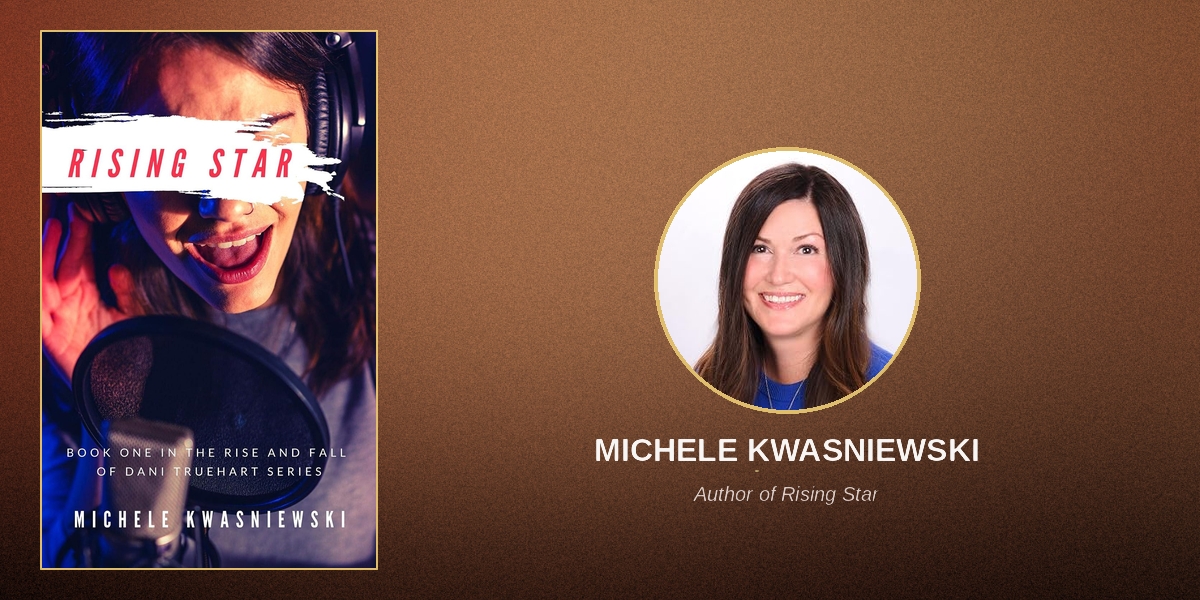
Michele Kwasniewski Explores the Cost of Fame in the Rising Star YA Series

By: Danna Jones

Michele Kwasniewski spent more than fifteen years working inside the entertainment industry before she sat down to write Rising Star, and every chapter of the novel reflects the specific quality of knowledge that direct professional experience produces in someone who has been paying close attention. She is not imagining what the music industry looks like from a fifteen-year-old girl’s perspective. She is building that perspective from the inside out, using the accumulated pattern recognition of someone who has been in rooms where careers are made and unmade, where talent is recognized and exploited and celebrated and consumed, and who has developed through that experience a precise and honest understanding of how the industry actually works at the level of human relationships and daily professional reality.

Dani Truehart at fifteen is talented, prepared, and navigating a world that is simultaneously the one she has been training for and considerably more complicated than any amount of training could have fully described. The guardianship arrangement with her vocal coach Martin, the recording contract with music producer Redman, the specific dynamics of a music career at the level she has just entered, all of these are rendered with the specificity of someone who has been there rather than imagined it. And underneath all of the industry material, Kwasniewski keeps Dani’s actual human life fully visible and fully weighted: the relationship with Sean that the career is steadily displacing, the family situation she has partly escaped and partly carried with her, the friendships that knew her before she was becoming a product.

The moral complexity of the characters surrounding Dani is one of the novel’s most important qualities. Martin is drawn with sustained ambiguity rather than resolved into trustworthiness or exploitation. Redman is specific and recognizable as a particular kind of industry figure rather than a generically dubious antagonist. The mother is overbearing and materialistic and also the person whose ambitions shaped a daughter who is genuinely talented, which means the situation is more complicated than simple escape would suggest. None of these figures are simple, because Kwasniewski has been around enough real versions of them to know that simple is the one thing they never actually are.

The first-person voice she constructs for Dani is calibrated precisely to a fifteen-year-old’s sensibility, neither simplified nor elevated, but exactly the intelligence and the gaps in experience and the specific emotional textures of a fifteen-year-old who is in the process of becoming someone who can read the world she has entered with the clarity she will eventually need. That authenticity of voice is what holds everything together and what makes the reader’s investment in Dani’s ongoing story feel genuinely earned rather than simply demanded.

If you want a YA novel about the music industry that earns its authenticity through fifteen-plus years of direct professional experience and builds at its center a protagonist who is one of the most fully realized young adult characters in recent fiction, Rising Star by Michele Kwasniewski is exactly that book. Grab your copy on Amazon today and start the series.

From Mood Board to Event Teaser with Seedance 2.5

Warm lanterns, handmade objects, and an evening courtyard can establish an event’s mood, but a teaser also needs a sequence. With Seedance 2.5, the planning task is to turn those references into an opening, a few telling details, and a clear invitation. This example shows how to move from a mood board to that short scene plan.

The Seedance 2.5 AI video generator can help you explore an AI promotional video from approved references. The example below is a fictional evening craft market called Lantern Yard.

Reduce The Mood Board To Three Rules

Choose one color relationship, one lighting quality, and one movement style. For Lantern Yard, the rules might be warm paper-lantern light against deep blue evening, tactile handmade materials, and gentle pullbacks.

Remove images that conflict with those rules. Label each retained asset by role: location, color, material, crowd energy, or typography.

A 20-second editing plan could use 0–4 seconds for the lantern opening, 4–12 seconds for the maker and visitor details, 12–16 seconds for the wider courtyard, and 16–20 seconds for the end card. Generate manageable scenes and assemble them around these beats rather than relying on one output to deliver every attraction and exact event text.

Example prompt for the opening: “A hand switches on a paper lantern above a craft-market table at dusk. The camera slowly pulls back to reveal ceramic cups and folded fabric beneath warm lantern light. Deep blue evening in the background, restrained movement, faint crowd ambience, and no dialogue. Leave the scene free of event lettering.”

Carry the same palette and lighting references into the later scenes. Add the confirmed event information in the edit.

Open With A Specific Invitation

Begin close on a paper lantern being lit by hand. Ambient sound rises as the camera pulls back enough to reveal tables being prepared. This opening starts with a readable action and gives the next beat somewhere to go.

Reveal The Event Through Selected Details

Move through three recognizable moments: a maker arranging ceramic cups, a visitor testing a printed tote, and friends sharing food beneath the lights. These are illustrative activities for the fictional example. A real event team should replace them with approved attractions and truthful representations of the venue.

Avoid showing every possible feature. The teaser should establish the kind of experience, while the event page can carry schedules and detailed information.

Build Toward One Main Reveal

The widest shot should arrive after the close details. Reveal the fictional courtyard filled with stalls and lanterns as the music opens up. Use an outward reveal that echoes the opening pullback so the teaser feels like one invitation rather than a collection of unrelated clips.

On seedance2-5.com, creators can use prompts and multimodal references to plan clips of up to 30 seconds. Choose a shorter duration if the idea reads clearly sooner, and verify the selected aspect ratio and resolution in the current interface.

Protect The End Card

Reserve a clean final moment for the event name, date, location, and approved call to action. Generated lettering should not be trusted as final event information. Add exact text in the editing stage and test it at the size viewers will see on the intended platform.

For the fictional example, an illustrative end card could read “Lantern Yard, Meet the makers.” A real campaign must use confirmed event details and approved branding.

Review The Teaser As A Promise

Check whether the mood, activities, and crowd shown are consistent with the actual event plan. Confirm permission for every person, logo, artwork, music reference, and venue image. Watch for continuity in lighting, wardrobe, objects and architecture.

Then ask whether the sequence has a clear progression: intimate opening, selected experience details, wider reveal, and readable end card. A mood board supplies ingredients. The teaser plan decides when each ingredient appears and what it tells the viewer.

From Mood Board to Event Teaser with Seedance 2.5

Warm lanterns, handmade objects, and an evening courtyard can establish an event’s mood, but a teaser also needs a sequence. With Seedance 2.5, the planning task is to turn those references into an opening, a few telling details, and a clear invitation. This example shows how to move from a mood board to that short scene plan.

The Seedance 2.5 AI video generator can help you explore an AI promotional video from approved references. The example below is a fictional evening craft market called Lantern Yard.

Reduce The Mood Board To Three Rules

Choose one color relationship, one lighting quality, and one movement style. For Lantern Yard, the rules might be warm paper-lantern light against deep blue evening, tactile handmade materials, and gentle pullbacks.

Remove images that conflict with those rules. Label each retained asset by role: location, color, material, crowd energy, or typography.

A 20-second editing plan could use 0–4 seconds for the lantern opening, 4–12 seconds for the maker and visitor details, 12–16 seconds for the wider courtyard, and 16–20 seconds for the end card. Generate manageable scenes and assemble them around these beats rather than relying on one output to deliver every attraction and exact event text.

Example prompt for the opening: “A hand switches on a paper lantern above a craft-market table at dusk. The camera slowly pulls back to reveal ceramic cups and folded fabric beneath warm lantern light. Deep blue evening in the background, restrained movement, faint crowd ambience, and no dialogue. Leave the scene free of event lettering.”

Carry the same palette and lighting references into the later scenes. Add the confirmed event information in the edit.

Open With A Specific Invitation

Begin close on a paper lantern being lit by hand. Ambient sound rises as the camera pulls back enough to reveal tables being prepared. This opening starts with a readable action and gives the next beat somewhere to go.

Reveal The Event Through Selected Details

Move through three recognizable moments: a maker arranging ceramic cups, a visitor testing a printed tote, and friends sharing food beneath the lights. These are illustrative activities for the fictional example. A real event team should replace them with approved attractions and truthful representations of the venue.

Avoid showing every possible feature. The teaser should establish the kind of experience, while the event page can carry schedules and detailed information.

Build Toward One Main Reveal

The widest shot should arrive after the close details. Reveal the fictional courtyard filled with stalls and lanterns as the music opens up. Use an outward reveal that echoes the opening pullback so the teaser feels like one invitation rather than a collection of unrelated clips.

On seedance2-5.com, creators can use prompts and multimodal references to plan clips of up to 30 seconds. Choose a shorter duration if the idea reads clearly sooner, and verify the selected aspect ratio and resolution in the current interface.

Protect The End Card

Reserve a clean final moment for the event name, date, location, and approved call to action. Generated lettering should not be trusted as final event information. Add exact text in the editing stage and test it at the size viewers will see on the intended platform.

For the fictional example, an illustrative end card could read “Lantern Yard, Meet the makers.” A real campaign must use confirmed event details and approved branding.

Review The Teaser As A Promise

Check whether the mood, activities, and crowd shown are consistent with the actual event plan. Confirm permission for every person, logo, artwork, music reference, and venue image. Watch for continuity in lighting, wardrobe, objects and architecture.

Then ask whether the sequence has a clear progression: intimate opening, selected experience details, wider reveal, and readable end card. A mood board supplies ingredients. The teaser plan decides when each ingredient appears and what it tells the viewer.

MTA Seeks Manufacturers for 650 New CNG Buses in Largest Fleet Upgrade Since 2013

The Metropolitan Transportation Authority is preparing to order 650 new compressed natural gas buses, replacing more than 10 percent of its fleet in a single procurement cycle aimed at improving reliability and reducing operating costs for a system that serves over one million daily riders.

Key Takeaways

  • The MTA will release a request for proposals for 650 new 40-foot CNG buses, with manufacturer submissions due October 19, 2026.
  • The order replaces 620 aging CNG buses already in the fleet, some of which are 21 years old and well past their expected service life.
  • CNG buses will account for roughly 30 percent of standard bus purchases under the MTA’s 2025–29 Capital Plan.
  • The capital plan also funds 500 zero-emission buses and charging infrastructure at depots in communities disproportionately affected by poor air quality.
  • All natural gas used by the MTA’s CNG fleet is offset by renewable natural gas sourced from landfills and farms.
  • Forty-one new buses have already entered service since July, replacing vehicles with an average age of 18 years.

A Fleet Modernization Built Around Reliability, Not Just Emissions

Governor Kathy Hochul announced the procurement on September 10, describing the order as the single largest purchase of new MTA buses in over a decade. The 650 buses will be 40-foot, low-floor models powered by compressed natural gas, a fuel the MTA has used for years and one that agency officials say is cheaper, quieter, and more mechanically reliable than diesel. MTA Chair and CEO Janno Lieber framed the decision in practical terms, noting that the electric bus industry has not yet matured enough to fill this volume of need at this speed.

The MTA committed nearly a decade ago to transitioning its full fleet of close to 6,000 buses to zero emissions by 2040. That goal remains on the books, but the path to reaching it has shifted. Electric bus performance across the fleet has been uneven, with range limitations, charging infrastructure gaps, and maintenance challenges slowing the rollout. The CNG procurement does not replace the electric commitment; the same capital plan includes funding for 500 zero-emission buses and depot charging systems. But the 650-bus order signals that the MTA is unwilling to let fleet age climb while waiting for electric technology to scale.

The Procurement Follows a Broader Push for Faster Bus Service

The order is a direct extension of the “Next Stop: Faster Buses, Better Service” initiative that the MTA launched in July alongside Governor Hochul and Mayor Zohran Kwame Mamdani. That plan identified fleet age and mechanical reliability as factors dragging down bus speeds citywide. Since July, 41 new buses have already entered service, replacing vehicles with an average age of 18 years. The oldest bus retired under the initiative was 21 years old.

For riders across the five boroughs, the reliability problem is not abstract. Chronic delays and inconsistent service have plagued the city’s bus network for years, with disabled New Yorkers, older adults, and parents with strollers disproportionately affected. Newer buses spend more time on the road and less time in the shop, which translates directly into more frequent and predictable service on routes where riders have few alternatives.

CNG as a Bridge Fuel: Cost Savings and Environmental Offsets

The MTA’s decision to invest heavily in CNG rather than wait for a larger electric order reflects a calculation about operating costs as much as emissions. Compressed natural gas is cheaper per mile than diesel, and the agency says CNG buses require less maintenance overall. The fuel also insulates the MTA from diesel price volatility, a factor that matters at the scale of a fleet serving more than one million riders every weekday.

On the environmental side, the MTA offsets 100 percent of its CNG fuel consumption through renewable natural gas. RNG is produced from methane captured at landfills, farms, and other organic sources, which reduces lifecycle greenhouse gas emissions compared to conventional natural gas. CNG buses are also quieter than their diesel counterparts, a meaningful difference for neighborhoods where bus routes run through residential streets at all hours.

The capital plan does prioritize zero-emission infrastructure in communities most affected by air pollution. Charging equipment installations will focus on depots serving those neighborhoods, ensuring that the electric portion of the fleet expansion targets the areas where clean-air benefits matter most.

A New Procurement Model Designed to Encourage Innovation

The RFP is part of the MTA’s new Rolling Stock Program, which restructures how the agency buys buses and rail cars. Rather than issuing rigid specifications, the program gives manufacturers flexibility to propose new designs and technologies within broader performance requirements. The MTA says the approach is intended to speed up delivery timelines, reduce costs, and encourage competition among manufacturers.

MTA Chief of Rolling Stock Jessie Lazarus described the 650-bus order as a deliberate use of scale, noting that large order sizes allow the authority to leverage its multibillion-dollar capital commitment to get better pricing and faster turnaround from manufacturers. Proposals from interested bus manufacturers are due by October 19, 2026.

FAQs

How Many Buses Is the MTA Ordering?

The MTA is seeking manufacturers to build 650 new compressed natural gas buses, replacing 620 aging CNG vehicles currently in the fleet. Once delivered, the new buses will represent more than 10 percent of the MTA’s total bus fleet.

Why Is the MTA Choosing CNG Over Electric Buses?

The agency says electric bus technology has not yet scaled enough to fill this volume of need reliably. CNG buses are being ordered as a bridge solution while the MTA continues investing separately in 500 zero-emission buses and depot charging infrastructure under the same capital plan.

When Will the New Buses Enter Service?

Manufacturer proposals are due October 19, 2026. The MTA has not announced a specific delivery timeline, but the procurement is funded through the 2025–29 Capital Plan, and deliveries are expected to begin within that window.

Will the New Buses Serve All Five Boroughs?

The MTA operates bus routes across all five boroughs. The 650 new CNG buses will replace aging vehicles system-wide, serving more than one million daily riders across the city’s 345 bus routes.

Why Design Decides Which Technologies Survive

The computer mouse sat in a lab for almost twenty years before anyone bought one.

Douglas Engelbart built the first one in the 1960s at Stanford Research Institute, a wooden shell with two metal wheels. It worked. It was clever. And for most of the next two decades it stayed a research curiosity, something a few specialists knew about and nobody else could use.

That twenty-year delay had nothing to do with the engineering, which was finished early. Somebody still had to make the thing understandable to people who would never care how it functioned. Design is the usual name for that work, which is an unlucky name, because in most budgets the design line sits below the build and gets trimmed first when the timeline slips. Filed near the launch party.

Raw Capability Doesn’t Win On Its Own

A technology can be faster and cheaper and more advanced than everything around it and still lose to something worse that a stranger can figure out in a minute.

The mouse again. Engelbart had a working device; what he lacked was a system in which the device made sense to anyone outside a lab. Xerox built that system. On April 27, 1981, the company announced the 8010 Star, a $16,000 workstation with on-screen icons, folders, overlapping windows, and a mouse for pointing at all of it. You could see your work now instead of memorizing the commands that summoned it. The Star sold badly, largely on price, but it answered the question of whether point-and-click computing worked for people who weren’t specialists.

Worth noting what that labor consisted of. Engelbart’s group had tested the mouse against a light pen, a joystick, and a knee-operated control, and the mouse won on accuracy and error rate; they had also worked out that cursor movement should run at roughly twice the movement of the hand. When several of them moved to Xerox PARC in the early seventies, the researchers there read the test report and decided not to repeat the experiments. Any system they built would use a mouse. That is empirical work about human behavior, done years before anything shipped, and it looks nothing like styling.

Apple pushed the same idea further. On the Star, clicking an icon got you a pop-up menu that sat between your intention and the machine’s response. Apple’s software team went to direct manipulation instead: pull a window’s corner to resize it, grab it to move it, nothing in between. That version shipped on the 1984 Macintosh, got copied into Windows, and reached hundreds of millions of desks. The pointing device itself barely changed across those eighteen years. Icons, windows, menus, and the rules governing how they answered a click absorbed almost all the labor.

The Touchscreen Waited Forty Years

Eric Johnson, an engineer at the Royal Radar Establishment in England, described a capacitive touch panel in 1965 and held a patent by 1969. A graduate student at the University of Toronto built a working multi-touch system in 1982, and researchers at Bell Labs built a capacitive version independently that same year. Pinch to zoom and two-finger rotate were both running in university labs decades before anyone owned a phone that used them.

IBM shipped a real touchscreen phone in 1994. The Simon had been shown at COMDEX in late 1992 and reached buyers in August 1994, priced around $899, with a 4.5-inch monochrome screen you operated by pressing hard with a stylus. It could send faxes and email. It sold so few units that most people today have never heard of it. Everything technically necessary for a mass-market touch device existed. What existed alongside it was a set of interaction choices nobody wanted to make.

The iPhone landed in 2007 on top of all that prior art, and Apple invented none of the underlying pieces. The decision it made was narrower and more consequential. Your finger would be the only instrument, no stylus and no learning curve worth mentioning, and every interaction in the device had to survive that constraint or get cut.

The sequence repeats across most of the technologies now treated as inevitable. A breakthrough gets demonstrated twenty or forty years ahead of any market for it, sits in papers and prototypes, and the company that eventually owns the category tends to be whoever worked out how to put the thing into a person’s hand rather than whoever discovered it.

The Web Is The Clearest Case, And A Test For Any Studio

On the web, the capability and the translation were built by different people a few years apart, so the handoff is easy to watch.

Tim Berners-Lee wrote the first browser at CERN in 1990. Protocols, server, links, all of it running. It ran on a NeXT machine, which cost thousands of dollars and sold perhaps fifty thousand units in total across the company’s lifetime, so for the first couple of years the web was a working system available to almost nobody.

Then Mosaic. Marc Andreessen and Eric Bina released version 1.0 on April 22, 1993, out of the NCSA at the University of Illinois; Windows and Macintosh versions followed later that year, and it was free for most uses. Its notable trick was showing images inline with text where earlier browsers had opened them in separate windows. By December 1993 the NCSA counted more than 5,000 downloads a month. Nothing underneath had improved. A page had simply become something an ordinary person could look at and click, and the boom that followed is generally traced to that.

Which makes this layer a fair way to judge whoever builds your site. Making a page look expensive is not difficult and not rare. The work that separates the best web design agencies from vendors who decorate is taking a complicated product, service, or argument and getting a stranger to understand it inside the first ten seconds of scrolling. Ask a studio to explain how they did that on a specific past project. The answer sorts them quickly.

What This Means If You’re Building Something Now

The practical question is when the translation work starts. If it starts after engineering declares itself finished, the schedule has already classified it as finish work, whatever anyone says in the kickoff.

Put the people responsible for how a feature gets understood in the room while the feature is being specified, back when their options are still wider than color and copy. Your customer will never meet the architecture or the pipeline that took the whole quarter. They meet one surface, and on the record of the last sixty years that surface tends to decide how many of them stay.

Engelbart’s mouse worked in the mid-sixties. Johnson had his touch patent by 1969, and CERN had a running web in 1990, on a machine almost nobody owned. Each of them sat there, finished, until somebody did the translating. Whatever sits on your roadmap is on the same clock, and the only open question is whether that work gets done on purpose or gets done by whoever ships the version people can finally use.

A Departure from Conventional Christian Books: Michael Frati’s Vulnerable Approach in A Pilgrim’s Process

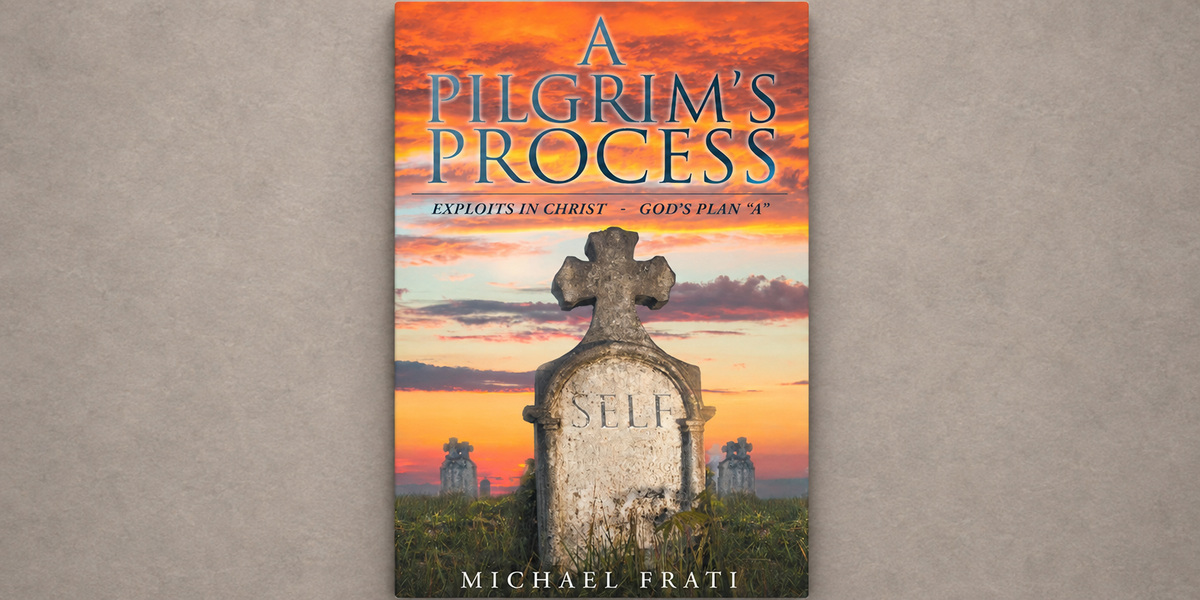
Many Christian books tend to follow a familiar pattern. They are structured, instructional, and often feel as though they were written from behind a pulpit or a theological desk. They explain doctrine, reference scripture, and aim to teach. A Pilgrim’s Process by Michael Frati is a refreshing departure from that type of conventional Christian book. It stands apart from that tradition entirely. Instead, it pulls readers in close and speaks with raw honesty, humor, and a disarming simplicity about what it actually looks like to walk with God in real life.

Rather than presenting theology academically or systematically, the book offers something far more personal. It reads like a life being told exactly as it was lived. Through that lived experience, faith becomes vivid, grounded, and surprisingly accessible. Even the deepest spiritual truths are presented with a clarity that feels almost effortless, as if they were always meant to be understood this way.

Frati has a rare ability to take complex spiritual ideas and make them feel familiar, as though the reader has known them all along but needed someone honest enough to say them out loud.

Who Is Michael Frati

Michael Frati, born in 1947 and currently living in Tavares, Florida, brings a lifetime of experience to his writing. His background is not confined to theology or ministry alone. Over the years, he has been a business owner for 27 years, a New York State magistrate judge for 17 years, a pastor, a missionary, and a songwriter. He has also personally funded and built three churches in Livingstone, Zambia, and is currently building a fourth church in Lusaka, Zambia.

Frati has been married to his wife, Patti, for more than four decades, raised five children, and is a grandfather to nine grandchildren.

What makes his story particularly compelling is how the book came into existence. For over fifteen years, people from all walks of life encouraged him to write it down. Friends, parishioners, and even strangers repeatedly told him that his stories needed to be preserved. One early pastor even urged him to write after a Thanksgiving meal. Eventually, the encouragement became impossible to ignore. When he finally began writing, the book poured out in just sixteen weeks.

That origin is evident in every page. The writing does not feel overly polished or carefully manufactured. Instead, it carries the energy of something that had been waiting a long time to be released.

Why The Book Feels Different

At the heart of A Pilgrim’s Process is a simple but powerful idea. Frati describes God as having a “Plan A” for every life. Anything outside of that, what he calls self-directed “Plan B,” leads to frustration, mediocrity, or failure.

What distinguishes this book is not the idea itself, but how it is communicated. Frati does not simply state the principle. He demonstrates it repeatedly through stories drawn from his own life. These stories are often humorous, sometimes painful, and always deeply human.

The result is a narrative where readers do not feel like they are being instructed. They feel like they are simply listening to someone who has lived through both success and failure and is willing to speak honestly about the difference.

Frati’s tone is unpretentious and direct. There is no attempt to mask mistakes or soften difficult moments. Instead, he writes with a kind of grounded humility that comes from experience rather than performance. His voice often feels like that of a trusted friend who has already walked difficult roads and is willing to share what he learned along the way.

Hard spiritual ideas are not simplified in a superficial way. They are clarified through lived experience, making them easier to grasp without losing their depth.

The Reading Experience

Readers often find themselves reacting to the book in unexpected ways. Some moments prompt laughter, others reflection, and many create a sense of quiet recognition. There is a quality throughout the writing that feels deeply personal, as though the reader is being included in a conversation rather than being taught a lesson.

Frati’s storytelling carries emotional weight without becoming heavy-handed. His honesty feels costly, not curated. He shares not only what he has learned, but also where he struggled to learn it. Beneath the humor and storytelling, there is a steady conviction that life aligned with God’s purpose is not only possible but worth pursuing fully.

By the time readers reach the later pages, even familiar biblical ideas take on new meaning. The well-known statement from Paul, “It is no longer I who live, but Christ who lives in me,” begins to feel less like distant theology and more like something attainable. Frati’s life itself becomes part of the argument.

Final Impression

For readers weary of predictable or formulaic Christian writing, A Pilgrim’s Process offers something distinct. It is bold without being forceful, vulnerable without being performative, and deeply personal without losing its spiritual focus.

It reads less like a traditional self-help or theological text and more like a story that refuses to let go of the reader. Through a lifetime of experience, Frati presents a case for faith that is not only explained but embodied.

The result is a book that stands out in its genre, not because it tries to be different, but because it simply tells the truth as it has been lived.

About The Author

Michael Frati is a pastor, missionary, storyteller, and published author based in Tavares, Florida. He continues to share his experiences and reflections through writing and ministry.

A Pilgrim’s Process is available in both Kindle and print editions.

Hiver Moves From Gmail Helpdesk to Agentic Support Platform

A single customer issue can involve multiple teams, several systems, and decisions that require human judgment. The context needed to resolve it may sit across a CRM, past tickets, product documentation, Slack, and internal teams. Most support platforms were not built for this level of complexity.

For more than a decade, Hiver has powered support inboxes for over 10,000 teams working in Gmail. Now, with Hiver Omni, the company is taking a bigger step: a standalone, agentic platform designed for complex support requests that span teams, tools, and channels.

AI That Does More Than Answer Questions

Consider a customer whose CRM integration has stopped syncing. Resolving that request could mean checking account history, reviewing previous tickets, understanding what changed, investigating a recent product update, and bringing engineering into the conversation. In a traditional helpdesk, much of that investigative work still falls on the support team.

Hiver Omni’s AI Agent can take on the first stretch of that work. It can ask clarifying questions, pull relevant account and product context, and route the case with its findings already attached. A support rep can also ask the AI to update a CRM record or create a Jira ticket without leaving the conversation.

When Engineering, Product, or Customer Success needs to get involved, collaboration stays connected to the original case rather than becoming another disconnected Slack thread.

Many AI support tools focus on deflecting routine questions with a chatbot layered over an existing helpdesk. Hiver Omni is built around the requests that need investigation and coordination instead.

The Knowledge Problem

AI is only as useful as the information it relies on. And support knowledge gets outdated quickly. Products change. Documentation doesn’t always keep up. Meanwhile, valuable answers often remain buried inside thousands of resolved conversations. Hiver Omni approaches this differently. Its AI can mine resolved conversations for answers that were never documented, help create missing knowledge, and identify information that may have become stale.

Autonomy With Guardrails

More autonomy also means more responsibility. Hiver Omni makes automated actions traceable. Admins can decide which workflows AI can run independently and expand that autonomy gradually as trust grows. Hiver also says it doesn’t use customer data to train its models.

The goal isn’t simply to automate more support tickets. It’s to help teams solve the problems that require investigation, coordination, and judgment.

That’s the bet behind Hiver Omni: AI Agents handle the heavy lifting, people bring the judgment, and complexity no longer dictates how customer support gets done.