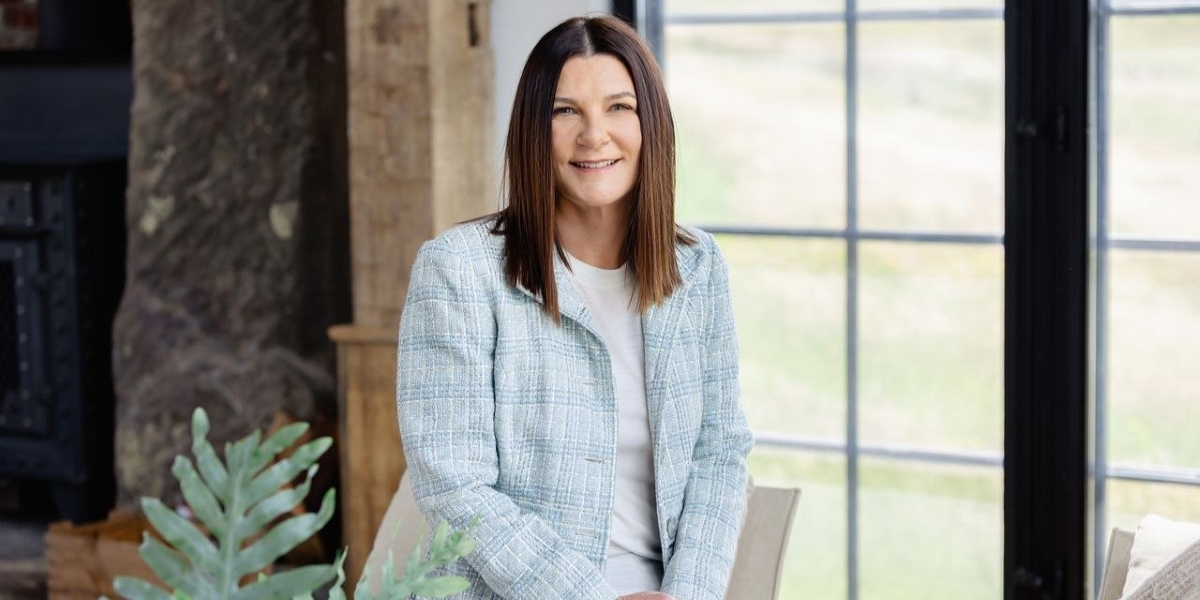
You Don’t Have to Quit Drinking to Take Back Control; Georgia Foster Explains How

It’s Friday evening. The end of a stressful work week makes the idea of relaxing with a glass of wine seem like an ideal solution. As you take a sip of wine, you begin to feel that old guilt settling deep inside of you. For several weeks, you’ve been attempting to limit your drinking by convincing yourself this would be your final glass. You find yourself once more pondering whether quitting altogether might be necessary to regain control. Your enjoyment of social events conflicts with the overpowering influence alcohol has on your life. You don’t drink every single night, and you wouldn’t consider yourself a problem drinker, but you find that reducing your alcohol consumption is more challenging than expected. Total alcohol abstinence appears extreme, yet you yearn to start each day with clear thinking and control while eliminating the persistent voice that tells you to drink less.

If this sounds familiar, you’re not alone. The all-or-nothing approach to alcohol consumption creates difficulties for numerous people. The problem might not require total abstinence. The possibility exists to transform your drinking behavior without completely eliminating alcohol from your life. As a world-renowned hypnotherapist and drinking mindset specialist, Georgia Foster has helped thousands of people succeed in their goals because she believes you can, and she has helped thousands of people do just that.

Through social drinking, Georgia Foster experienced heightened confidence and self-assurance that made her feel like her best self. But over time, she realized something important: When she drank, she would lose her critical inner voice which constantly questions your self-worth. Her self-critic returned in force when she stopped drinking, which resulted in unending internal conflicts.

It was this internal struggle that sparked her journey into understanding the deep connection between the mind and behavior. She recognized that it wasn’t the alcohol itself that was the problem, it was the lack of control. People weren’t necessarily addicted; they were just letting their drinking control them. That’s when she realized that to regain control, it wasn’t about quitting drinking entirely, it was about regaining control of the mind and shifting the relationship with alcohol.

Georgia mastered hypnotherapy during her journey and learned to apply the techniques to herself before using them to hypnotize thousands of clients. Her technique enables people to manage their alcohol consumption without the need to stop drinking completely. The goal is to achieve peace of mind by ending internal struggles with your decisions, just like Georgia did.

But this isn’t about Georgia. This is about you. Because the truth is, when you take control of your mind, you take control of your drinking, and that’s the real freedom.

Hypnotherapy? You’re kidding.. right?

It’s real. Many people approach hypnotherapy with skepticism when they consider it for reducing their alcohol consumption. Despite its unfamiliarity, people often overlook hypnotherapy, but the truth is, it helps people create permanent changes in their habits and behaviors.

Research shows that hypnotherapy can help rewire the subconscious mind, addressing the root causes of unwanted behaviors, such as emotional drinking or reaching for a glass of wine out of habit. Studies have shown that individuals who undergo hypnotherapy are significantly more likely to reduce their alcohol intake compared to those using traditional methods. A study published in the International Journal of Clinical and Experimental Hypnosis found that 70% of participants saw a reduction in alcohol consumption after hypnotherapy sessions.

But why does this work? Imagine your mind is like a garden. Over time, habits and patterns, like drinking too much, can grow, sometimes without you even realizing it. These habits are planted in the subconscious and are difficult to change using sheer willpower alone. Hypnotherapy works by gently helping you “replant” new, healthier habits in the soil of your subconscious. Just like a gardener removes weeds and nourishes the plants they want to grow, hypnotherapy helps remove the old thought patterns and nurture new, more balanced ways of thinking and behaving around alcohol. It’s not about “stopping” drinking entirely, but about changing how your mind views alcohol and helping you regain control. Thousands of people have found that by addressing the subconscious drivers behind their drinking, they can achieve lasting results without feeling like they’re giving up something they enjoy.

Confident, In Control, Free of Judgement.

Imagine being able to enjoy a glass of wine or a cold beer without the guilt, shame, or anxiety that often comes with it. What if you could sip your drink, feeling confident and in control, knowing you’re making a conscious choice? This is the kind of transformation hypnotherapy helps people achieve. It’s not about eliminating alcohol but about changing your relationship with it. Through this process, you’ll be able to drink with mindfulness and clarity so that alcohol no longer holds power over you. With hypnotherapy, the goal is to create a sense of balance where you feel empowered to make healthier decisions. You’re no longer driven by subconscious triggers, old habits, or emotional patterns but by a clear and confident choice to drink in a way that feels right for you.

Hypnotherapy enables you to transition from feeling out of control to feeling more grounded by targeting the fundamental reasons for your drinking behavior. You will eventually realize that drinking becomes less intrusive and does not take over your thoughts or mood throughout the night. It’s about creating a healthier, more positive mindset toward alcohol, one that allows you to enjoy the experience without any of the negative emotions that might have held you back before.

It’s like going to the Doctor – Confidential

It’s important to recognize that making a change, especially when it comes to something as personal as alcohol consumption, can be challenging. Transformation begins with maintaining an open mindset while seeking new approaches to your situation. People who seek hypnotherapy usually struggle with feelings of internal conflict and guilt towards their drinking patterns and often carry a deep sense of shame or embarrassment. And it’s normal to feel that way. You don’t have to face this journey alone, and massive changes do not have to take place overnight.

As Georgia Foster, a leading expert in alcohol reduction through hypnosis, often shares with her clients: “No one will ever know you’re getting help unless you choose to share it. That’s the beauty of this process, it takes the pressure off you. When the mind feels at ease, change happens naturally. Hypnotherapy works best when you feel safe, free, and open to transformation. It’s like gardening on soft, moist soil, planting good seeds of confidence and control while gently removing the pesky weeds of guilt and self-doubt.

“A lot of my clients come to me feeling guilty or ashamed of their drinking habits, and they worry that they’ve gone too far. But the truth is, with the right mindset and the right support, real change can happen, sometimes after just one session. And that change is often more immediate than they expect. Hypnotherapy isn’t about judgment; it’s about understanding, connection, and creating new pathways for better choices. My work is completely confidential, providing a private and secure space where clients can make changes at their own pace, free from outside pressure or judgment from family, peers, or spouses. This is their journey, and they deserve the freedom to embrace it in a way that feels safe and empowering.”

Research supports the fact that hypnotherapy can lead to significant change quickly. A study published in The American Journal of Clinical Hypnosis found that participants who underwent hypnotherapy for behavior change saw improvements after just one session, with many reporting a decrease in alcohol cravings and consumption in a matter of days. Hypnotherapy works by rewiring the subconscious, addressing the root causes of habits, and empowering individuals to take control of their behaviors in a sustainable way.

This shift happens in a non-judgmental and supportive environment where people can start at their own pace. There’s no pressure, no need to be perfect, just the opportunity to begin transforming your relationship with alcohol from the very first session.

Disclaimer: This article is for informational purposes only and does not constitute medical advice or a substitute for professional care. Anyone concerned about their alcohol consumption should consult a qualified healthcare professional.

The Thermometer in Your Medicine Cabinet Is Answering the Wrong Question

Anyone who has looked after a sick child knows the ritual. You wait for the beep, you read the number, you decide whether the number is bad enough to do something about. Then the thermometer goes back in the drawer, and at some point over the next few hours you do the whole thing again.

The number is accurate. What it cannot tell you is the thing you actually want to know, which is where the temperature is heading.

That gap explains why continuous temperature monitoring has been quietly moving out of hospital wards and into ordinary households, and it is the market Stemp Medical Devices and Solutions Inc. was built for. The Salt Lake City company makes a soft wearable temperature patch that sits against the skin and reads temperature without stopping, streaming to a phone app that shows a line instead of a dot.

Consider what a single reading leaves out. A temperature of 99.4 at nine in the evening is a shrug. The same 99.4 at nine in the evening, arrived at after three hours of steady climbing, is a different evening entirely. With one measurement, the two are indistinguishable. Direction is the information, and a spot check discards it by design.

What normal actually means

Then there is the benchmark most of us grew up with. The belief that a healthy adult runs at 98.6 degrees traces back to a German physician who averaged underarm readings from a very large group of patients and published the figure in 1851. It stood for more than a century. When researchers repeated the exercise with modern instruments, the average had drifted closer to 97.9, and individual baselines wander further still depending on age, the hour of the day, and where someone sits in a hormonal cycle.

So the number in your head is a population average, and you are not a population. A device recording continuously can do something a thermometer cannot, which is learn what your own normal looks like. A rise then registers as a rise, rather than as a reading that happens to fall near a line somebody drew in the middle of the 19th century.

The three in the morning problem

The other thing continuous monitoring changes is who has to stay awake. Stemp’s app pushes an alert when readings cross a threshold the household sets, and a wearer can share live readings and overnight history with a family member or a clinician who is nowhere near the room. For an adult child keeping an eye on a parent three states away, that is the difference between finding out at eight in the morning and finding out when it happens.

The hardware is designed to be forgettable, which matters more than it sounds. The patch is soft, sits low against the skin, and is meant to be worn through the night, so there is no reason to wake someone up to take a reading. A monitor that people take off is a monitor that has stopped monitoring. The company is also careful about what the patch is not. It measures skin temperature for monitoring and wellness, it is not a substitute for evaluation by a qualified health professional, and Stemp’s own guidance tells anyone worried about a reading to contact their clinician. Nobody at the company is pitching the patch as a diagnosis. What it offers is narrower and, for most households, more useful: a record of the hours when nobody was watching.

There is a reasonable objection here, which is that most fevers resolve on their own and constant data can turn an ordinary illness into a night spent staring at a graph. Fair enough. The counterargument is that anxious checking is what people already do with a thermometer, several times a night, without ever seeing a trend. Continuous readings do not create the worry. They give it something to work with.

The household thermometer is not going anywhere, and it does not need to. It answers a question about right now, quickly and cheaply. The more valuable question is what has been happening since the last time anyone bothered to check, and answering that one requires something that never stops measuring.

Candace Singh Left Wall Street to Rewrite Hollywood’s View of Family

By: Elowen Gray

Candace Singh spent a decade at two of Wall Street’s most demanding institutions, rising from Analyst to Vice President at Goldman Sachs in consecutive years before moving to JPMorgan to conduct due diligence on alternative investments. By every conventional measure, she had made it. Then, in March 2026, she walked away from corporate finance for the second time to make films full-time.

The first departure was a trial run. Singh left to hone her craft, learning the fundamentals of writing, directing, and producing before returning to corporate life. The second time, there was no plan to go back. Within weeks of leaving JPMorgan, a friend called asking for help on a feature film set. It wrapped in May.

The leap looked sudden from the outside. Inside, it had been building for years.

A Story Hollywood Wasn’t Telling

Singh’s debut short film, “Once a Man, Twice a Child,” follows a young adult accompanying an aging parent to a doctor’s appointment. The scene is ordinary. The dynamic underneath is not one Singh saw reflected on screen growing up.

She had spent years watching television that celebrated independence, the kind that showed young adults moving out, building lives apart from their parents, and treating leaving the nuclear household as the default marker of adulthood. Her own life looked different. Raised in New York by Guyanese parents, Singh made a deliberate choice to stay rooted at home, not out of inability to leave, but out of devotion. She wanted to be present for her parents’ care, finances, and doctor’s appointments in the years she still had with them.

That choice put her at odds with a familiar cultural script. In her words, Hollywood tends to cast adults who live with their parents as either failures to launch or overgrown children. Singh saw something else in her own family: a cousin who performed chest compressions to save her father’s life, another who visited a hospital daily for months during a parent’s recovery, and her own decision to leave a Wall Street all-nighter at 4 a.m. to rush her father to the emergency room.

Her decade on Wall Street sharpened an instinct to notice patterns most people miss. Working alongside colleagues across London, Singapore, Hong Kong, Mumbai, and Bangalore, she began to recognize a shared, unspoken frustration. Many of her international coworkers felt their family structures were misread through a Western lens, and found it easier to stay quiet than to explain. That recognition became the seed of her mission as a filmmaker, to give a name and a face to the young adults quietly caring for their parents, rather than let the story go untold.

Betting on the Harder Path

Leaving finance was not a simple decision. Singh had taken on the financial responsibility of retiring her parents early after her grandmother passed away during the pandemic, prioritizing security for them ahead of her own. Producing her first short film while working full-time at JPMorgan meant sacrificing weekends, holidays, and personal days for years, watching the project’s timeline stretch longer than she wanted.

Eventually, she recognized that dividing her attention between two demanding careers was quietly stalling the one she cared about most. As a young woman who also hopes to marry and build her own family one day, she understood that further delay risked letting indecision outweigh what she actually wanted to achieve. Having already chosen to prioritize her career over family-building, she decided the sacrifice would only be worth it if she went all in. She chose to go all-in on filmmaking, self-producing “Once a Man, Twice a Child” to retain full creative control over how the story was told.

That control extended to casting. Conventional wisdom said the film needed recognizable actors to gain traction. Singh ran an extensive search and organized her own casting calls, but no one could replicate the specific, lived-in chemistry she needed. She ultimately cast her own father and uncle in the lead roles, spending months running improv sessions to build their comfort in front of a camera and shaping scenes around their natural rhythms and more than sixty years of brotherly history. She cast herself as the daughter, in part to help her father feel at ease on set. The result, she says, is a living snapshot of her family’s dynamic that she will carry with her wherever the film goes next.

What Wall Street Taught Her About Betting on Vision

Singh credits part of her conviction to the years she spent evaluating which companies were worth backing. Her roles at Goldman Sachs and JPMorgan put her close to the earliest financial signals behind companies that would later become household names, including OpenAI and SpaceX. Watching those bets pay off reinforced a belief she carried into her own career change: that a clear vision, pursued with consistent conviction, can outrun the odds.

It is a lesson she traces back further than her time on Wall Street. Her high school yearbook quote was a line from Abraham Lincoln about the importance of one’s own resolution to succeed, and it has stayed with her since. Along the way, she has also learned to distinguish a true goal from temporary setbacks that can look like failure in the moment, treating disappointments as prompts to re-examine her direction rather than as reasons to abandon it.

That belief now anchors her plans for Emerald Tree Filmworks, the production company she founded. In the near term, she aims to screen “Once a Man, Twice a Child” at international festivals. Longer term, her ambitions extend to major industry recognition, including the Academy Awards, and to films that create the kind of shared cultural moments audiences once experienced collectively, from Michael Jackson’s 1993 Super Bowl performance to Live Aid.

Singh has already begun to draw industry recognition for the leap. She has been named to P.O.W.E.R Magazine’s Summer 2026 issue as CEO of Emerald Tree Filmworks, with a feature as one of the magazine’s Women of the Month planned for its Fall 2026 issue, and has been recognized by the Influential Women platform for her work as a director, writer, producer, and financier.

Audiences curious to see the world Singh is building can follow along on Instagram, YouTube, and TikTok, where she shares glimpses of Emerald Tree Filmworks and the making of her debut short.

For Singh, the through-line between her two careers is not as far apart as it might seem. Both required her to identify what others were missing, trust her own read of the situation, and commit fully once she saw it clearly. The difference now is that the vision on the table is entirely her own.

Ask What Retirement Advice Costs and Watch How Long It Takes to Get an Answer

Try this experiment. Call three financial advisory firms, say you are twelve years from retiring, and ask what a plan would cost. You will hear some version of the same reply from all three: it depends on your situation, let us set up a time to talk.

The reply is not evasive by accident. Under the arrangement that has dominated the advisory industry for decades, a firm bills an annual percentage of the assets it manages for you, commonly somewhere around one percent, and sets a minimum account size that decides who gets in the door. Neither number can be turned into a dollar figure until the firm knows your balance. The first conversation is not a consultation. It is a qualification.

One Detroit firm has taken the opposite approach and simply published its prices. Becker Retirement Strategies Inc. lists three flat-fee retirement planning engagements on its site, starting at $1,500 for a one-time roadmap, running to $2,800 plus a $200 monthly retainer for ongoing guidance, and reaching $10,000 a year for clients who want hands-on portfolio management. There is no account minimum, and the contents of each tier are itemized alongside the price.

Whether that is cheaper depends entirely on the household, and it is worth being honest about the arithmetic. On a $400,000 portfolio, a one percent fee runs $4,000 a year, so a $2,800 setup and $2,400 in retainers lands in similar territory. On a $2 million portfolio, the percentage model costs $20,000 a year and the flat fee looks like a bargain. On a $150,000 portfolio, one percent is $1,500 and the flat arrangement may well cost more, assuming a firm with a minimum would have taken the account at all, which is the part that usually goes unmentioned.

What the published price actually buys is the ability to do that math before committing to anything.

There is a second, subtler difference. A percentage fee is deducted from the portfolio rather than invoiced, which means most clients never see it leave. Anyone who has ignored a small recurring charge on a credit card statement understands the mechanism. A fee that arrives as a number you have to approve gets evaluated. A fee that quietly reduces a balance you were not going to spend for fifteen years does not.

The households most affected by all this tend to be the ones a decade or two out: solid income, retirement savings scattered across two or three former employers, no clear picture of what any of it produces as monthly income. They are precisely the households that benefit most from coordination, and precisely the ones a minimum-driven practice cannot afford to spend an afternoon with. Becker says it has built more than 420 individualized plans for over 180 households and oversees more than $30 million in assets under guidance, and it argues that a practice organized around a few hundred relationships does not need to keep raising its minimum to stay viable.

The work itself is not exotic. Retirement income projection, contribution analysis across 401(k), IRA, and Roth accounts, Social Security timing, then tax-efficient withdrawal sequencing, Roth conversion analysis, Medicare and healthcare cost planning, and estate coordination at the higher tiers. Most competent firms do a version of it. The variable is what you are charged and whether you can find out in advance.

For anyone shopping, a few questions cut through quickly. What is the total dollar cost in year one and year five. Is the fee invoiced or deducted. Is there a minimum, and would you meet it. Does anyone earn a commission on what gets recommended. Firms that answer plainly are telling you something about how they operate, and so are the ones that steer back to scheduling a call. Becker, for its part, still opens every engagement with a complimentary discovery call, which is a sensible thing to use as a test drive no matter where a household ends up signing.

Disclaimer: This is informational and not investment, tax, or legal advice. Retirement outcomes depend on individual circumstances; no result is guaranteed, and prospective clients should review a firm’s disclosures and consult their own tax and legal professionals.

Casanova Residence Groundbreaking Adds 96 Affordable Units to Hunts Point as City Commits $1 Billion to Supportive Housing

The Casanova Residence, a 96-unit affordable housing development on Casanova Street in the Hunts Point section of the Bronx, broke ground on Monday, August 3, marking another milestone in Mayor Zohran Mamdani’s effort to accelerate housing construction across the borough. The project, developed by The Doe Fund in partnership with the city’s Department of Housing Preservation and Development, will pair permanently affordable apartments with on-site supportive services for residents transitioning out of homelessness.

  • The Casanova Residence will deliver 58 supportive housing units and 38 rent-stabilized apartments available through the NYC Housing Connect lottery.
  • The Mamdani administration is investing $1 billion over the next two fiscal years to create and preserve supportive housing, a 60 percent increase over the prior two-year period.
  • Casanova is The Doe Fund’s 13th permanent residence and its 11th affordable housing project in the Bronx, bringing the nonprofit’s portfolio to more than 1,400 units citywide.
  • The building will include on-site case management, job training, free broadband, a fitness center, and landscaped outdoor space.
  • HPD’s Supportive Housing Loan Program financed the project, with additional backing from Raymond James and Webster Bank.
  • Once completed, the development will sit directly across from a planned 20,000-square-foot municipal grocery store at The Peninsula, the city’s first publicly run supermarket.

Fifty-Eight Units Reserved for Formerly Homeless New Yorkers

The bulk of the Casanova Residence will serve a population that has historically cycled through shelters and emergency services without a stable path out. Fifty-eight of the building’s 96 apartments are designated as supportive housing for individuals and families living with mental illness, substance use disorders, or disabling medical conditions. Each of those residents will have access to on-site case management, education programs, workforce development, and addiction recovery support operated by The Doe Fund.

The remaining 38 units will be rent-stabilized apartments marketed through the NYC Housing Connect lottery system, opening them to working-class Bronx residents who meet income eligibility requirements. The building will also include communal amenities: a fitness center, a landscaped outdoor area, dedicated community and service spaces, and free broadband for all tenants.

Jennifer Mitchell, President and CEO of The Doe Fund, noted during the groundbreaking ceremony that the organization has worked in the Hunts Point community since 2016. The Doe Fund’s housing portfolio now comprises more than 2,100 units across New York City when counting properties in operation, under construction, and in pre-development. Casanova will be the nonprofit’s 13th permanent residence, bringing its completed portfolio to more than 1,400 units. The organization has operated in affordable and supportive housing for nearly 40 years, pairing stable homes with workforce training, digital literacy, financial education, legal services, and community programming at each of its sites.

A $1 Billion Commitment Under the Block by Block Housing Plan

The Casanova groundbreaking lands within a broader housing strategy that the Mamdani administration has branded “Block by Block: The Housing Plan for a New Era.” That plan sets a target of creating 200,000 new affordable homes and preserving another 200,000 over the next decade, while also expanding public housing investment and tenant protections.

The administration’s recently adopted city budget allocates $1 billion over the next two fiscal years specifically to create and preserve supportive housing. That figure represents a 60 percent increase over what the city spent on supportive housing in the prior two-year budget cycle. HPD Commissioner Dina Levy described the Casanova project as representative of the kind of housing needed to reach residents who face overlapping challenges of homelessness, health conditions, and economic instability, noting that the majority of the building’s residents will have access to on-site social services, case management, and job training.

The city has also launched complementary programs to speed up housing delivery. The Supportive Preservation Program, introduced earlier this year, provides dedicated funding and technical assistance to stabilize existing supportive housing developments across the five boroughs. And the administration’s “SPEED” initiative is designed to cut pre-development timelines for affordable and supportive housing by as much as two years, addressing one of the most persistent bottlenecks in New York City’s housing pipeline.

Hunts Point Emerges as a Testing Ground for Bronx Investment

The Casanova Residence sits within a stretch of Hunts Point that the Mamdani administration has positioned as a showcase for its Bronx-focused policy agenda. Once complete, the building will stand directly across from The Peninsula, a five-acre campus on the former site of the Spofford Juvenile Detention Center. That project, developed by Gilbane Development Company, Hudson Companies, and MHANY Management, will ultimately bring 740 units of affordable housing, more than 50,000 square feet of public open space, and 30,000 square feet of light industrial manufacturing space to the neighborhood.

In May 2026, the administration announced that The Peninsula had been selected as the second location for the city’s municipal grocery store program. The 20,000-square-foot publicly run supermarket is expected to open in 2027 and deliver lower food costs by operating on city-owned property, reducing the overhead expenses that typically drive prices higher for shoppers. The program fulfills one of Mamdani’s core campaign pledges: to establish one publicly supported grocery store in each borough before the end of his first term. Hunts Point already anchors a critical piece of the city’s food infrastructure — the Hunts Point Food Distribution Center handles roughly 40 percent of New York City’s food supply.

Financing and Development Partners

The Casanova Residence was financed through HPD’s Supportive Housing Loan Program, which provides below-market-rate financing for developments that pair permanently affordable apartments with on-site social services. Additional project financing came from Raymond James and Webster Bank. Council Member Justin Sanchez and Bronx Borough President Vanessa L. Gibson joined Mayor Mamdani, Deputy Mayor for Housing and Planning Leila Bozorg, and HPD Deputy Commissioner for Development Patrick Love at the Monday groundbreaking.

Borough President Gibson described the project as aligned with her priority of expanding housing across the Bronx that reflects the needs of working-class families, vulnerable residents, and formerly homeless individuals. The development follows a pattern of Doe Fund projects in the borough that have combined housing with wraparound social services, including its 2019 groundbreaking on a 90-unit building at 555 Nereid Avenue in Wakefield, which included 54 studio apartments for formerly homeless veterans.


FAQs

When Will the Casanova Residence Be Completed?

The city has not announced a specific completion date for the Casanova Residence. Construction is now underway following the August 3, 2026 groundbreaking ceremony. Comparable Doe Fund developments in the Bronx have typically taken two to three years to complete.

How Can Bronx Residents Apply for Casanova Residence Apartments?

The 38 rent-stabilized apartments will be listed on the NYC Housing Connect lottery system once the building nears completion. Eligible applicants will need to meet income requirements set by the city’s affordable housing program. The 58 supportive housing units will be filled through referrals from city agencies serving homeless and health-affected populations.

What Services Will Be Available to Residents On-Site?

The Doe Fund will operate on-site programming that includes case management, education and job training, workforce development, digital and financial literacy courses, addiction recovery support, and linkages to off-site healthcare. The building will also offer free broadband, a fitness center, and landscaped outdoor common areas.

What Is the Municipal Grocery Store Planned Near the Casanova Residence?

A 20,000-square-foot city-run grocery store is planned for The Peninsula development on Spofford Avenue, directly across from the Casanova Residence site. The store, expected to open in 2027, is part of Mayor Mamdani’s municipal grocery program, which aims to lower food costs by operating on city-owned land and reducing traditional overhead expenses passed on to shoppers.